Tell us about the job
Takes about a minute. No obligation.
A contractor quoting a central AC repair in Bayfield County has to establish what the system has actually been running against before they can price the job or order parts. 153 severe weather events were recorded in Bayfield County, Wisconsin between 2015 and 2024. At that rate, severe weather is a standing condition for equipment here, not a rare event, and the condenser coil and capacitor carry most of that load. A unit that has been cycling hard through repeated weather events wears those components faster than one sitting through mild summers. So the first question on a repair call is whether the failed part gave out from cumulative load or from something the weather had nothing to do with, because the answer changes what else a contractor replaces on the same visit.
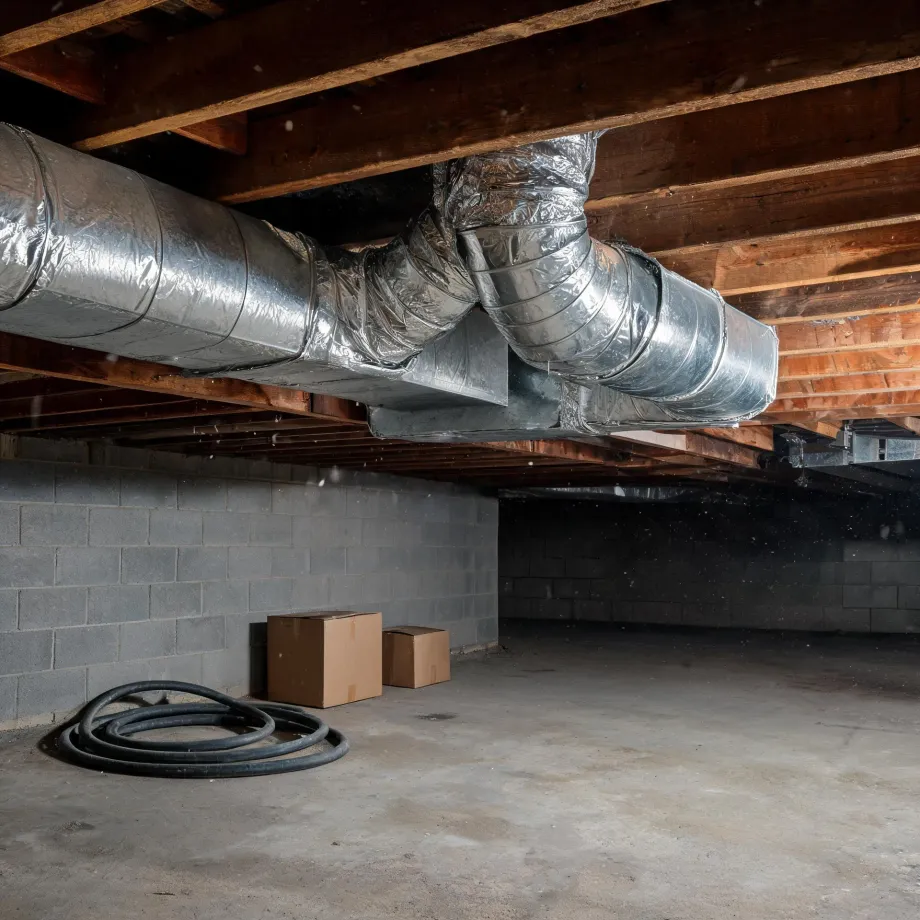
Half the homes in Bayfield County, Wisconsin were built in 1982 or earlier (2020-2024 ACS 5-year). A house built that long before today's central AC equipment was standard was not designed around it, and what a contractor finds once the unit is open reflects that history. Duct seals that were never airtight, enclosures that have shifted across decades of freeze-thaw cycles, and insulation that has settled or been disturbed all change what a failed component has been working against. The part that failed may be the part that gets replaced, but a contractor working on a repair here checks what drove it to fail, because the same load conditions will take out whatever goes in next.
The Parts of a Central AC a Contractor Checks First
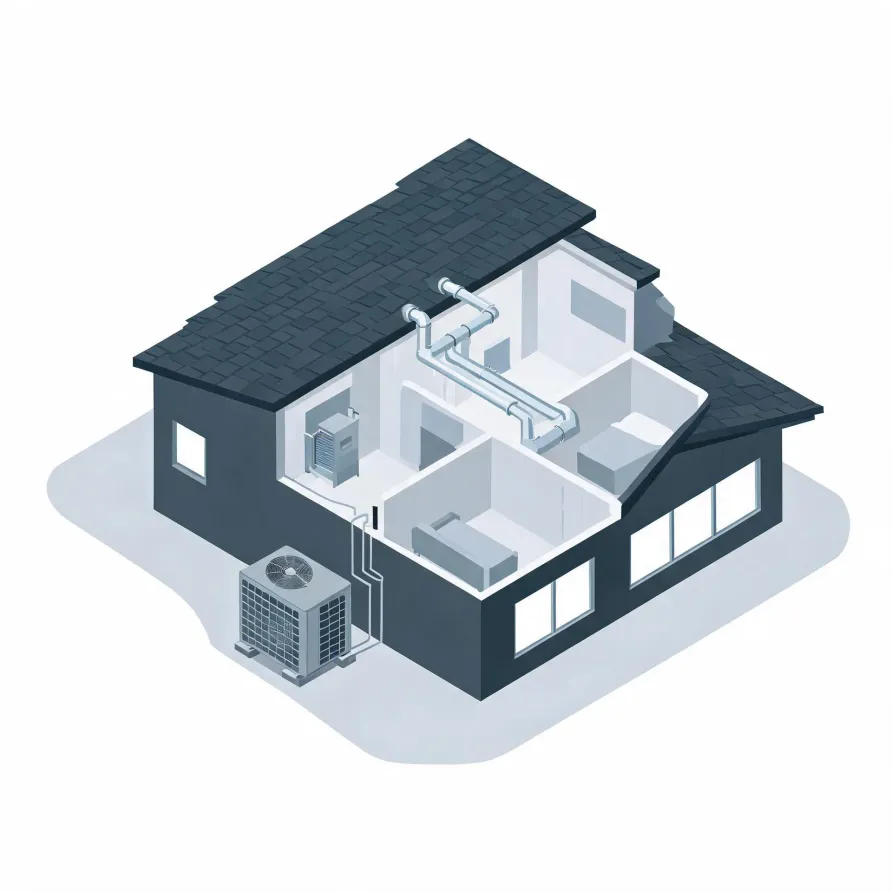
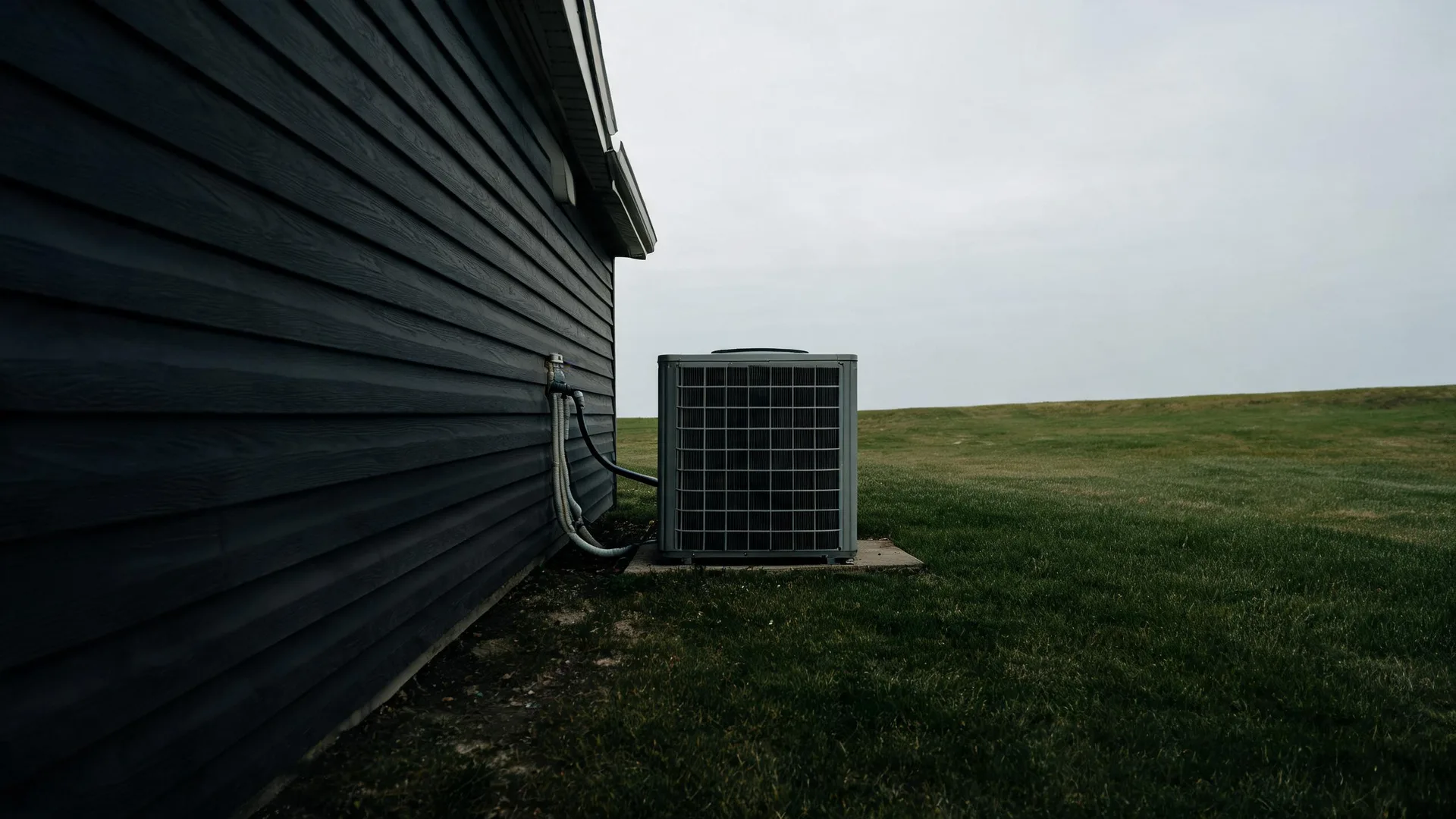
The outdoor condenser unit sits outside the house, usually on a concrete pad at ground level, and it is where the system sheds heat to the outside air. The compressor lives inside that cabinet and is one of the first things a contractor looks at when the system is not cooling, because when it fails the whole system stops. The refrigerant lines running between the outdoor unit and the indoor side carry the working fluid that makes cooling possible, and a leak in those lines shows up as poor performance or no cooling at all.
Inside the house, the air handler sits in a utility closet, basement, or attic and moves air across the evaporator coil, which is where the system pulls heat out of your indoor air. The evaporator coil and the air handler's blower motor are common trouble spots: a frozen coil, a dirty coil, or a failing blower will each produce recognizable symptoms a contractor can trace back to that piece. The expansion valve, which sits near the evaporator coil and controls refrigerant flow, is another component a contractor checks when pressures read off.
The drawing shows the general layout of a central AC system, and a licensed contractor determines which components and conditions apply to your particular house.
Find a contractor in Bayfield CountyBayfield County, by the numbers
153 severe weather events were recorded in Bayfield County, Wisconsin between 2015 and 2024.
NOAA National Centers for Environmental Information, Storm Events Database, bulk CSV export, events 2015-01-01 through 2024-12-31.Half the homes in Bayfield County, Wisconsin were built in 1982 or earlier (2020-2024 ACS 5-year).
U.S. Census Bureau, 2020-2024 American Community Survey 5-Year EstimatesBayfield County, Wisconsin holds 13,356 housing units (2020-2024 ACS 5-year).
U.S. Census Bureau, 2020-2024 American Community Survey 5-Year EstimatesOwners occupy 83.9% of the occupied homes in Bayfield County, Wisconsin (2020-2024 ACS 5-year).
U.S. Census Bureau, 2020-2024 American Community Survey 5-Year EstimatesCodes & Standards Governing Central AC Repair in Bayfield County, Wisconsin10 sourced rules and standards
What HVAC Repair Looks Like in Bayfield County
Split-system central air conditioners rated below 45,000 Btu/h manufactured on or after January 1, 2023 must meet a federal minimum of 13.4 SEER2.
Split-system central air conditioners rated at or above 45,000 Btu/h manufactured on or after January 1, 2023 must meet a federal minimum of 13.4 SEER2.
Split-system central air conditioners manufactured between January 1, 2015 and December 31, 2022 had to meet 13 SEER, the metric that preceded SEER2.
Single-package central air conditioners manufactured on or after January 1, 2023 must meet a federal minimum of 13.4 SEER2.
Space-constrained central air conditioners manufactured on or after January 1, 2023 must meet a federal minimum of 11.7 SEER2.
Federal efficiency standards for split-system central air conditioners and heat pumps are set on each certified combination of outdoor unit and indoor coil rather than on the outdoor unit alone.
Residential and light commercial air conditioning and heat pump systems assembled in the field, including mini-splits and unitary systems, may not be installed on or after January 1, 2025 using a refrigerant with a global warming potential above 700.
A field-assembled system whose specified components were all manufactured or imported before January 1, 2025 carries no installation compliance date under the refrigerant restrictions and may still be installed.
Licensing Rules for HVAC Repair in Bayfield County, Wisconsin
A Wisconsin business that employs a certified HVAC qualifier is a certified HVAC business, and no city or county may require it to hold a local certification or licence on top of that.
Wisconsin requires a state HVAC contractor registration: no person or business may install or service heating, ventilating or air conditioning equipment, or offer to, without one.
Severe Weather Events in Bayfield County
Extreme weather puts real strain on central AC systems, cycling them hard through heat spikes and power fluctuations that add up over time. Repair needs in Bayfield County reflect local conditions, and the chart below gives that context a concrete shape.
153 severe weather events, 2015–2024. Source: NOAA National Centers for Environmental Information, Storm Events Database.