Skip calling around to set up an air conditioner tune-up.
On a hot, sticky Wisconsin day, your air conditioner should run long stretches, sometimes close to the whole afternoon. That's normal when it's humid out and the sun's been on the house for hours. What's not normal is when it runs that long and the house still feels warm, or when it never shuts off at all, even overnight.
A system that runs nonstop and isn't keeping up is telling you something. It could be low on refrigerant, or the coil could be iced over, or it could just be too small for the house it's cooling. Figuring out which one takes someone who actually opens the cabinet and checks, not a guess over the phone.
That's where most homeowners get stuck. You end up searching for AC companies, calling a few, trying to describe what the unit sounds like or how long it's been running, then waiting on quotes that are hard to compare because each contractor looked at something different, or didn't look at all.
This page connects you with a contractor local to Wisconsin, someone who services this kind of equipment through every stretch of hot, humid weather here and has seen what usually gives out first in homes like yours. It's one contractor, not a handful of sales calls competing for your business. You explain the problem once, and the person who shows up already has the context.
Below, you'll find what actually affects how long your AC should run on a day like today, and what it means if yours is running longer than that.
How long should my AC run on a really hot day in Wisconsin?
It's one of those July afternoons where the air outside feels like a wrung-out towel, and your AC seems like it never shuts off. You're not sure if that's the unit working the way it should or straining to keep up. Before you start worrying about the compressor or the electric bill, you want to know what's actually normal for a day like this in Wisconsin.
An hour or more at a time is normal on a hot, humid day
When it's 85 or 90 outside and the humidity is thick, your air conditioner has to pull a lot of heat out of the house, and it has to run long enough to pull the moisture out too. A unit that's sized right for your house will often run for an hour or more straight through the hottest part of the afternoon, then shut off for a while once the house catches up. That's the system doing its job, not struggling. What matters more than the runtime itself is whether the house actually cools down and whether the air coming out of the vents feels cold. If it runs long and the house still feels warm and damp, that's worth a second look.
Running long but keeping up
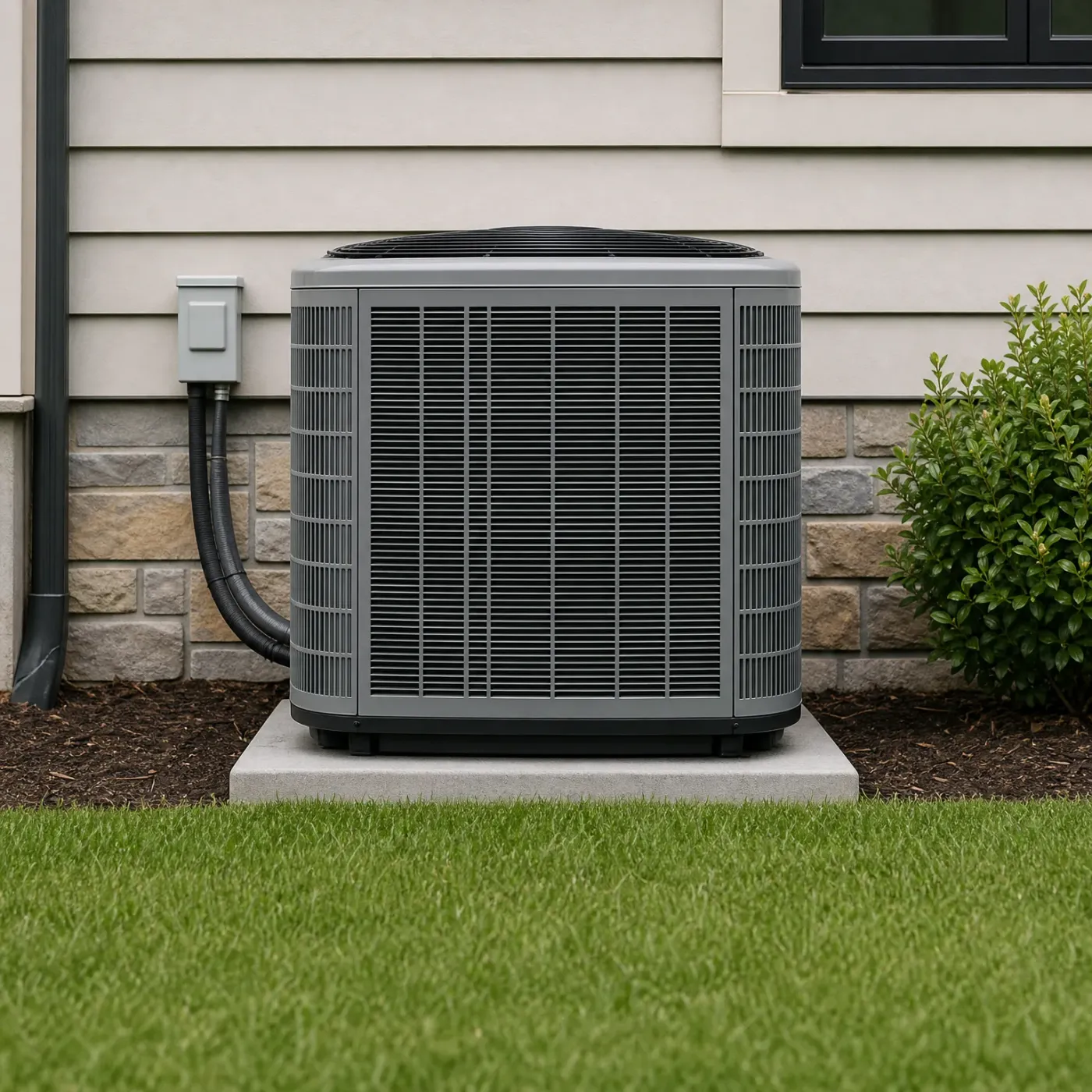
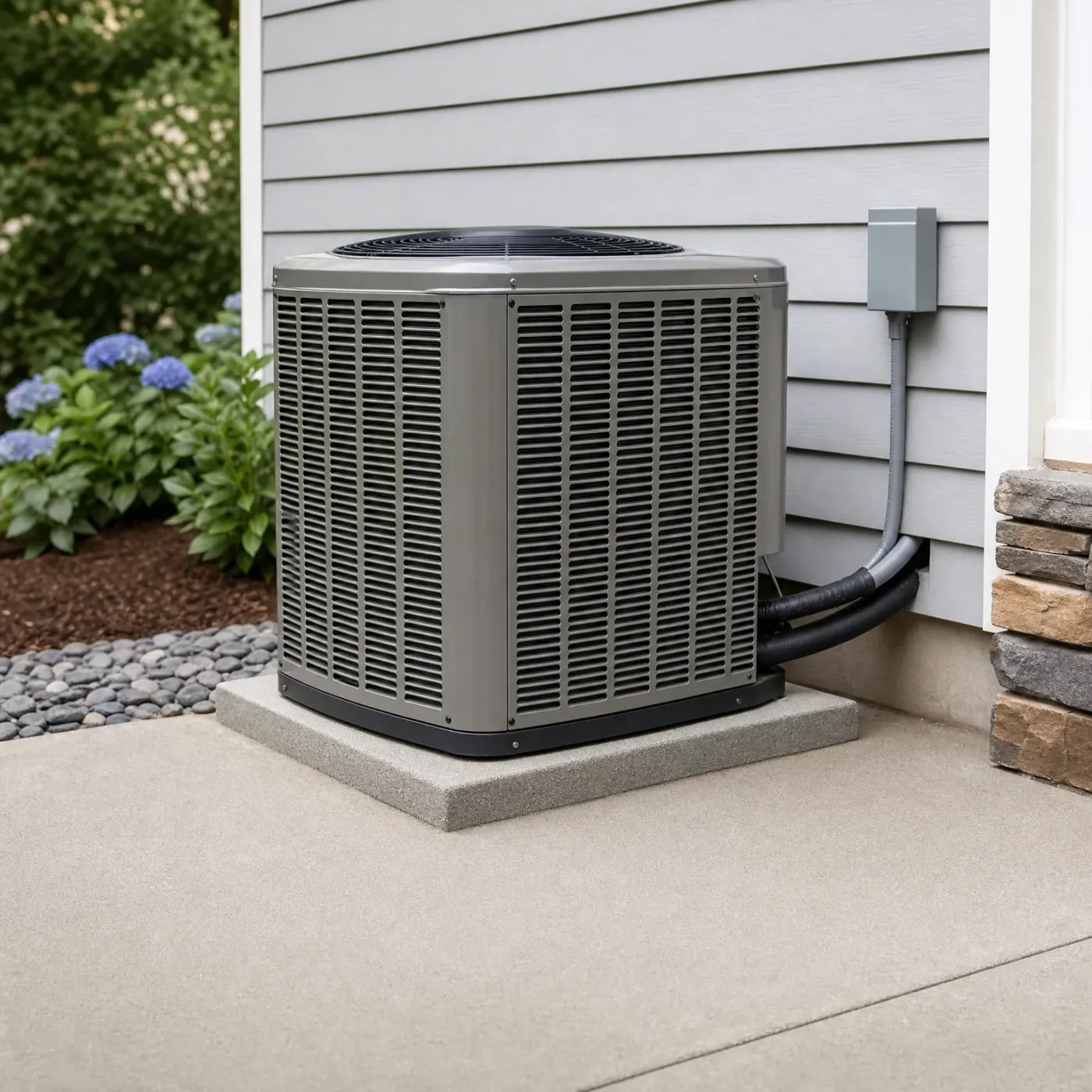
If the air coming off the registers is cold and the house is holding close to your setting, a long run is just the unit doing its job on a tough day. The cabinet stays clear, the shrub next to it gets trimmed back, and air moves through the fins without trouble.
Running long and losing ground
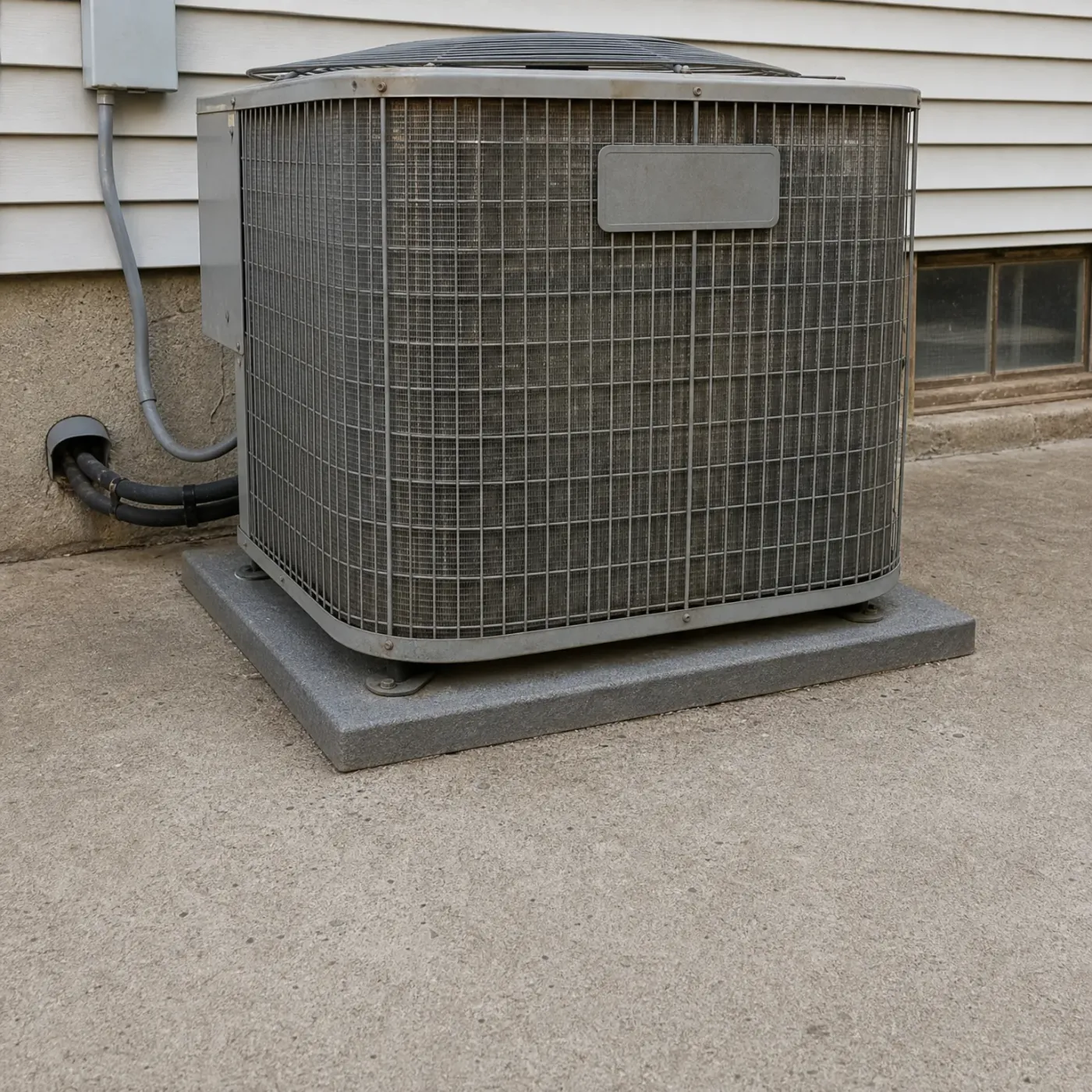
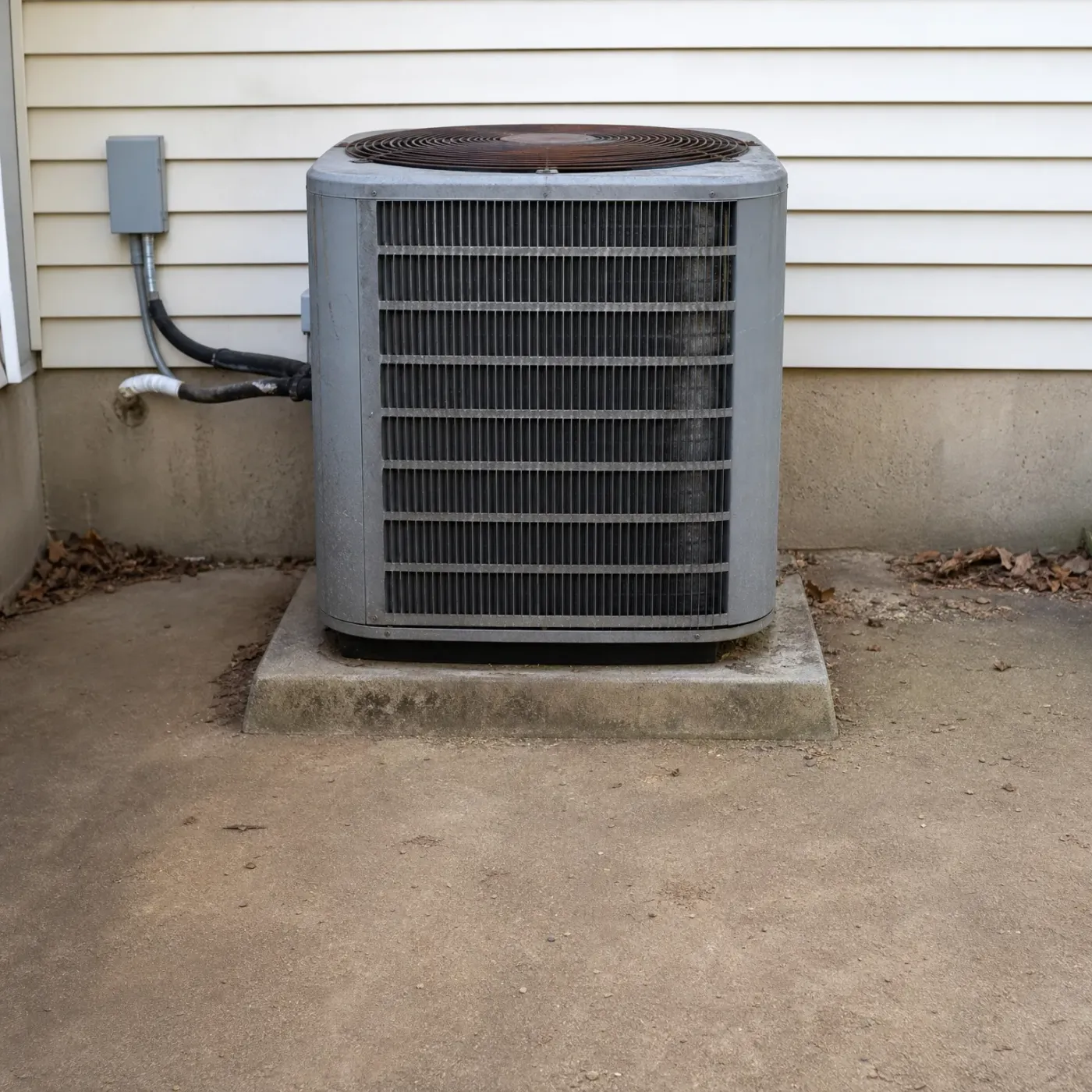
Dust caked across that wire mesh blocks the airflow the unit needs to dump heat outside. It keeps running, the house still climbs a degree or two past your setting, and the condenser works harder for less cooling. A coil that dirty usually means it's been a while since anyone cleaned it.
Why does my house still feel warm with the AC running nonstop
You walk past a vent and the air feels weak, or barely cool. The thermostat says 74 but your upstairs feels more like 80. Maybe you notice the unit outside running when you leave for work and it's still running when you get home. Sometimes there's a smell, something musty near the vents, or a hissing sound from the outdoor unit that wasn't there last summer. None of that is just bad luck on a hot day. A system that can't catch up is working harder than it should, and that shows up on your power bill before it shows up as a real breakdown. Left alone through a few more muggy stretches, the strain tends to land on the same parts each time, the ones that were already working too hard to begin with.
A unit that runs most of the afternoon and still keeps the house comfortable is doing what it's built to do on a humid Wisconsin day. One that strains and loses ground usually has a reason, and most of those reasons show up during a maintenance visit before they turn into a breakdown in August. A dirty coil, a low charge, a blower that's lost some of its pull. These get worse quietly, and the only way to catch them is to have someone look. Finding that someone is its own chore. You'd normally be searching listings, calling a few companies, describing the same symptoms three times over, then waiting on quotes to compare. This page skips that. The request goes to one licensed contractor working in your area, someone who services this kind of equipment all summer and has a good sense of what tends to fail in a Wisconsin house after weeks of heat and humidity. With power costs what they are here, a unit that's falling behind is worth having checked before it runs any longer than it has to.
Why humidity adds to the run time
Your AC does two jobs at once. It pulls heat out of the air and it pulls moisture out too, and that second job doesn't show up on the thermostat. On a dry 85 degree day the unit cools the house and shuts off. On a muggy 85 degree day it keeps running because the air keeps carrying in moisture for it to wring out, even after the house hits your setpoint. That's why the same outdoor temperature can mean a 20 minute cycle one day and a 2 hour cycle the next. Wisconsin summers bring enough sticky stretches that long afternoon runs are routine, not a sign anything's off.
What a dirty coil does to that runtime
The outdoor unit has a coil wrapped around it that has to shed the heat pulled from your house into the outside air. When that coil is caked with cottonwood fluff, grass clippings or a season of dust, it can't let go of heat as fast. The compressor keeps running to make up for it, so a cycle that should've ended in 40 minutes stretches to 90. A technician cleaning that coil during a maintenance visit restores the airflow it needs. It's one of the most common reasons a unit runs long on a day that isn't even the hottest one of the summer.
Before you get your air conditioner maintenanceAfter you get your air conditioner maintenance
Summer air in Wisconsin carries a dew point that averages 60°F across June, July and August, measured over the parts of the state where people actually live. That's the sticky range, the kind of air that feels heavy even when the temperature itself isn't extreme. Your AC has to wring that moisture out before the house feels dry and comfortable, and that work doesn't show up on the thermostat at all. It shows up in how long the unit runs. A dew point in the 60s is enough to keep the system cycling for hours at a stretch on a sunny afternoon, pulling water out of the air the whole time, even after the temperature itself has leveled off.
NASA POWER T2MDEW county cells weighted by homes
A long run time on a hot, muggy day is just your AC working through heavy air. A long run time with a warm upstairs, weak airflow, or a unit that short cycles is your AC telling you something is wrong, and that's worth a look before the next heat wave. Most of what causes that gets found during a maintenance visit, the kind where someone checks the charge, the coil, the airflow, and the things you can't see from the thermostat. A contractor who works on Wisconsin systems all summer has likely already seen whatever your unit is dealing with, in a house down the street or one just like yours. You'll talk to one licensed local contractor about your system, not a handful of companies competing for your callback. Your AC should run long on a day like this. It shouldn't run long and still lose.