





An outdoor air conditioning condenser unit on a concrete pad beside a house with stone veneer and vertical board siding, with a small shrub and mulch bed lit by a ground light at dusk.

Get your air conditioner to the right pro

How to get your AC ready for a Wisconsin summer

Getting your AC ready for summer means knowing what to check before the first humid stretch hits, from the condenser outside to the airflow inside. This page walks through what that involves. If you'd rather skip the research and the round of phone calls, you can get matched with a contractor who'll reach out about your system directly.

Match me with a pro

Getting your AC ready for a Wisconsin summer means having it looked at before the heat and humidity set in, not after. A central air system that sat idle all winter can have a dirty condenser coil, a low refrigerant charge, or a clogged filter choking airflow, and none of those show up until the first ninety-degree day when you need the system most. By then the air is already heavy and sticking to everything, and a unit that's struggling just keeps the house warm and your power bill climbing with it, since electricity here isn't cheap. A technician checking the system now catches a weak capacitor or a coil caked with a winter's worth of dust while it's still an easy fix, not an emergency one. Most Wisconsin homes run gas heat, so the AC is the one system here that depends entirely on being ready to run hard, right away, the first humid week it's needed.

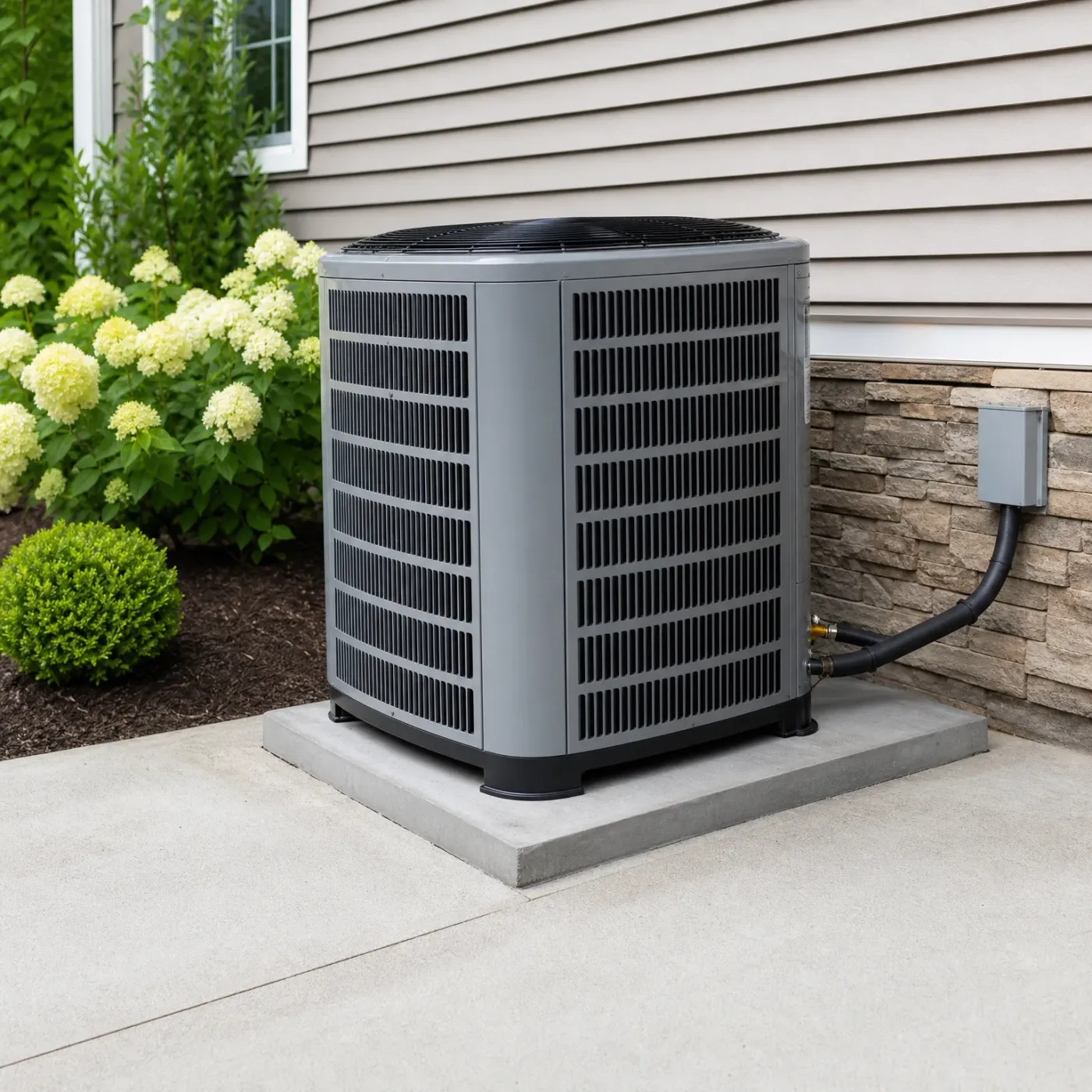
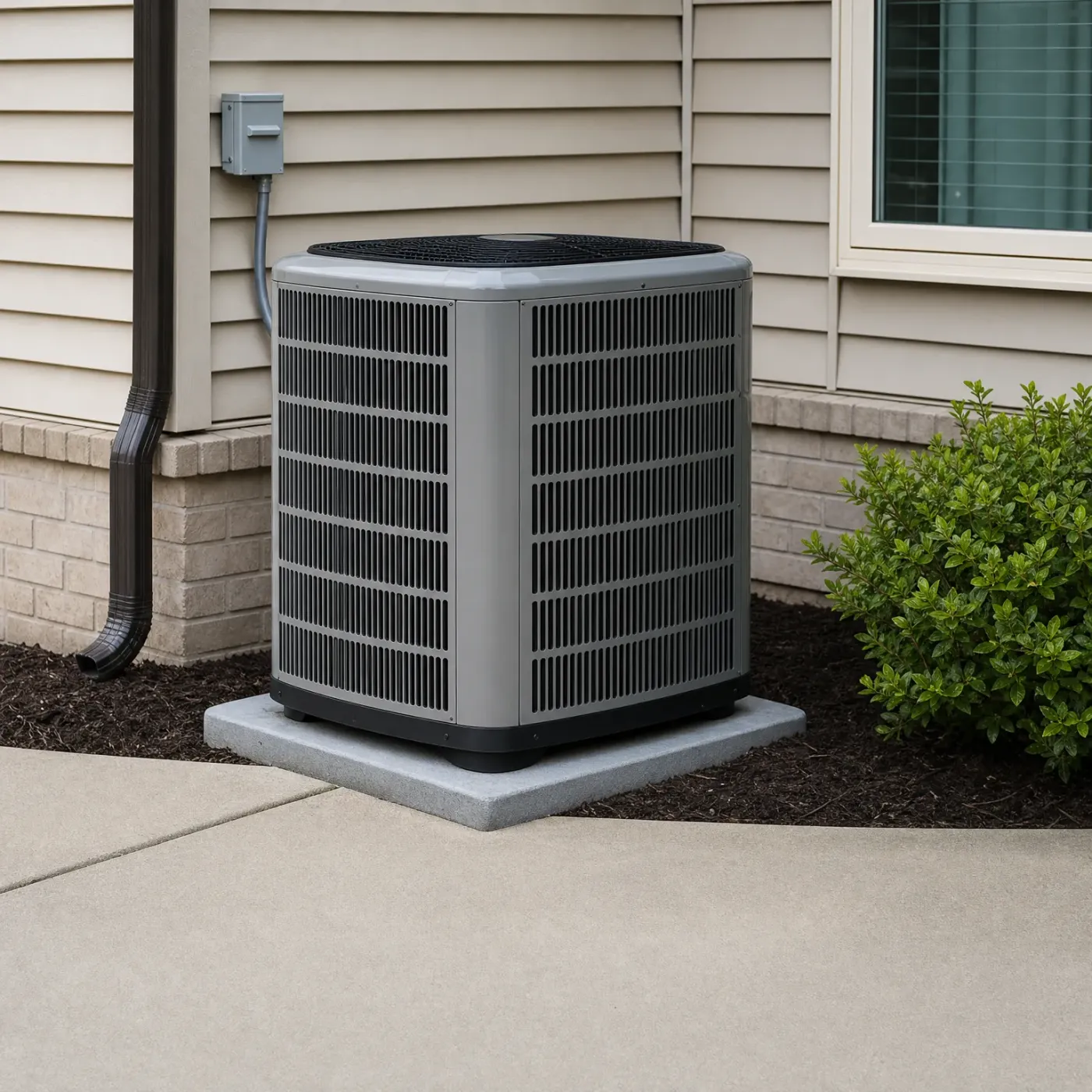
A gray outdoor air conditioning condenser unit on a concrete pad beside a house with horizontal vinyl siding, a brick foundation, downspout, electrical disconnect box, mulch bed and a green shrub.
A clean condenser like this one moves heat outside the way it's supposed to, with nothing blocking the fins.
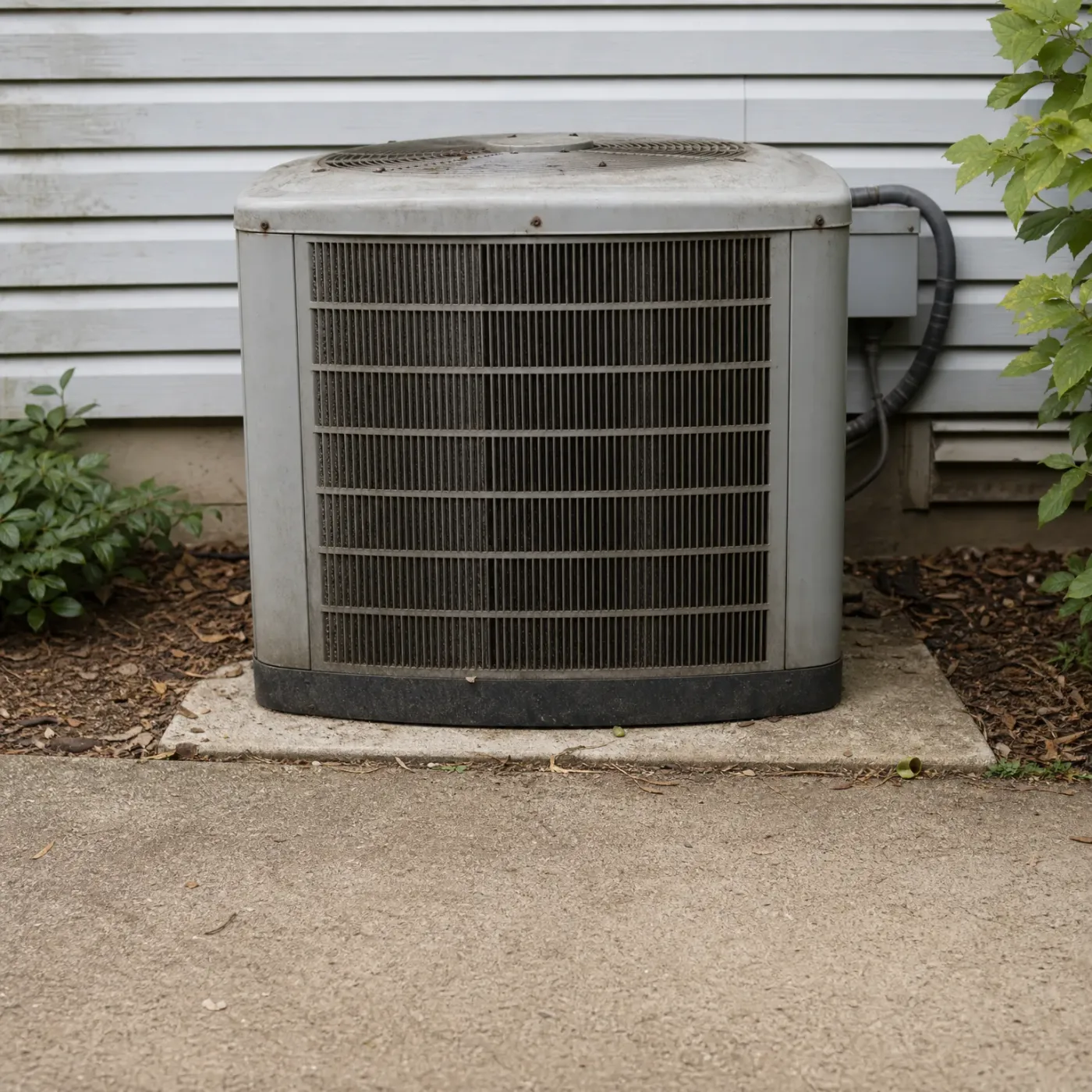
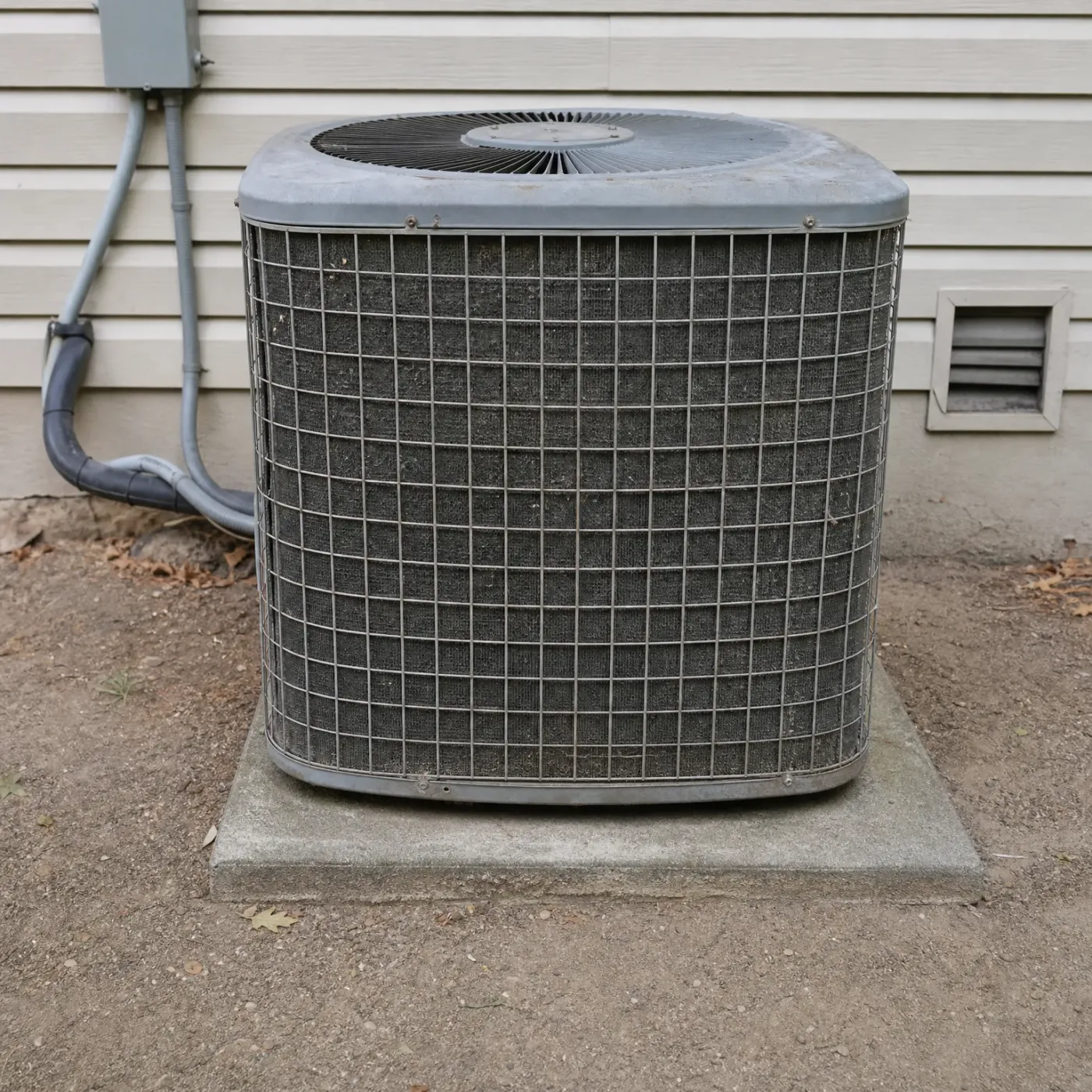
An outdoor air conditioning condenser unit with a dirty mesh coil guard sits on a concrete pad beside a house with horizontal lap siding, a wall vent, and conduit running to an electrical disconnect box.
A coil caked in dirt like this makes the system work harder and can leave a room short of cool air on a humid day.

The outdoor unit and the indoor coil work as one system, and each piece depends on the one before it. Outside, the fan pulls air across the condenser coil to release the heat the system collected indoors, so anything crowding that cabinet, like leaves, mulch, or a fence built too close, makes the whole system work harder. Inside, the evaporator coil is where the cooling actually happens, and it needs steady airflow moving across it to pull heat out of the house. A weak capacitor can leave the compressor or fan motor humming without starting, or cause the unit to shut off on its own partway through a run. Refrigerant is a closed loop. It doesn't burn off or wear out, so a system running low almost always means a leak somewhere in the coil or the line set. Even the condensate line plays a part. It carries moisture off the evaporator coil, and when algae clogs it, some systems shut down rather than risk an overflow. Setting the thermostat lower than you want it doesn't speed any of this up. The system still moves heat out at the same pace.

What's Actually Happening Inside the Unit

  • The outdoor condenser fan pulls air through the coil fins and pushes it up and out, and anything blocking the sides, like leaves or a fence too close, cuts that airflow down.
  • Refrigerant doesn't get used up like fuel, so a system low on charge almost always has a leak somewhere in the line set or the coil itself.
  • The indoor evaporator coil is where the actual cooling happens, and it can only pull heat out of the air if the airflow across it is strong enough.
  • A capacitor gives the compressor and fan motors the jolt they need to start, and a weak one can let the unit hum without starting or shut off on its own.
  • Condensate from the evaporator coil drains out through a small PVC line, and when that line clogs with algae, the system can shut itself off to avoid an overflow.
  • The thermostat's low setting doesn't make a home cool faster, since the system moves heat out at the same rate no matter where the dial is set.
An older woman with gray hair in a cream knit sweater sits under a blanket on a sofa by a window, looking outside toward yellow-leaved trees, with a lamp, shelves and an armchair in the room behind her.
A gray-haired woman in a chunky knit sweater sits in an armchair with a blanket, looking out a window at yellow autumn foliage, with bookshelves and a potted plant behind her.
A gray-haired woman in a navy sweater sits in an armchair with a knit blanket beside a window, looking out at yellow autumn foliage, with a dining table and houseplant in the room behind her.
A gray-haired woman in a gray cowl-neck sweater sits in an armchair with a blanket, looking out a dark-framed window toward yellow autumn trees.

Why the condenser sits outside

The condenser pulls heat from inside your house and releases it to the air outside, through the coil and the fan on top. For that to happen, the coil needs clear airflow on all sides. Mulch beds, overgrown shrubs, or a fence built too close all cut into that airflow, even when the unit itself is in good shape. Wisconsin winters often leave built-up leaves and yard debris packed against the fins by spring, work the snow and wind did without anyone noticing. A quick look at the unit before the first warm week tells you whether it's clear or whether something's been pressed against it all winter, choking off the air it needs to move.

What low refrigerant actually means

Refrigerant doesn't get used up the way gas does in a furnace. A system that's low on charge has a leak somewhere in the line, and running it that way doesn't fix itself with time. It shows up as a system that runs longer than it used to and still leaves rooms warmer than the thermostat setting. In humid weather that gap is more noticeable, since a system struggling to remove heat struggles to pull moisture out of the air too. Catching this before the first hot stretch means a contractor can find the leak and recharge the system before you're relying on it every day to keep the house livable.

A woman in a cream knit sweater sits in an armchair with her eyes closed near a window showing yellow autumn foliage, with a mug on a round wooden side table beside her.
A gray-haired man with a beard in a blue button-placket shirt reclines on a couch with his eyes closed, beside a sunlit window with a green plant.
A gray outdoor air conditioning condenser unit on a concrete pad beside a house with light horizontal siding, with a mulched planting bed and lawn to the left.

The right pro for this job

Fill out one form instead of calling around for an air conditioner tune-up.

A local pro who services air conditioners gets in touch about the tune-up.

Skip the calls

You're not committing to anything by asking.

Tune Up Now or Wait for the Heat

Spring tune-up

  • A contractor checks the refrigerant charge now, while the system can still be adjusted before the heat arrives.
  • Coil cleaning happens on your schedule, not squeezed in during a stretch of 90-degree days.
  • Catching a worn capacitor or a dirty coil in May means it gets fixed before it causes a breakdown in July.
  • You pick the appointment time instead of waiting for whatever slot is open during a heat wave.
  • If a part needs ordering, there's time for it to arrive before you actually need the system running hard.

Waiting until summer

  • Every AC owner in Wisconsin has the same idea once it hits 85 degrees, so appointments book out further.
  • A system that's been struggling quietly all spring often fails outright on the hottest, most humid day.
  • A breakdown in July means days without cooling while you wait for a contractor to fit you in.
  • Problems that would've been a simple adjustment in April can turn into a bigger repair after weeks of running strained.
  • You're troubleshooting under pressure, with a house already warm and sticky, instead of planning ahead with time to spare.
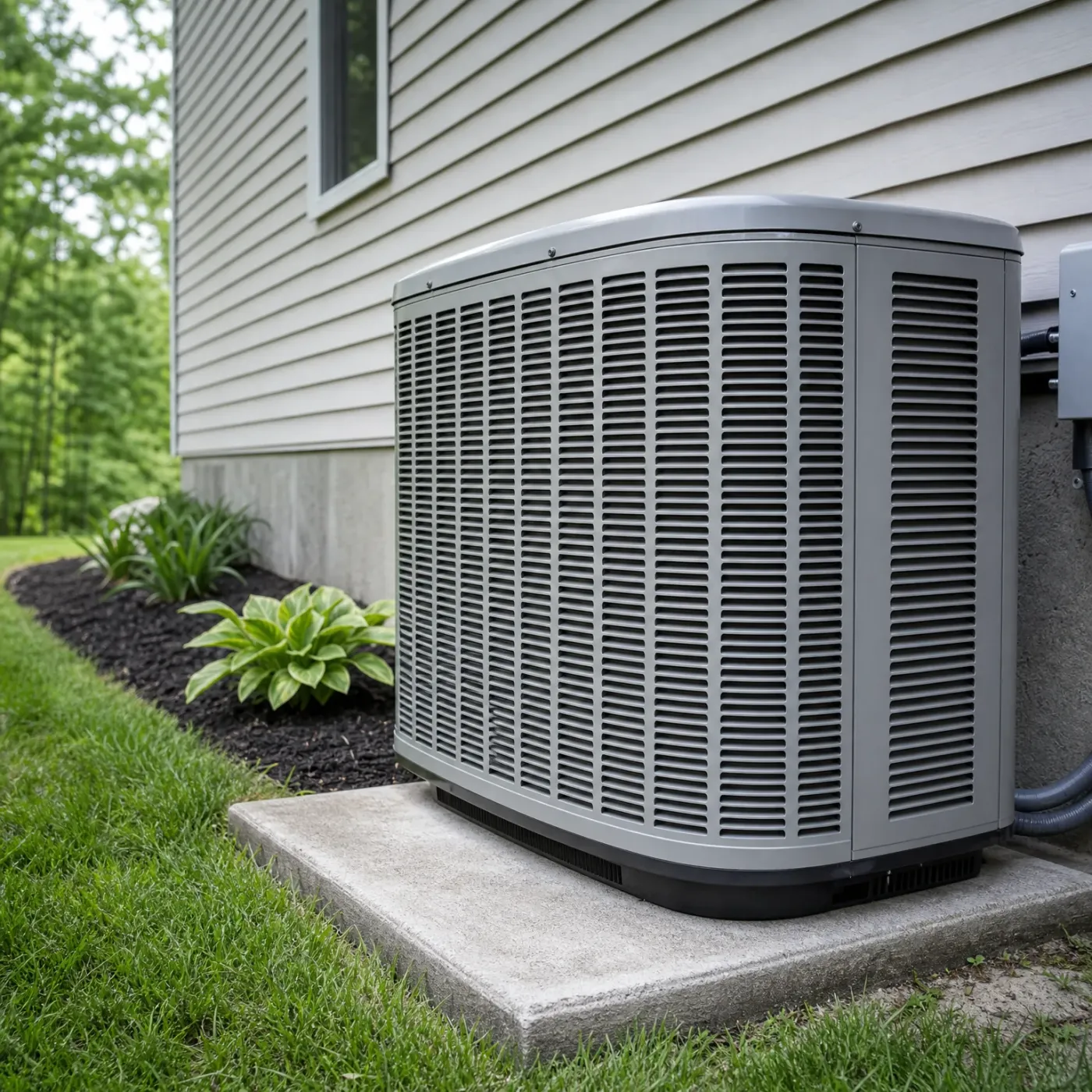
An outdoor air conditioning condenser unit on a concrete pad beside a house with horizontal lap siding, with a gray electrical disconnect box and conduit on the wall, mulch bed and shrub to the right, and mown grass in the foreground.

Running clean

This is what a condenser should look like before the humid stretch hits: metal fins open to the air, nothing piled against the sides. Air passes through the coil and the fan pushes the heat out, the way the system is built to work. A unit kept clear like this holds its charge and its airflow all summer.
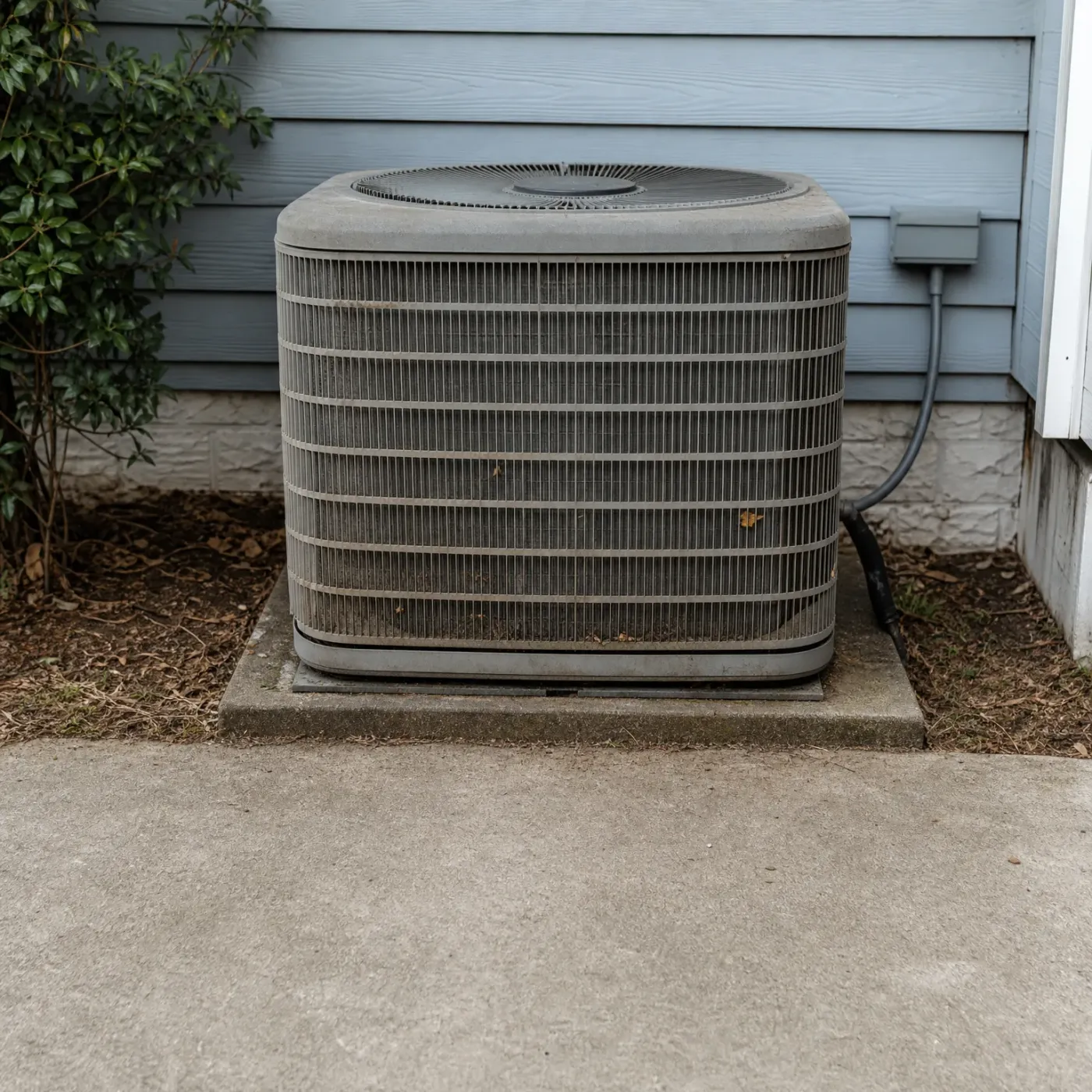

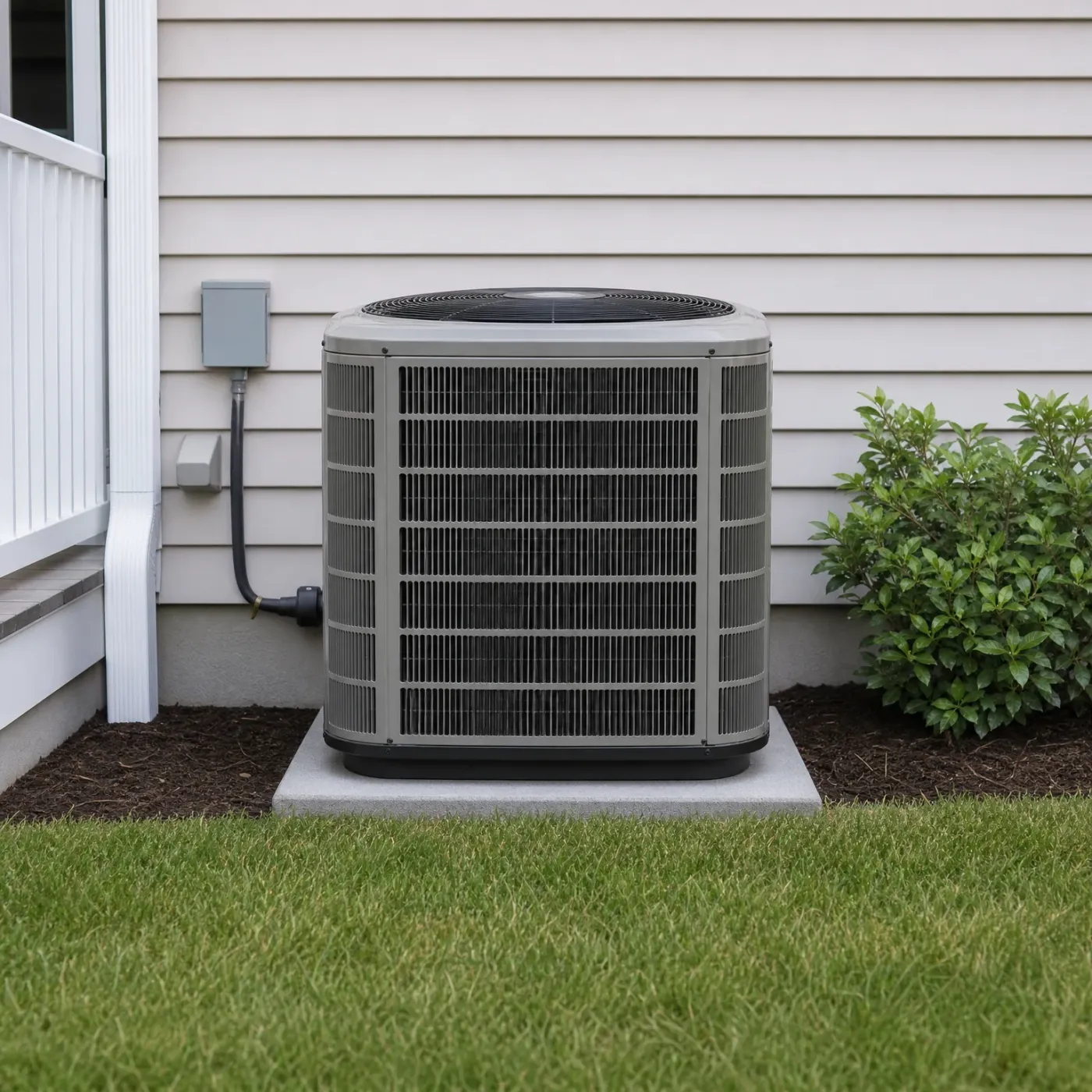
An outdoor air conditioning condenser unit on a concrete pad beside a house with light blue horizontal siding, with a shrub to the left and a conduit and disconnect box on the wall to the right.

Choked with debris

This one is coated in dust across the coil guards, and that buildup blocks the airflow the coil needs to release heat. A condenser left like this through a Wisconsin winter runs harder for less cool air once summer turns muggy. A contractor can clean the coil and check what the buildup may have strained.

Has your AC been running since last September?

If nobody has looked at your system since last summer, you won't know there's a problem until it's 85 degrees and humid and the house isn't cooling down. A room that takes longer to cool than it used to, a unit that runs most of the afternoon without the house feeling any different, or air from the vents that feels weaker than you remember are all signs the system has been losing ground quietly. None of that shows up in January. It shows up the first week you actually need the system to keep up, and by then a dirty coil or a low charge has had all winter to sit untouched.

A two-story cream-colored house with horizontal siding and a gray hipped roof, flanked by large green trees and shrubs, with a concrete walkway crossing a lawn to a wet street in the foreground.

Wisconsin summers average a dew point of 60°F across June, July and August, according to NOAA climate data for the state. That's the number that decides how heavy the air actually feels, more than the temperature on its own. For your air conditioner, that moisture means it's not just cooling the house, it's pulling water out of the air at the same time, through the evaporator coil inside. A system low on refrigerant or short on airflow struggles more with that part of the job, and you'll notice it as a house that feels cool enough by the thermostat but still sticky. That's usually the coil or the charge falling behind the humidity, not just the heat.

NASA POWER T2MDEW county cells weighted by homes

An outdoor air conditioner condenser unit on a concrete pad beside a house with light gray horizontal siding, with mulch and green shrubs on either side and a concrete walkway in the foreground.
Before you get your air conditioner maintenance
A gray outdoor air conditioning condenser unit on a concrete pad beside a house with horizontal siding and a stone veneer base, with refrigerant line and electrical disconnect box on the wall and flowering shrubs to the left.
After you get your air conditioner maintenance

Calling around on your own

Finding someone to look at your AC usually starts with a search, then a handful of calls to see who even answers. Each contractor wants the same details: the age of the unit, what it's doing, whether it's gas or electric backup. You compare quotes that aren't quite for the same scope of work, and you're the one keeping track of who said what. By the time someone's scheduled, you've spent evenings on this instead of anything else.

Getting matched instead

You answer a few questions about your system once. That goes to a contractor who takes on work like yours, and they're the one who calls you, not the other way around. No sorting through listings, no repeating your situation to the third person who picks up. What it costs and how soon they can get to you is between you and them once you're on the phone, but the part where you track down who's even available is already done.

Power costs 18.08 cents per kilowatt-hour statewide

At 18.08 cents a kilowatt-hour, a system running harder than it needs to shows up fast on your bill. A dirty coil or low airflow makes the compressor work longer to cool the same room, and you pay for every extra minute it runs.

EIA-861 2025 statewide residential average

  1. A contractor checks the refrigerant charge against the system's specs.

  2. The condenser coil gets cleared of dirt, leaves, and debris.

  3. The blower and ducts get checked for airflow reaching every room.

  4. Electrical parts like the capacitor and contactor get tested under load.

A man in a dark blue shirt stands in an open front doorway of a stucco and wood-clad house, facing a blond woman seen from behind in the foreground on a stone walkway.

Your AC has a job to do before July gets here

A system that's been sitting since last September either moves heat the way it should or it doesn't. Nothing in between. A clear coil, the right refrigerant charge, and airflow reaching every room is the whole answer to what gets your AC ready for a Wisconsin summer. Everything on this page comes back to that.

You don't have to be the one who finds out who checks that and gets it scheduled before the first sticky week. Getting matched with a contractor who takes on what your system needs means you make one call instead of several, and the contractor reaches out to you from there. Where you stand once that happens is simple: someone qualified looking at your unit before the heat decides for you.

Interior corner of a living room with a beige upholstered sofa and dark cushion in the foreground, a ceramic vase of leafy branches on a dark side table by a curtained window, a framed picture on the wall, and a wood-surround fireplace at right.
An outdoor air conditioner condenser unit sits on a concrete pad beside a house with horizontal siding and stone veneer, next to mulch, shrubs, and grass.

Matched to your air conditioner job

Step 1 of 3: Equipment