60°F
That's the average summer dew point here. Your AC has to wring that moisture out of the air before the house even starts to feel cool, and a dirty coil slows that down.
Let someone else find the pro
Power rates in Wisconsin aren't cheap, and a muggy summer can run your air conditioner nonstop. A unit that's low on refrigerant or clogged with a dirty filter works harder and costs more to run. This page gets into what maintenance actually does for your bill, and what to check first. Skip calling around for a contractor yourself. Send the form and let someone come to you.
Let a pro reach outThe fastest way to lower your AC bill is to get the unit running the way it's supposed to, because most of the extra cost comes from a system working harder than it needs to. A dirty coil or a low refrigerant charge makes the compressor run longer to cool the same house, and that extra runtime is what shows up on the bill. In a Wisconsin summer, with the air already heavy outside, a struggling unit can run almost constantly through July and August instead of cycling on and off. Replacing the filter helps, but it doesn't fix a dirty coil or a fan motor pulling more power than it should. That takes someone checking the refrigerant charge, the coil, and the electrical side of the unit. Once that's done, the system stops overworking to do the same job, and the bill reflects it.





A system that's working too hard doesn't announce it. The house still cools down, just slower, and the unit runs longer stretches to get there. By the time you notice the bill, you've already paid for a few weeks of that. In a Wisconsin summer, with the humidity making the air feel heavier than the thermostat says, that long runtime is constant from June into September.
There's a risk past the dollars too. A compressor that runs under strain in July has less left in it for August, and a breakdown on the hottest week of the year means no cooling until someone can get out to you. Rather than spending evenings calling around, checking reviews, and explaining the same problem to three different contractors, you send one form and the search is off your plate.

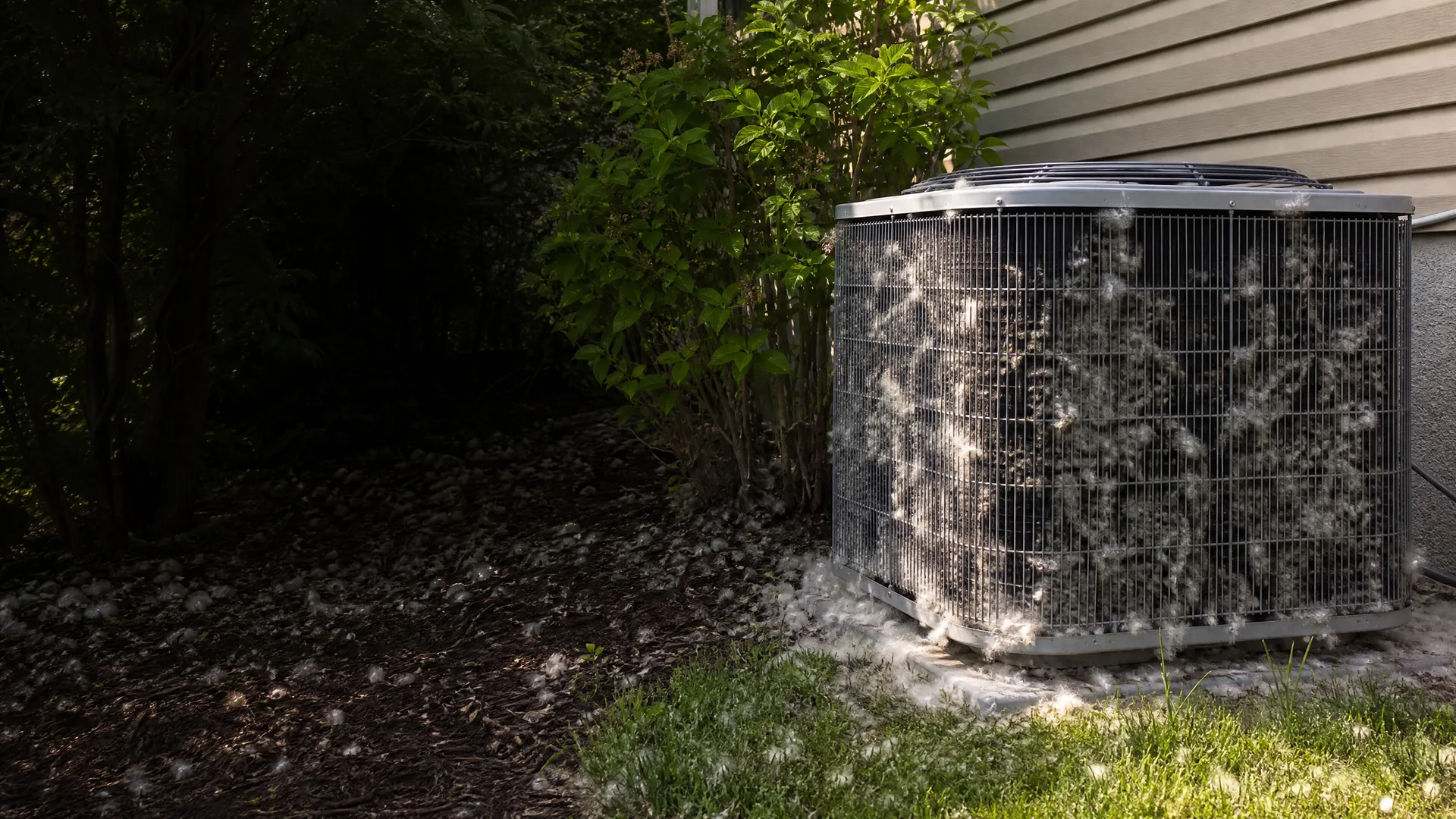
You're out pulling weeds along the side yard in late May when you notice it. The condenser's been humming all afternoon, and up close you see why it's working so hard. The fins are packed white with cottonwood fluff, the stuff that's been drifting across the yard for a week. You run a hand over it and it comes away soft and matted, like lint from a dryer trap. Behind that screen of fluff, the unit's trying to pull in air to dump the heat it's collected from your house. It can still do that. It just has to run longer to manage it, and it'll keep running longer until that fluff gets cleared off the coil.
You've heard that a dirty AC costs more to run, but it's worth knowing why. It's not just a vague efficiency thing. Something specific happens inside the unit when it's dirty, and that's what turns into higher watts on the meter.
The outdoor coil's job is to dump the heat your house just gave up. When it's coated in cottonwood fluff, dust or grass clippings, air can't move through the fins the way it should, so the coil can't shed heat as fast. The refrigerant stays hotter than it's supposed to be at that point in the cycle, and the compressor has to work against that higher pressure to keep pushing it through. That's where the extra electricity goes. A dirty filter does something similar on the indoor side, starving the system of airflow and making the blower and compressor both run longer to pull the same heat out of the house.

Wisconsin summers average a dew point of 60°F across June, July and August, according to NOAA climate data. That's the sticky range, where the air already holds a lot of moisture before your AC does anything about it. Your air conditioner has two jobs: cool the air and wring the water out of it. When the dew point sits up around 60, that second job gets heavy, and a unit that's dirty or low on refrigerant can't keep up on both at once. The house feels clammy even when the thermostat says it hit the set temperature. If that sounds like your place most afternoons, send the form and skip the part where you're the one calling around for someone to look at it.
NASA POWER T2MDEW county cells weighted by homes
You've read what a dirty coil or a low charge does to your bill by August. Knowing that doesn't fix the unit, and most people don't have a gauge to check refrigerant or the time to pull a condenser apart on a Saturday. Finding someone who will is its own chore: searching for a contractor who actually serves your town, calling around for someone who can come out this week, explaining the same thing about the fluff on the fins or the long run times to three different companies, then sitting with three quotes trying to guess which one is fair. That's hours you don't have in the middle of a sticky July. Send the form above and that search is off your plate. One contractor gets your request, already knowing what you're dealing with, and you go back to the rest of your week while your AC gets looked at instead of just run harder.
Skip maintenance, and the AC still runs. It'll cool the house on a sticky July day, mostly. But it's pulling more watts to do it, and that difference shows up on every bill from June through August, not just one.
Get it serviced, and the compressor stops overworking. The coil's clear, the charge is right, and the unit shuts off when the house hits temperature instead of grinding past it. You pay for the cooling you actually needed.
That's the average summer dew point here. Your AC has to wring that moisture out of the air before the house even starts to feel cool, and a dirty coil slows that down.
Cooling and dehumidifying both happen at the same coil. Dust or grime on it makes both jobs harder, and the compressor runs longer to finish either one.
A tech checks refrigerant charge against the system's rating.
The condenser coil gets washed clean of dirt and fluff.
The blower motor and fan get lubricated and tested.
Electrical connections and capacitor readings get checked under load.
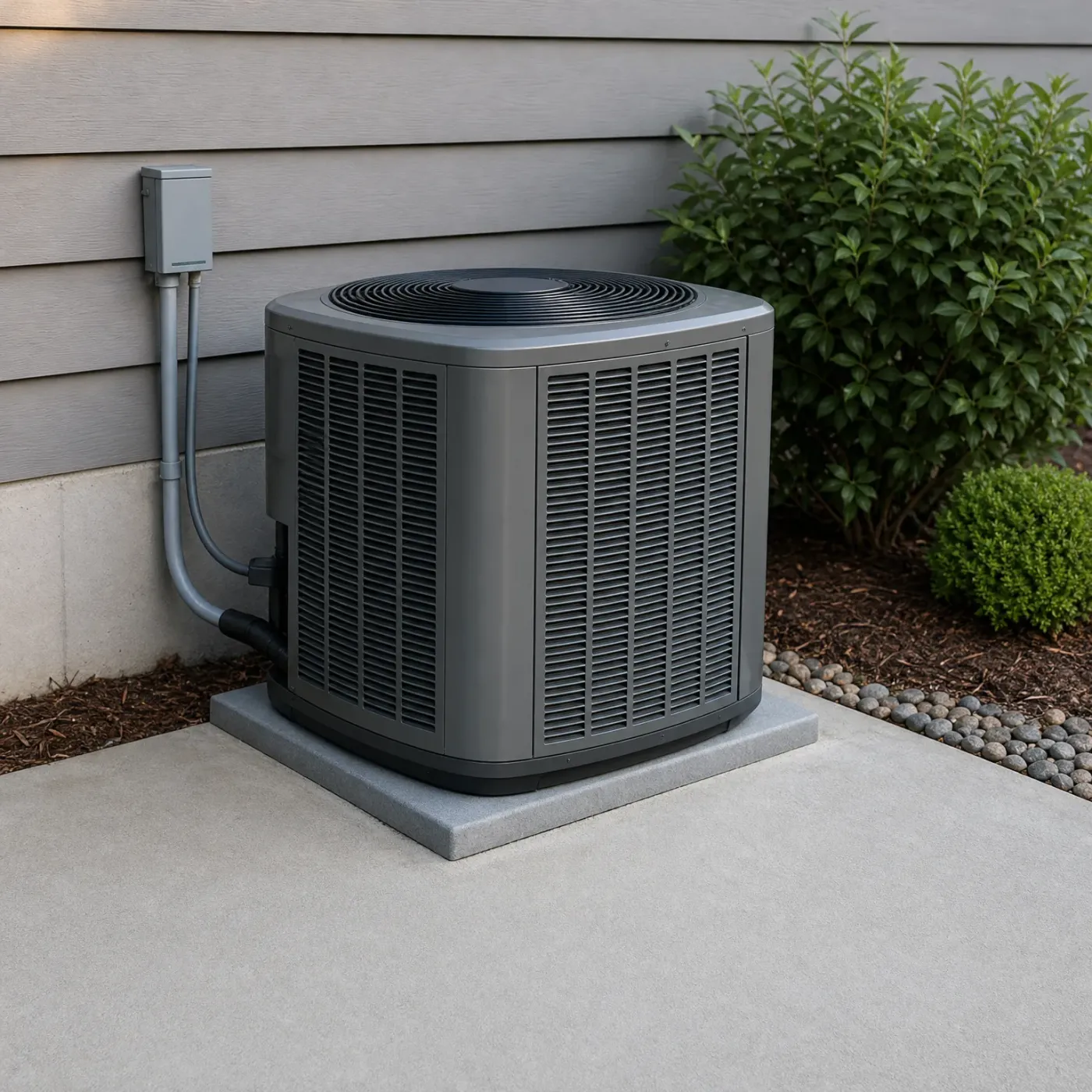
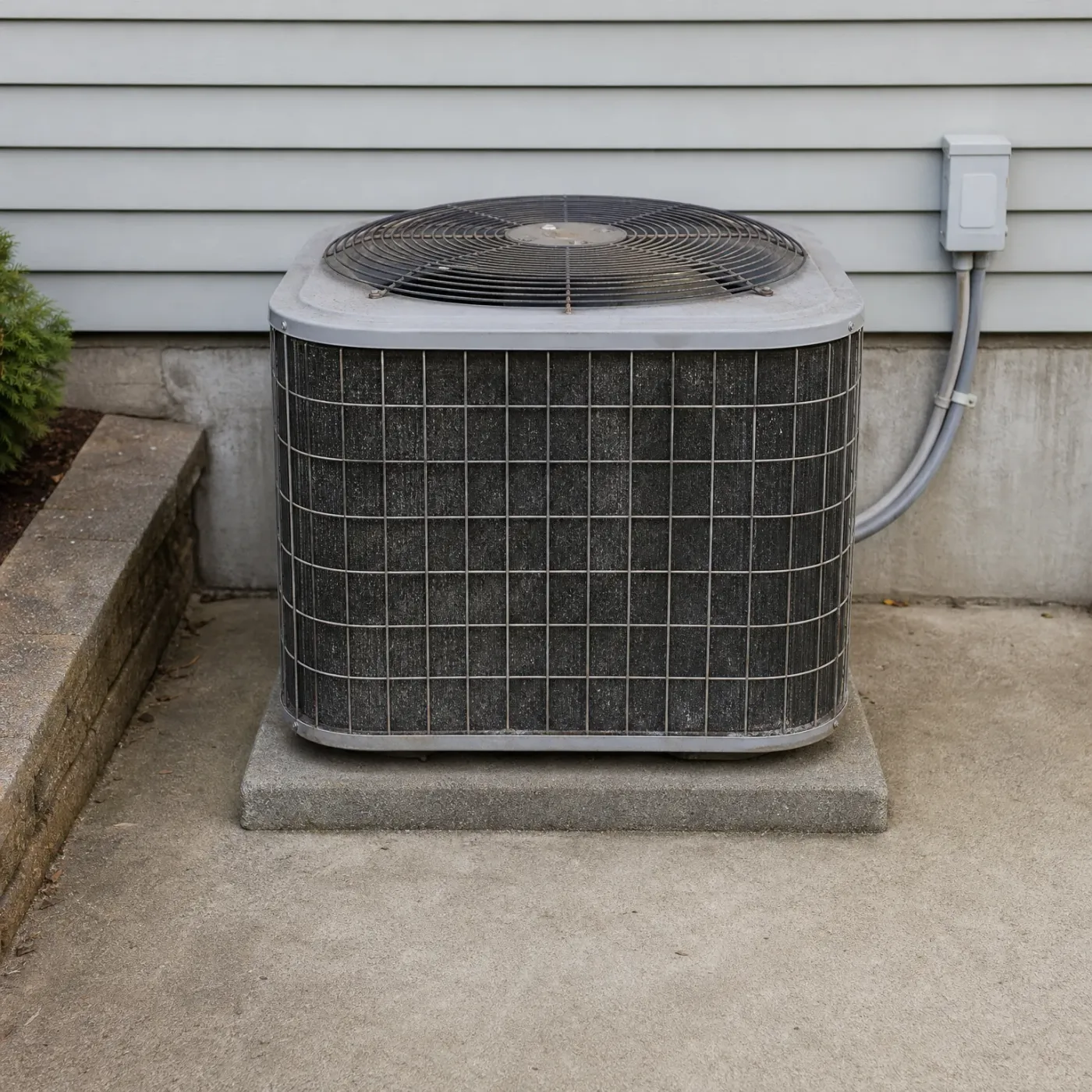


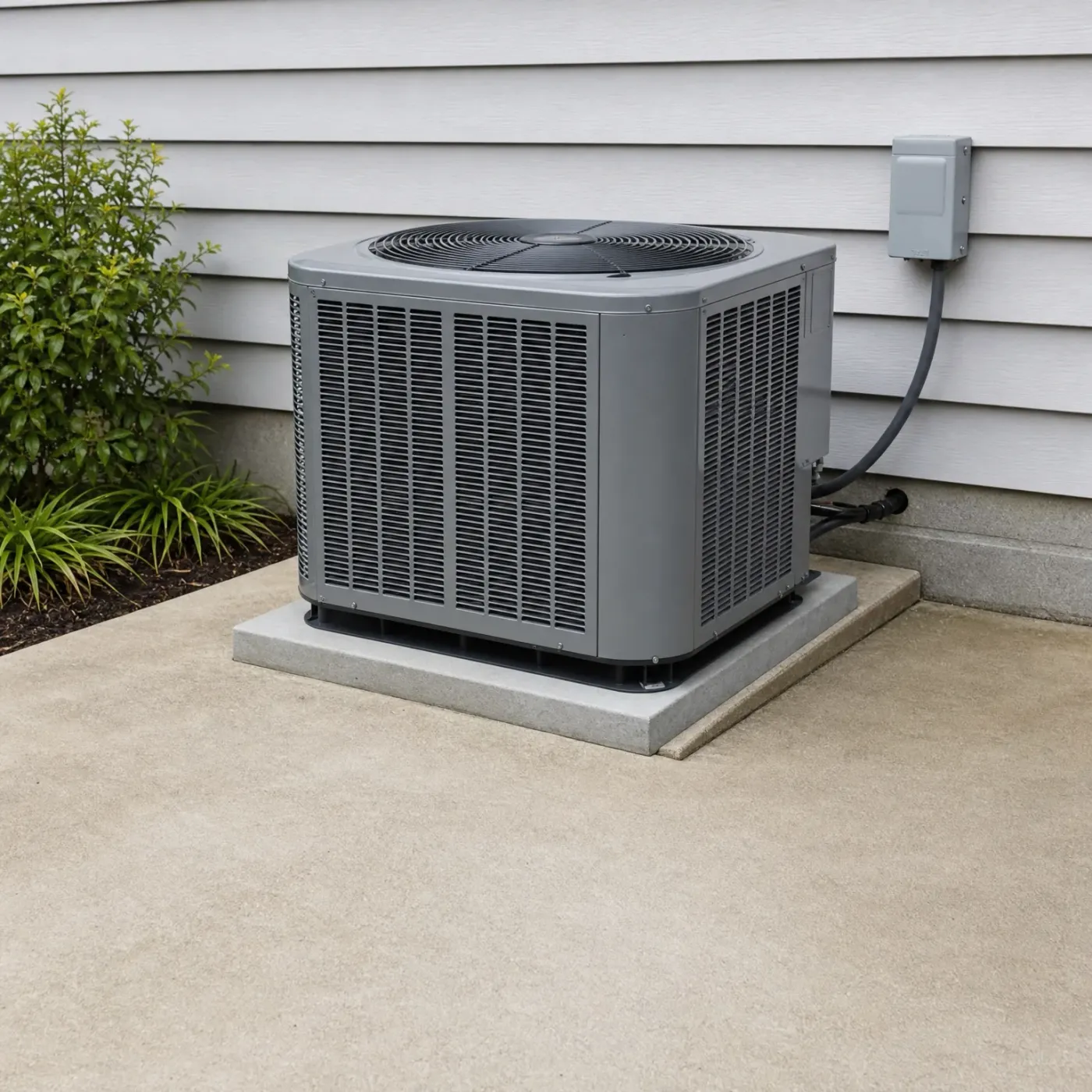
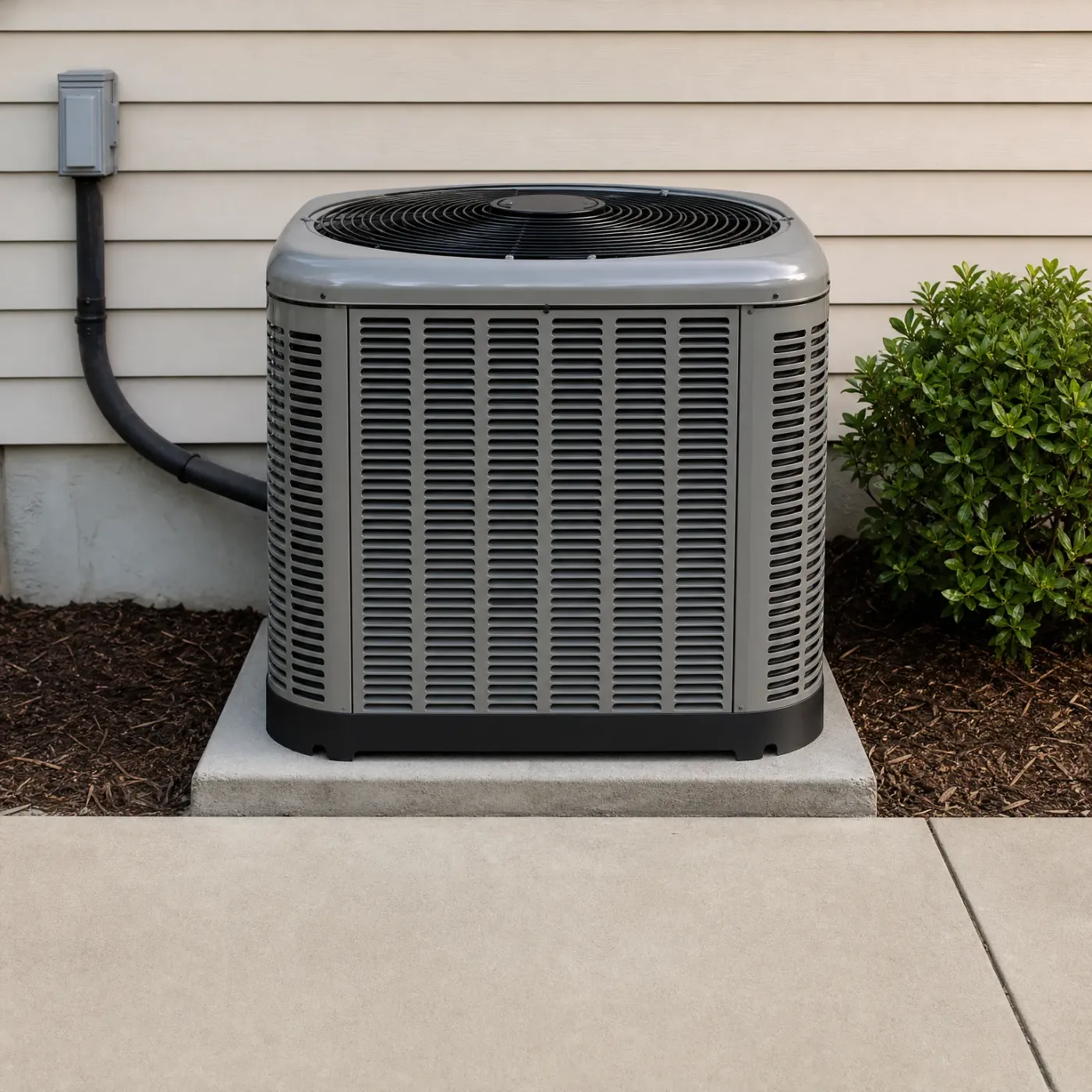
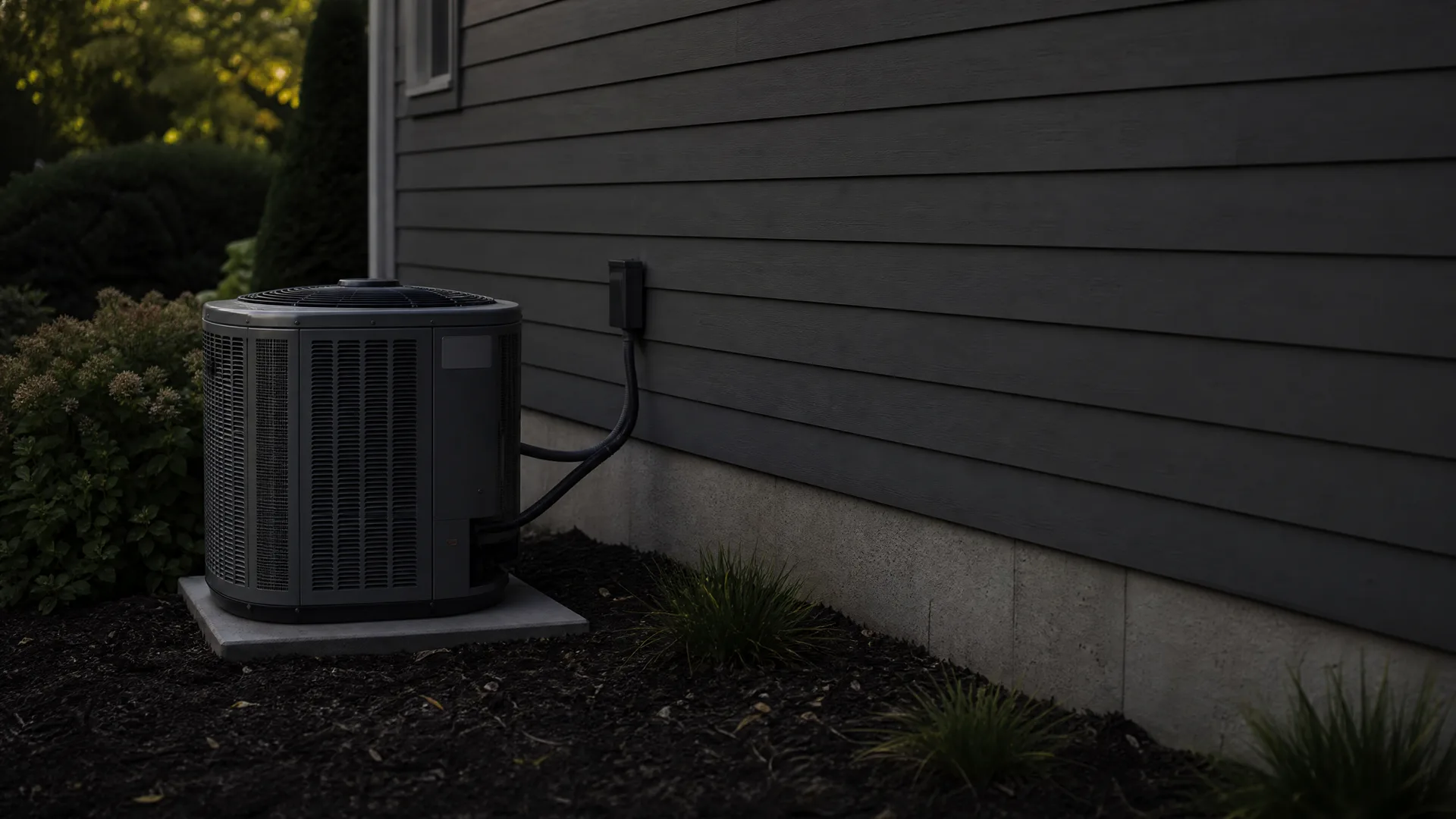
Air moves through the fins without a fight, and the compressor cycles off instead of running flat out. The disconnect box and conduit are just there doing their job, nothing straining. This is what a unit costing you less looks like from the yard.
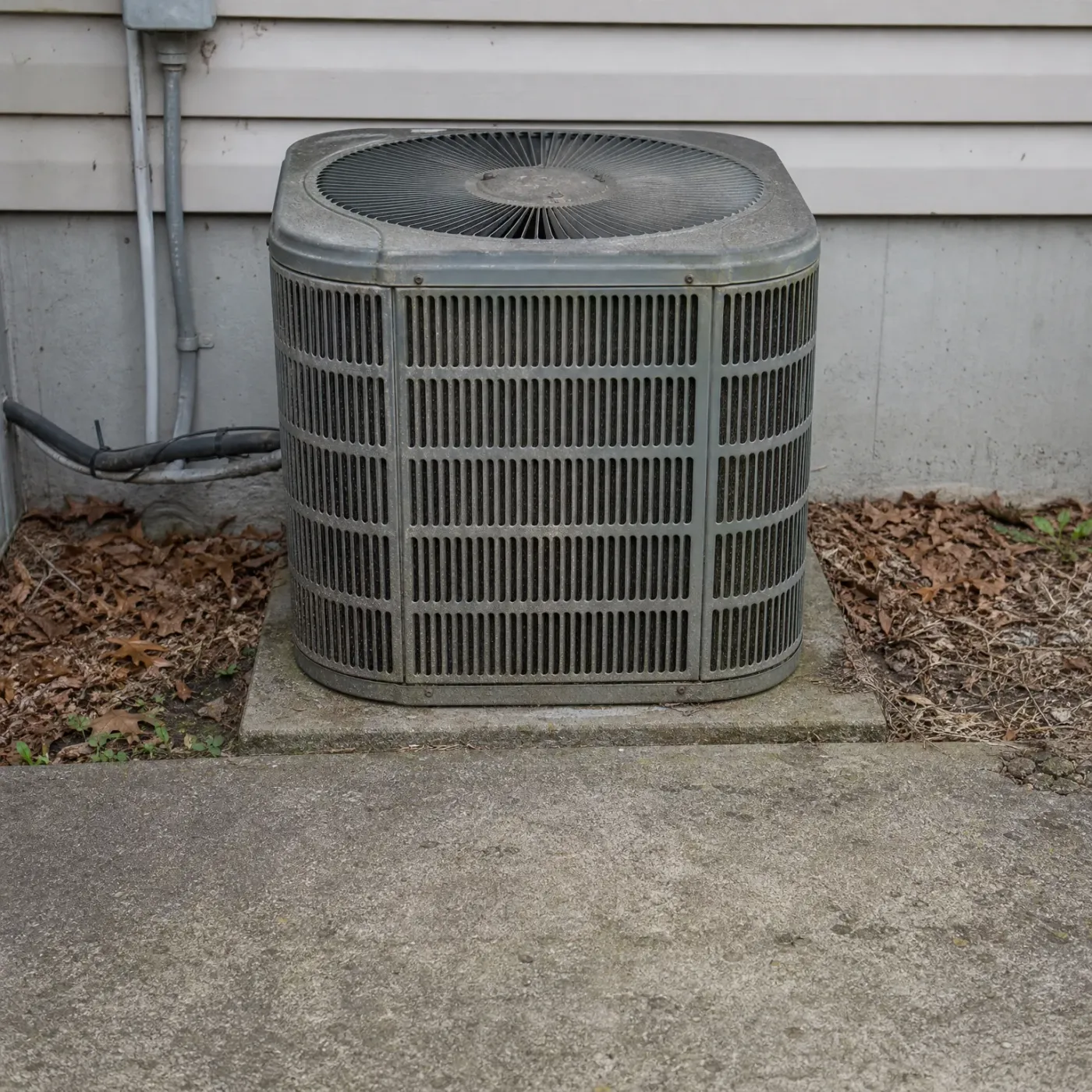
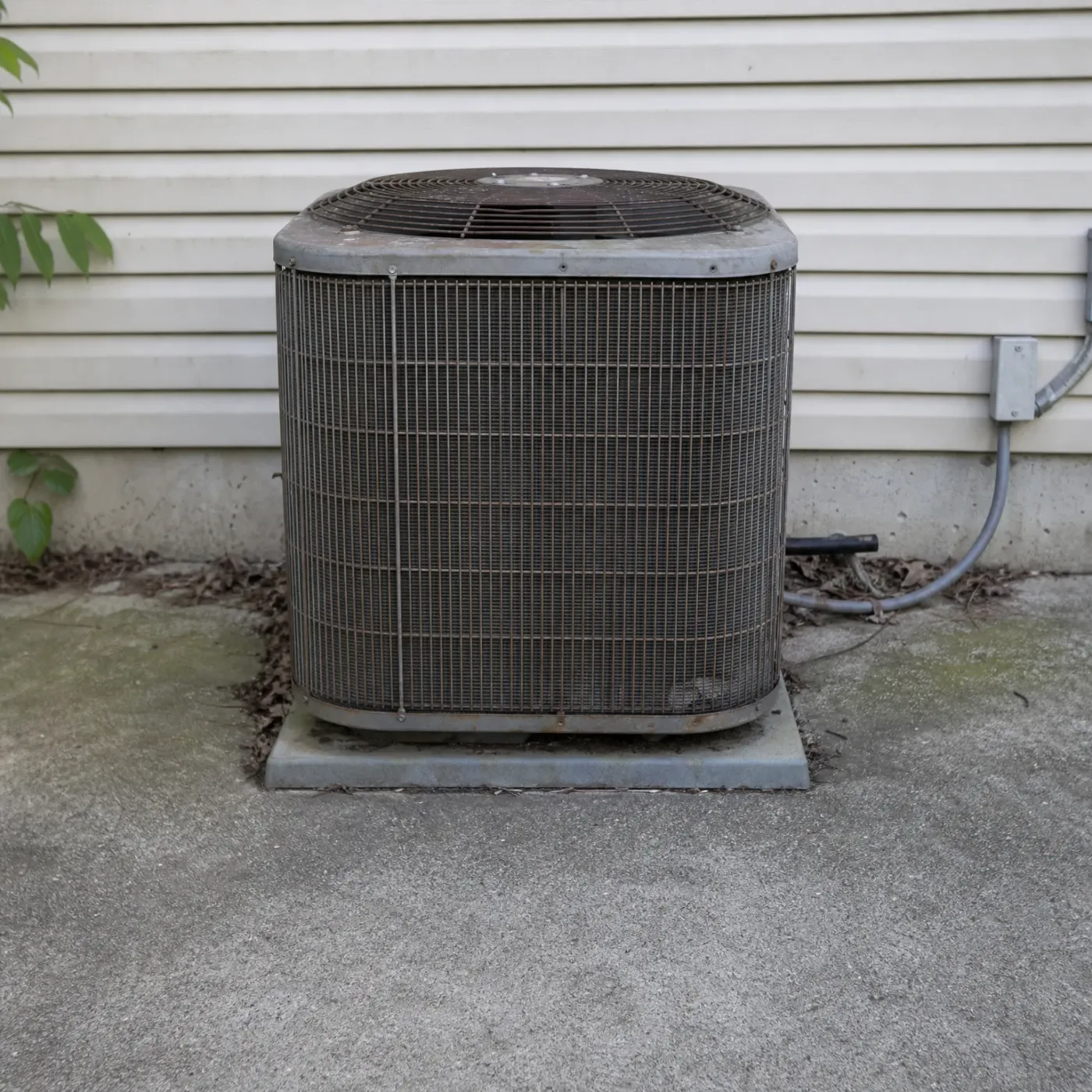
Leaves piled against the pad and fluff packed into the fins block the air this unit needs to dump heat outside. It still runs, pinned against the siding, pulling more power to do the same job. This is the one running up your bill.
At 18.08 cents per kilowatt-hour, every extra hour your compressor runs adds up fast. A unit that's clean and properly charged might cycle off after twenty minutes. One that's straining can run most of the afternoon, and you're paying for all of it.
EIA-861 2025 statewide residential average
Your air conditioner will cool your house whether it's running clean or running dirty. That's what makes this easy to put off. The difference never shows up as a unit that quits, it shows up on the bill, in the extra minutes the compressor stays on every time it cycles. A clean coil and a correct refrigerant charge let it do the job in short bursts. A dirty coil or a low charge turns those bursts into long stretches, and at 18.08 cents per kilowatt-hour, those stretches add up over a Wisconsin summer.
That's the whole case for maintenance: a tech checks the charge, washes the coil, tests the blower and checks the electrical connections under load, and what you get back is a unit that cycles off instead of grinding through the afternoon. None of that happens by itself, and most people don't have a gauge or a Saturday to spend finding out what's wrong.
What changes once you send the form is what's off your plate. You're not searching for a contractor, not calling around to see who answers, not explaining the same problem three times to three different companies, not sitting with a pile of quotes trying to guess which one's fair. That part of it stops being your job. The unit still needs the work done. But finding someone to do it is no longer something you have to carry.
Explain the job once and skip repeating it on every call.