Signs of a bad AC capacitor in Wisconsin

Step 1 of 3: Equipment

A bad capacitor usually shows up as an outside unit that hums but the fan won't spin, or a system that shuts off a few minutes after it starts. You might also notice the air isn't as cold as it should be, or the unit clicks and tries to restart on its own. The capacitor stores the charge that gets the compressor and fan motor moving, and once it weakens, the motor doesn't get the kick it needs to start turning. Heat and long run hours wear a capacitor down faster, and Wisconsin summers put a lot of hours on an AC between the muggy stretches. When a capacitor goes, the unit either won't start at all or it strains every time it does, which puts extra load on the compressor itself. Catching it at the humming stage, before the compressor takes that damage, is the difference between a simple part swap and a much bigger repair.

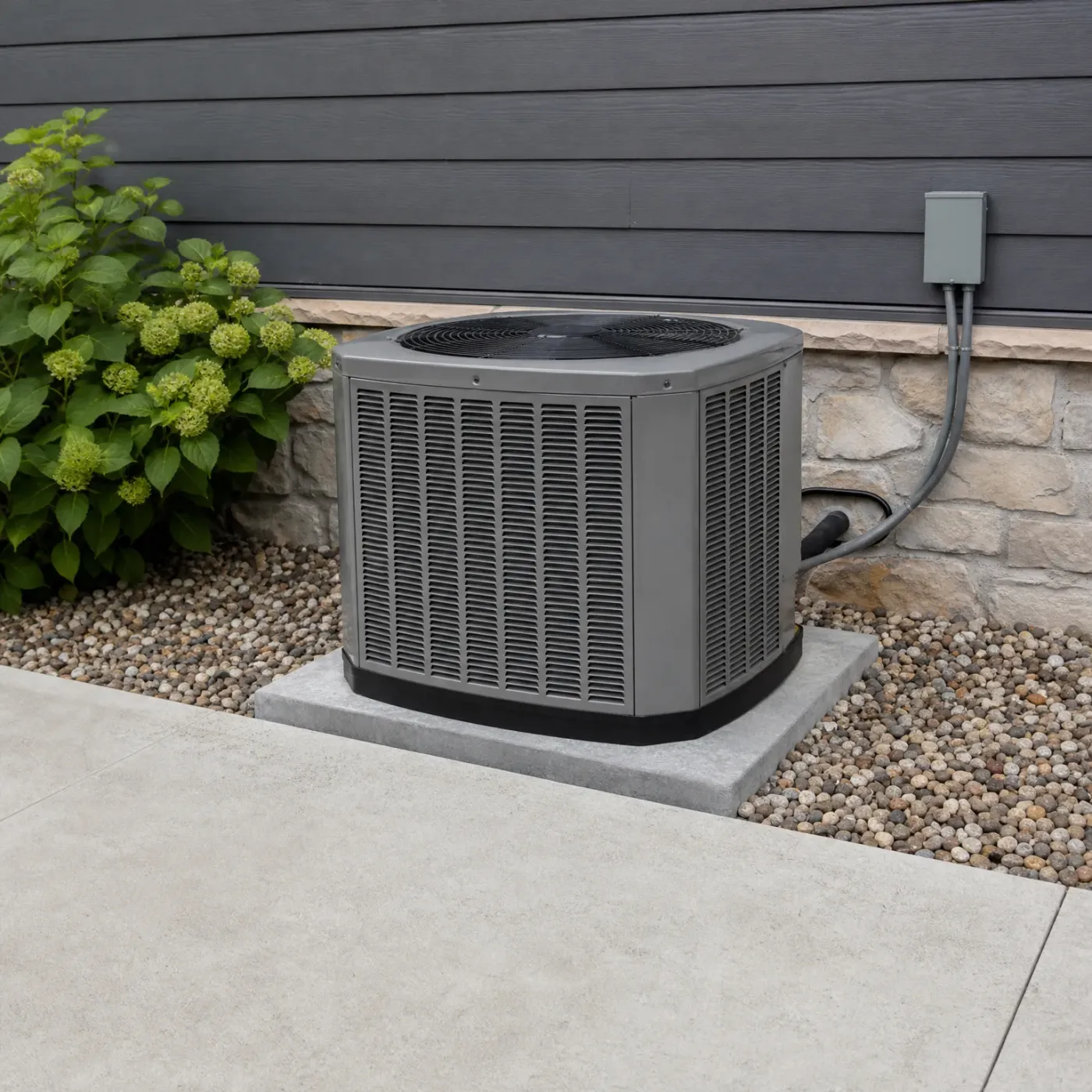
A gray outdoor air conditioner condenser unit on a concrete pad beside a house with dark horizontal siding and a stone base, surrounded by gravel, with a flowering shrub at left and a concrete walkway in front.

Running the way it should

The fan spins right up when the unit kicks on, steady and quiet except for normal operating sound. Cold air keeps coming all afternoon without the system quitting on you. A capacitor in good shape gives the motor the jolt it needs every single cycle, all summer.
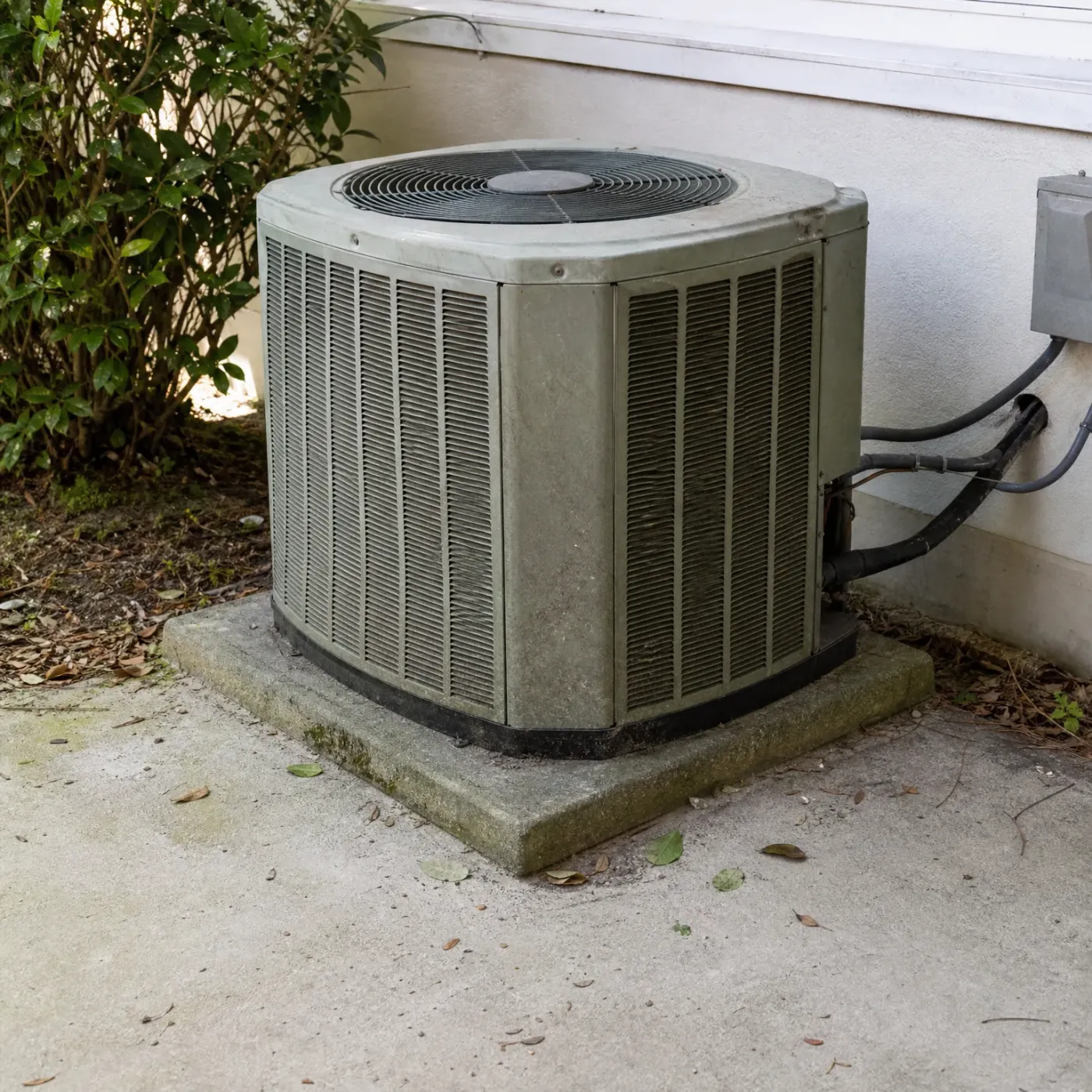

An outdoor air conditioner condenser unit sits on a concrete pad beside a stucco wall, with refrigerant lines and conduit running to the wall and a shrub to the left.

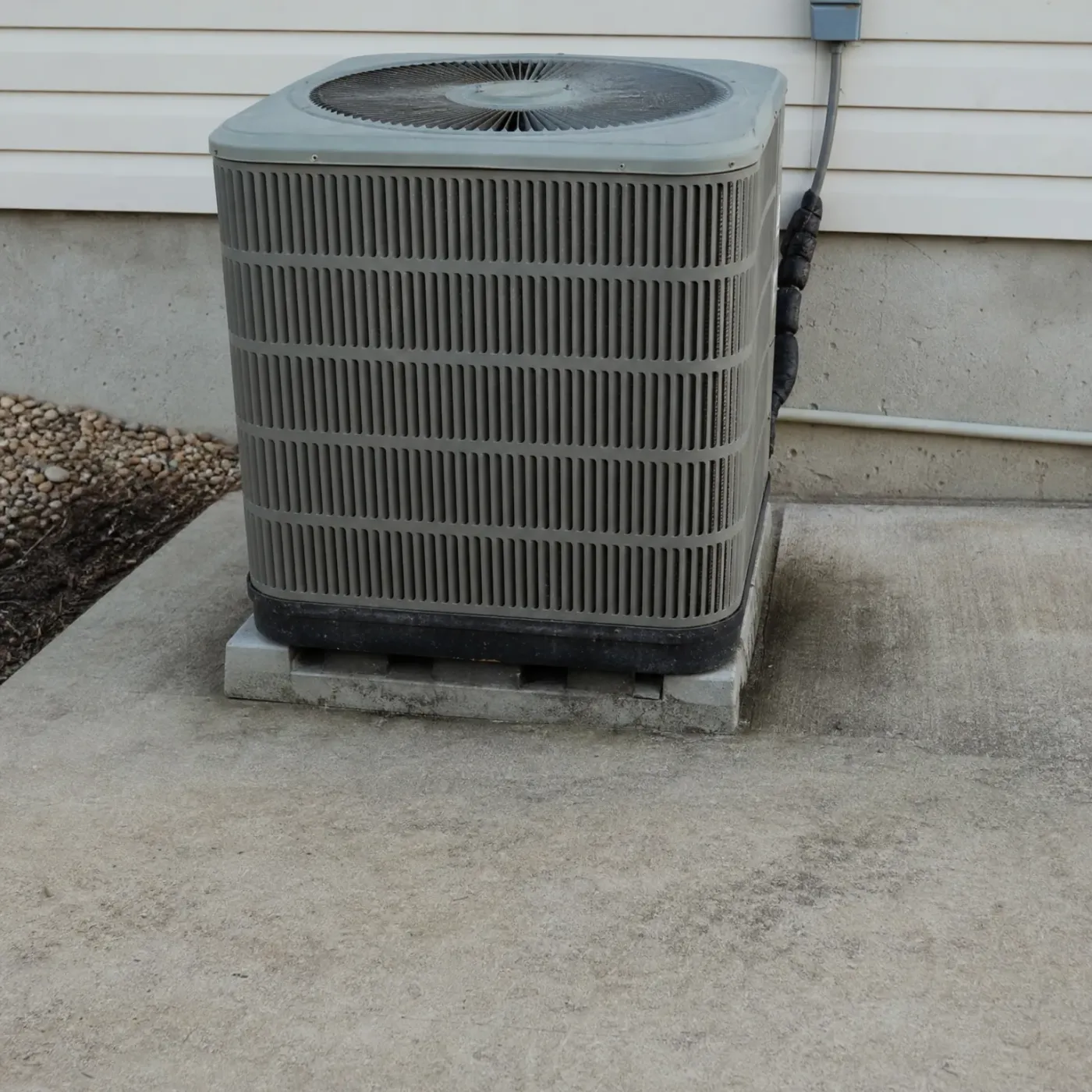
A capacitor on its way out

An older unit like this one works harder, and a weak capacitor often shows up here first. You hear the hum, maybe a click, and the fan stays still. Grime on the fins doesn't cause that, but years of strain on an aging unit add up.

Why does a bad capacitor make the AC hum but not start?

You hear the outside unit humming the second the thermostat calls for cool air, but the fan blades just sit there, or barely twitch. It's not silent, so it doesn't feel like a dead system, which is what makes it confusing. You're standing out by the condenser in the heat trying to figure out if this is something simple or something that's going to leave the house warm all afternoon.

The motor is getting power but not the push it needs to start turning

The hum is the motor itself, energized and trying to turn. A capacitor stores a charge and releases it to give the fan motor and the compressor the extra push they need at startup. When it's weak, there's enough current reaching the motor to make that humming sound, but not enough stored charge to break the fan loose and get it spinning. Once it's running, a motor doesn't need much to keep going, but starting it from a dead stop takes more than a failing capacitor can deliver. That's why you'll sometimes see the fan spin if you nudge the blades by hand, and it takes off on its own, which is a clear sign the capacitor is the problem and not the motor.

A woman in a knitted shawl sits in a living room with a fireplace, shelves, a sofa with cushions, and a lamp by a bright window, looking off to the side.
A woman with long brown wavy hair in a green shirt over a white top stands in a living room with built-in white shelves, a ceiling fan, a potted plant and a sliding glass door.
A woman with shoulder-length gray-streaked hair in a light gray knit sweater stands smiling and looking off to the side in a living room with a sofa, houseplant, framed picture, and sunlit sliding glass door.
A woman with shoulder-length curly gray hair wearing a gray knit sweater stands near a window with a sheer curtain, looking to the side, with a blurred interior room behind her.

When the capacitor goes, it doesn't ask what else is going on in the house that day. If it fails on a sticky July afternoon, you're stuck waiting it out while the rooms get warmer, because the fan that should be moving cold air just sits there humming. The motor behind it doesn't give up right away. It keeps trying to start, pulling more current each attempt, and that shows up on the power bill before you even get the unit fixed. If nobody's around to catch the hum and the warm air early, the strain can spread from the capacitor to the compressor, which turns a part replacement into a bigger repair. A unit limping along on a weak capacitor also tends to short cycle, shutting off and restarting over and over, and every one of those restarts puts load on parts that were never meant to work that hard, that often. None of this gets easier by waiting. A capacitor caught early, while it's just humming and underperforming, is a smaller fix than a capacitor that takes the rest of the system down with it.

What a Bad Capacitor Costs You

  • A dead capacitor on a muggy July afternoon can mean hours without cold air while the heat inside the house keeps climbing.
  • A fan motor that keeps trying to start on a failing capacitor pulls harder every time, which shows up on a power bill in a state where electricity already runs expensive.
  • If nobody's home to notice the hum and the warm air, a capacitor that's further gone can take the compressor down with it.
  • A short cycling system working around a weak capacitor stresses other parts of the unit each time it shuts off and restarts.
  • Wisconsin summers don't leave much room for a slow fix once the house starts holding heat room to room.
  • Catching the hum and the warm air early, before the unit quits altogether, usually means a simpler repair than waiting it out.
An outdoor air conditioner condenser unit sits on a gray pad beside a light vinyl-sided wall, on a concrete slab next to a gravel bed.
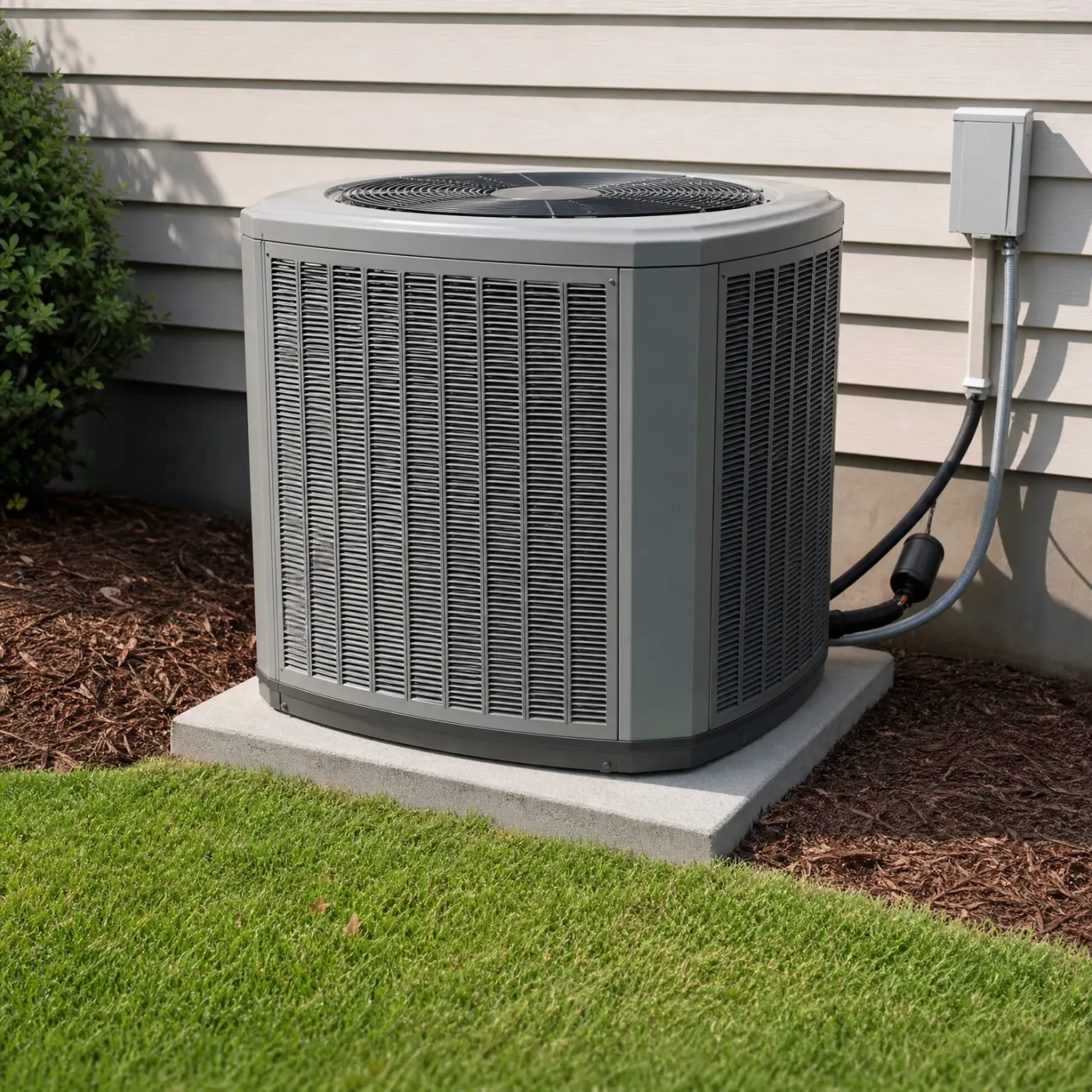
Before you get your air conditioner repair
A gray outdoor air conditioner condenser unit on a concrete pad beside a house with horizontal lap siding, with a wall-mounted disconnect box and conduit, mulch bed, shrub, and lawn nearby.
After you get your air conditioner repair

Hand off the air conditioner problem

Your request stays with one local pro.

Asking costs nothing, and the choice to hire stays yours.

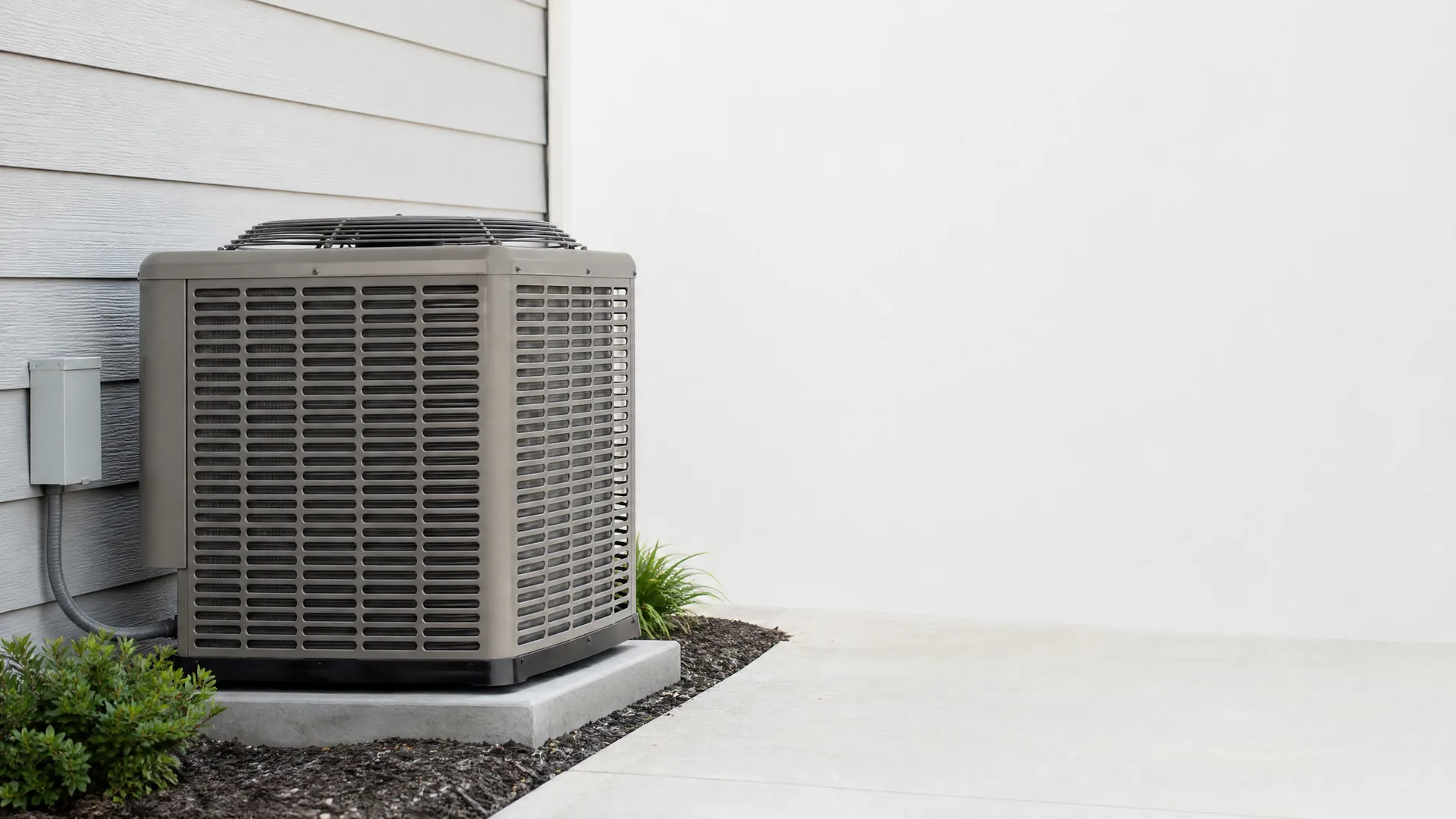
An outdoor air conditioner condenser unit on a concrete pad beside a house with light horizontal siding, with a small electrical disconnect box on the wall, mulch and shrubs at left, and a plain white wall and concrete slab at right.

What the capacitor actually does

The capacitor stores a charge and releases it to get the fan motor and the compressor moving. A motor can't start turning on its own power alone, it needs that extra push at the moment it switches on. Once the motor is spinning, it keeps running on regular power. That's why a failing capacitor shows up right at startup, not once the system has been running a while.

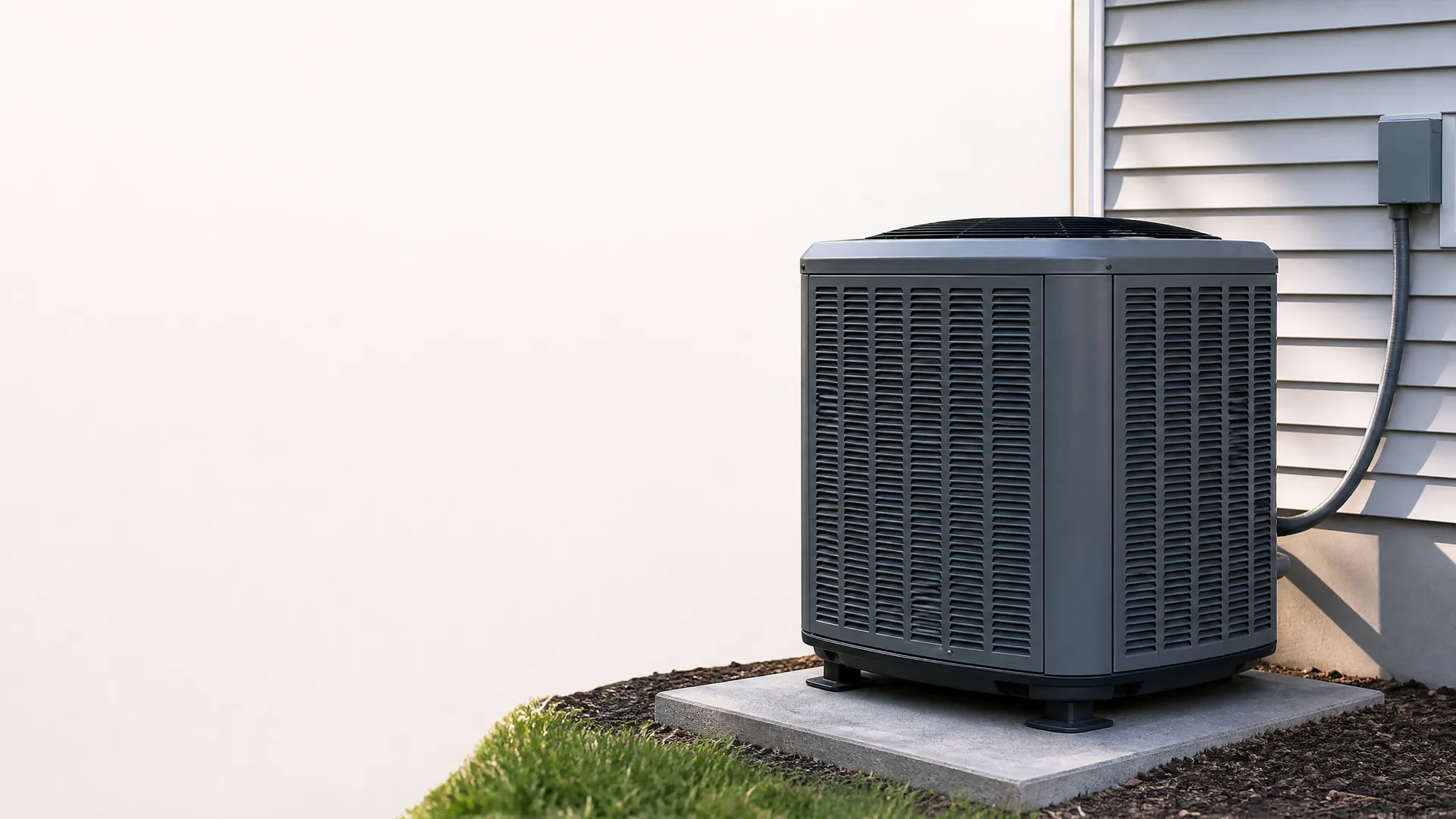
A dark gray outdoor air conditioner condenser unit on a concrete pad beside a house with horizontal siding and a plain light wall, with mulch and grass in the foreground and a conduit and electrical box on the wall.

Heat and age wear it down

A capacitor sits inside the outdoor unit, which bakes in direct sun all summer in Wisconsin. Heat is what wears a capacitor down faster than almost anything else. The metal plates inside lose their ability to hold a charge over time, and that process speeds up on the hottest days, which is exactly when the compressor is working hardest and needs the most help starting.

Capacitor Problem or Something Else

Capacitor is failing

  • The outside unit hums when the thermostat calls for cool air, but the fan blades don't turn or only twitch.
  • The system starts, runs a few minutes, then shuts off on its own and tries again later.
  • The air coming from the vents feels warmer than it used to, even with the thermostat set the same as always.
  • You hear clicking from the outside unit as it tries to restart without the fan ever catching.
  • The outside fan spins slowly or needs a push to get going, then speeds up once it's turning.

Something else is wrong

  • The fan runs fine but no cold air comes out, which points to the refrigerant charge or the compressor instead.
  • The whole system is dead quiet, no hum at all, which usually means a tripped breaker or a bad contactor.
  • The thermostat screen is blank or unresponsive, which is a thermostat or low-voltage wiring problem, not the capacitor.
  • Ice builds up on the refrigerant lines or the indoor coil, which points to airflow or a dirty filter.
  • The outside unit runs nonstop and never shuts off, which points to the thermostat or a stuck relay.
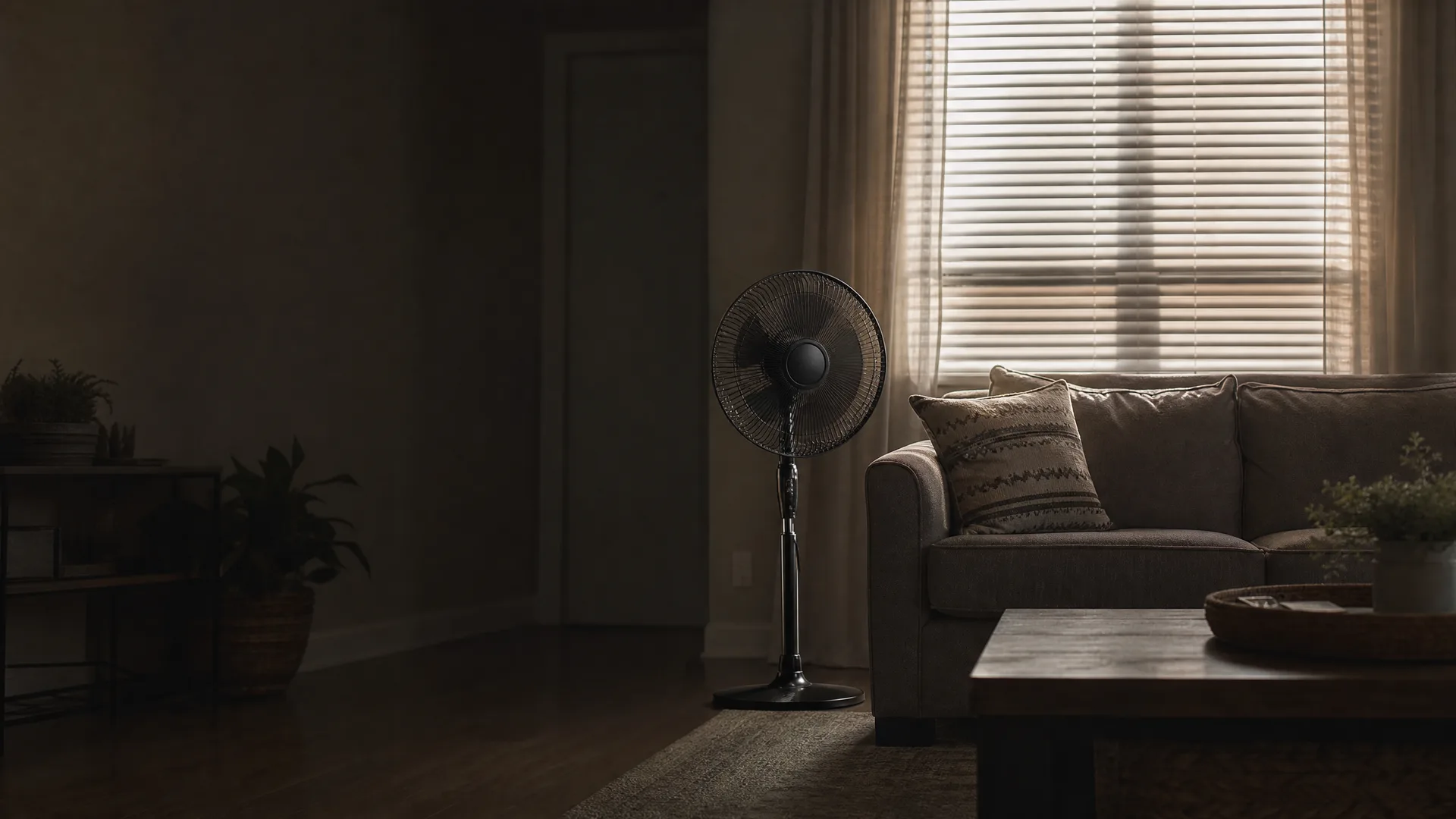
A dimly lit living room with a black pedestal fan on a wood floor beside a gray sofa with a patterned pillow, a wooden coffee table in the foreground, potted plants at left, and a curtained window with blinds behind.

The blinds are shut against the sun, but the living room is still warm enough that the floor fan next to the couch is doing most of the work. It's the middle of a July afternoon and the air from the vent overhead has gone soft, not cold like it was an hour ago. Outside, the unit clicks, hums, tries to catch, then goes quiet again. You wait for it to kick back in. It doesn't. The fan by the couch just pushes the same warm air around the room, and the house holds onto the heat the way it does every summer here, except now there's nothing fighting back against it.

Power costs 18.08 cents per kilowatt-hour statewide

At 18.08 cents per kilowatt-hour, a struggling compressor or a fan motor straining against a weak capacitor adds up fast on your bill. A capacitor that's starting to go makes the motor work harder to do the same job, and you pay for that extra draw whether the air coming out is cold or not.

EIA-861 2025 statewide residential average

A woman and a child wrapped together in a knitted gray blanket on a couch, with the child's head resting on her shoulder and a lit table lamp and houseplant in the background.
An older woman with gray hair in a bun and glasses, wearing a beige knit sweater, smiles while looking to the side in a warmly lit kitchen, with a loaf of bread on the counter in the foreground and a snowy scene outside the window.
A single-story house with gray vinyl siding, dark shingled gable roofs, and white-trimmed windows, set behind a partly dry green lawn under a clear blue sky.

A summer dew point averaging 60°F across June, July and August, as measured at Wisconsin weather stations, puts the air on the sticky side most afternoons. Humid air holds more heat, so your air conditioner has to pull moisture out before the house actually feels cool, which means longer run times than on a dry day with the same temperature. A capacitor that's starting to weaken has to push through that longer stretch of work, not just a quick burst to get going, and it's during those long runs that a failing one tends to quit. You'll notice the house holding its heat a little longer before the air catches up.

NASA POWER T2MDEW county cells weighted by homes

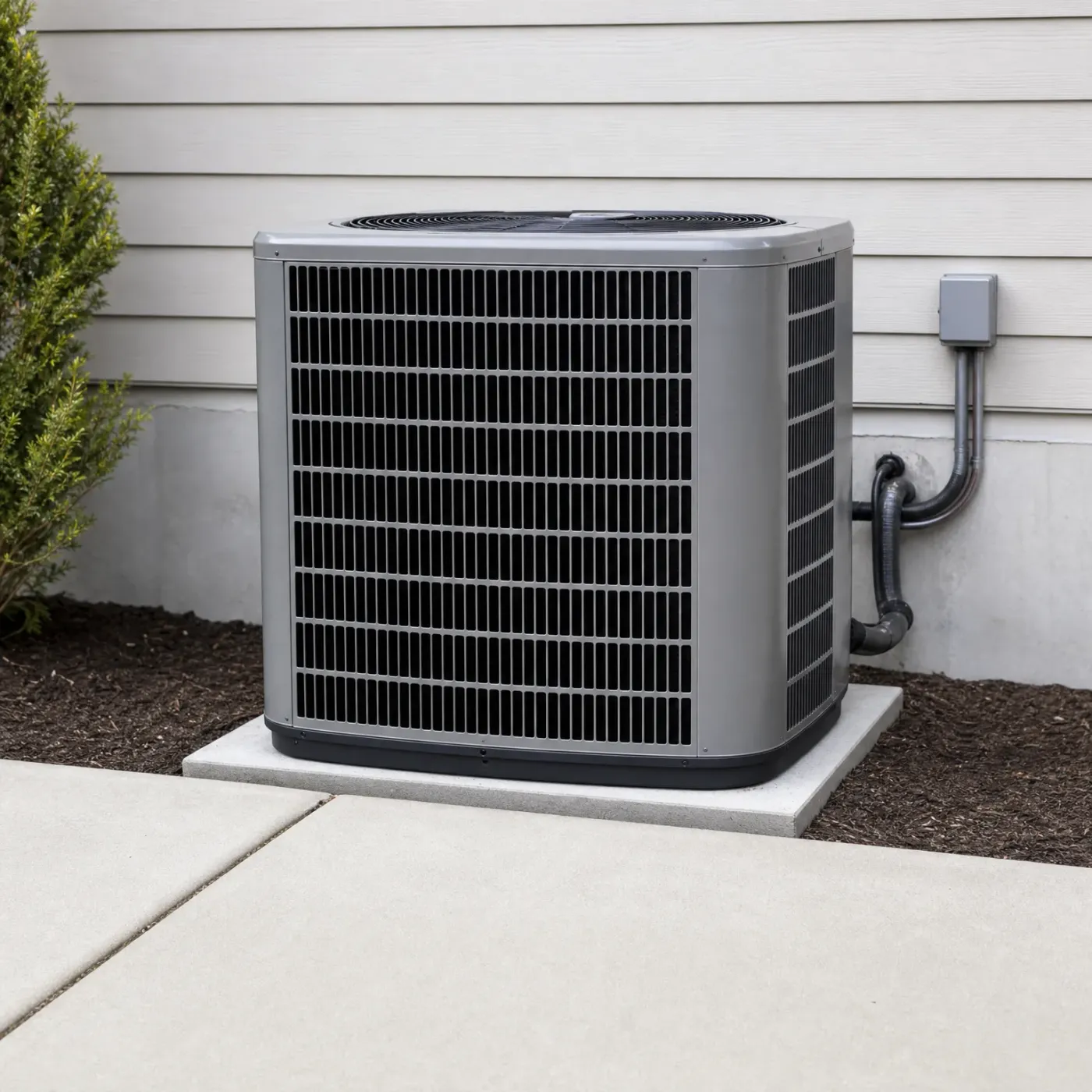
A gray outdoor air conditioner condenser unit sits on a concrete pad beside a house with horizontal lap siding, with conduit and an electrical disconnect box on the wall, dark mulch and a shrub to the left, and a concrete walkway in the foreground.
The fan spins up fast, the unit runs steady, and the grilles stay clean enough to see through.
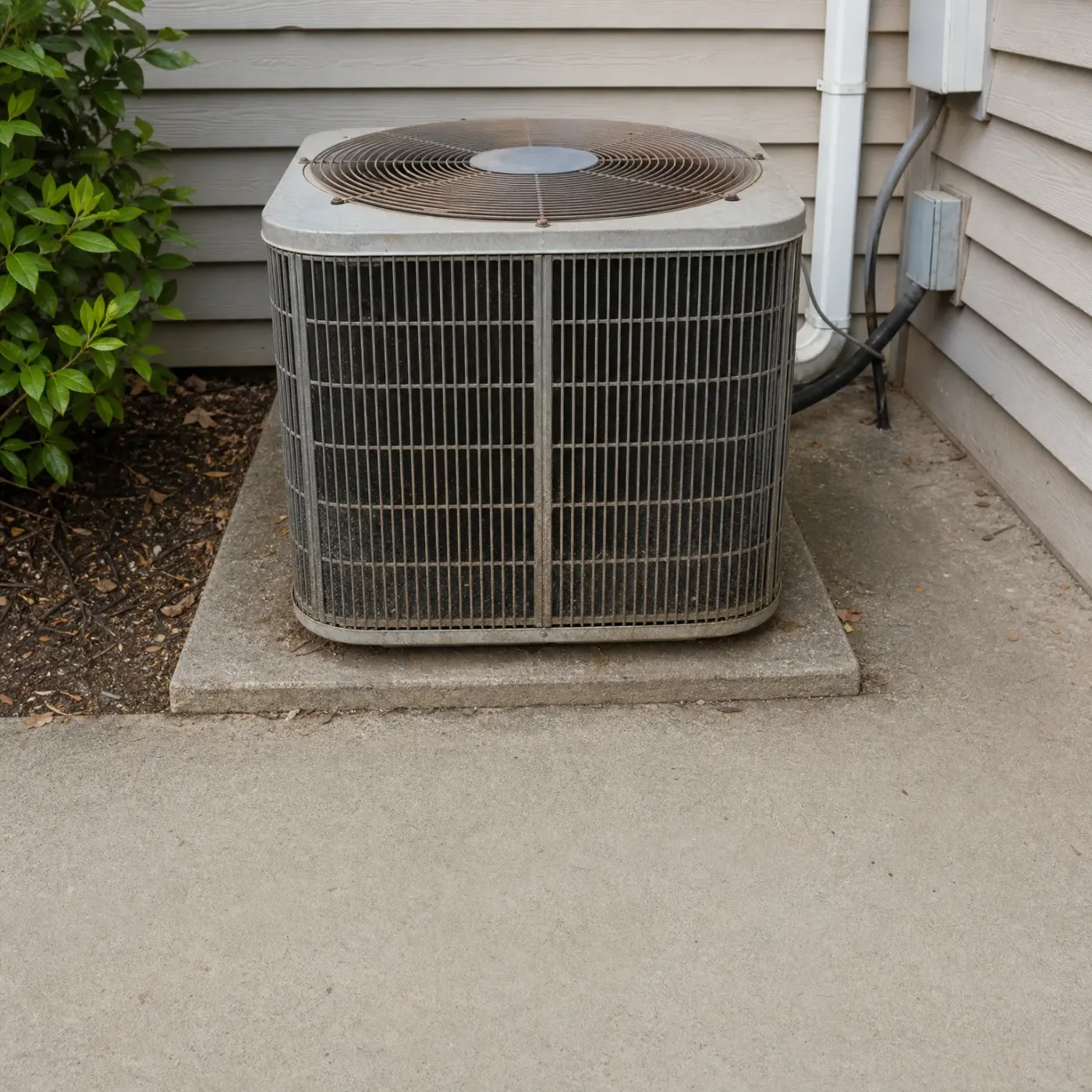
An outdoor air conditioning condenser unit on a concrete pad beside a house with horizontal lap siding, with a shrub and mulch bed to the left and conduit and a small electrical box on the wall to the right.
Years of dirt caked on the grilles and a disconnect box worn from the weather often sit right next to a capacitor on its way out.

What a Bad Capacitor Tells You

  • A hum with no fan movement, a system that quits minutes after starting, or weak airflow all point to the same part.
  • Left alone, a failing capacitor forces the motor to strain, and that strain shows up as a bigger power bill before the unit quits for good.
  • A licensed contractor who works on Wisconsin air conditioners all summer can usually spot a bad capacitor against the other usual suspects in a few minutes.
  • You get matched with one local contractor for the job, not a handful of companies competing for your callback.
  • Catching it now means cold air again before the next muggy afternoon sets in, not a wait while the heat builds up indoors.

A capacitor going bad doesn't hide. It shows up as a hum with no fan, a system that shuts off minutes after it starts, or air that's lost its edge, and once you know the signs, you know what you're dealing with. Left alone, that same part makes the motor work harder than it should, and a motor working harder pulls more power every hour it runs. On a July afternoon in Wisconsin, that's a bill that climbs while the house stays warm, and eventually a unit that stops starting at all.

Finding the part is usually quick work for someone who does it all summer. A contractor who services air conditioners across Wisconsin every cooling season has seen a failing capacitor often enough to know it from a bad contactor or a dirty coil within minutes, not hours. That's the kind of call this connects you to: one licensed contractor local to you, matched to the job, so you're not fielding calls from three different companies trying to win the work.

None of this is complicated once someone's looked at the unit. The part either holds its charge and gives the motor the push it needs, or it doesn't, and the signs you've just read tell you which one you've got. Getting it swapped now, before the next stretch of humid days sets in, is the difference between losing an afternoon to the heat and never losing one at all.

Sunlit corner of a room with a wooden sideboard holding a ceramic vase of olive branches and a dark wooden bowl, beside a white-framed window, a hardwood floor and woven rug.
A wooden cabinet holding a pale ceramic vase with leafy branches stands beside a beige wall in a sunlit room with hardwood floors, a jute rug, and a window showing green foliage outside.
Sunlit room corner with a beige upholstered sofa holding a rust-brown cushion, beside floor-length linen curtains at a window, over a wood floor with a woven rug.
Corner of a room with beige walls, a framed photograph, a floor-length linen curtain beside a window, an upholstered armchair with a knit pillow, white baseboards and trim, wood flooring and a pale rug.
Sunlit living room corner with a beige upholstered armchair with a cushion, linen curtains beside a wooden-framed window, green vertical panelled wall with a framed print, and a wooden table edge over a woven rug.

Hand off the search today

Your request goes to one pro, not a list of companies.

Hand off my repair

No fee to send it, and nothing to sign.