



Profile view of a bearded man wearing a black baseball cap and a dark gray T-shirt against a plain light background.

Why your AC can't keep up on hot Wisconsin days

Step 1 of 3: Equipment

Why can't my AC keep up when it's really hot out?

You crank the thermostat down and the house still sits at 78, maybe higher, by mid afternoon. It's not broken outright, the air is still coming out of the vents, but it can't pull the house down to where you set it. With Wisconsin summers getting humid and sticky, and the cost of running the system climbing with electric rates, you want to know if this is normal or if something's actually wrong.

Your AC is undersized for the heat and humidity, or it's losing capacity

Every air conditioner is rated to drop the indoor temperature by a certain number of degrees below whatever it is outside. On a 90 degree day with Wisconsin humidity sitting heavy in the air, that unit is working at its limit even if nothing is wrong with it. Add a dirty filter, a low refrigerant charge, or a coil caked with dust, and the system loses whatever cushion it had. The humidity makes it worse because the AC has to pull moisture out of the air before it can cool it, and that takes time and capacity away from actually lowering the temperature. If your system is struggling on the hottest days but keeps up fine otherwise, something inside it is working harder than it should to do the same job.

A woman with long wavy brown hair in a grey ribbed sweater sits on a couch indoors, looking toward a window, with a potted palm-like plant and fireplace behind her.
A woman with long brown hair wearing a green V-neck top and beige cardigan sits on a light sofa, looking off to the side, with a dining table, lamp and framed picture in the background.
A woman with long dark hair in a cream knit sweater sits on a beige sofa indoors, looking toward a bright window with a houseplant and framed picture in the background.
A woman with long dark hair in a green knit sweater sits on a couch indoors, smiling and looking toward a window with a blurred room behind her.

Normal Strain or a Real Problem

Normal strain

  • On a 90 degree day a properly sized AC can still lag the thermostat by a few degrees in the hottest part of the afternoon.
  • The unit runs close to nonstop from late morning to early evening, then catches up once the sun drops.
  • Humidity makes the air feel warmer than the thermostat reading, so the house feels muggy even while the system is working.
  • Closed vents, drawn blinds and a lower fan speed all ease the load without pointing to a problem.
  • Upstairs rooms or additions run warmer than the rest of the house simply because heat rises and ductwork doesn't reach them as well.

Needs a look

  • The house never gets within a few degrees of the setting, even overnight once it's cooler outside.
  • Airflow from the vents is weak or warm, not just struggling to keep up on the worst afternoons.
  • The outdoor unit is caked with grass clippings or cottonwood fluff, or ice has formed on the copper line.
  • Short cycling, where the system shuts off and restarts every few minutes, points to a stuck component or low refrigerant.
  • The problem shows up on mild days too, not only when it's pushing 90 outside.
  • A breaker that keeps tripping or a system that runs but never lowers the house temperature at all needs a technician, not a thermostat adjustment.
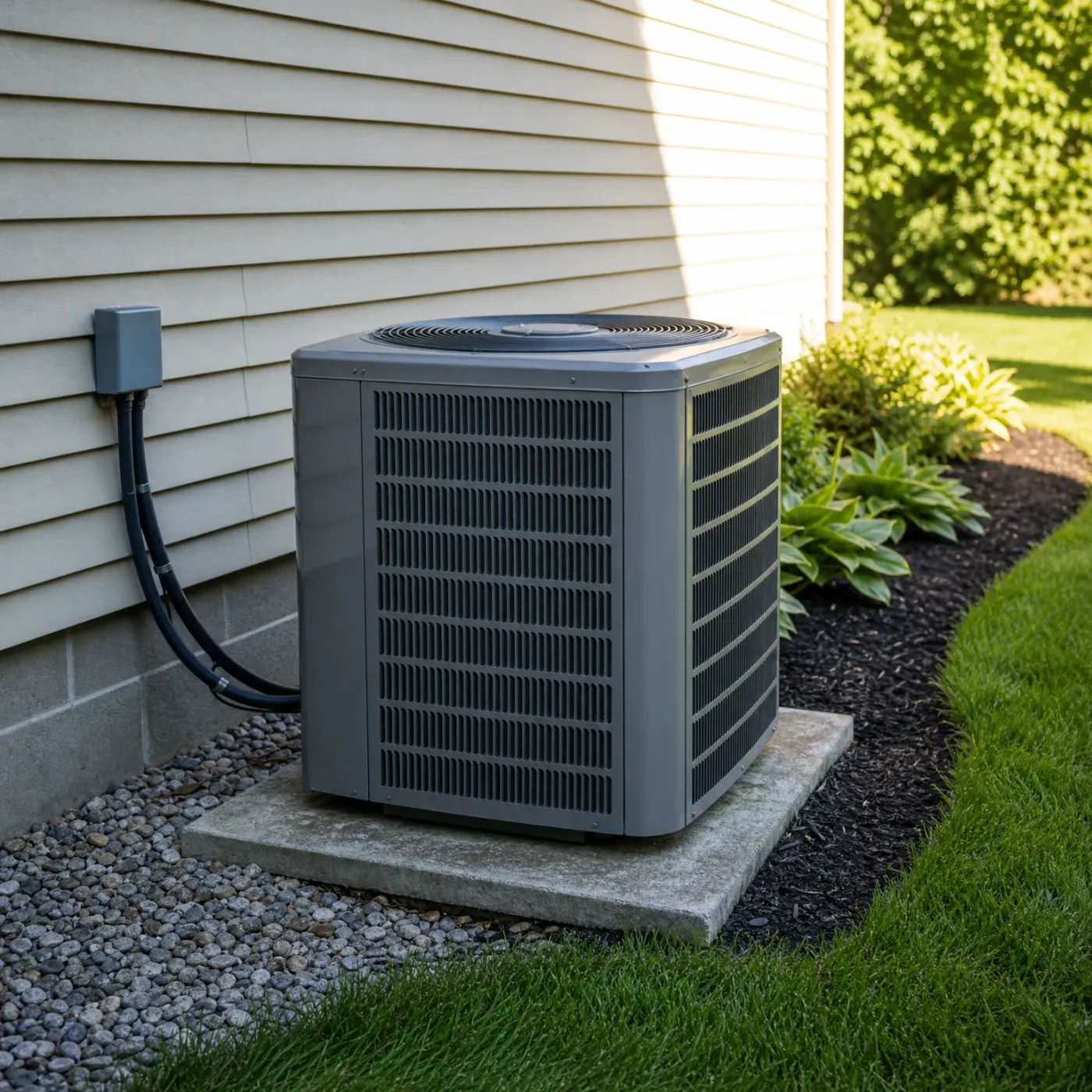
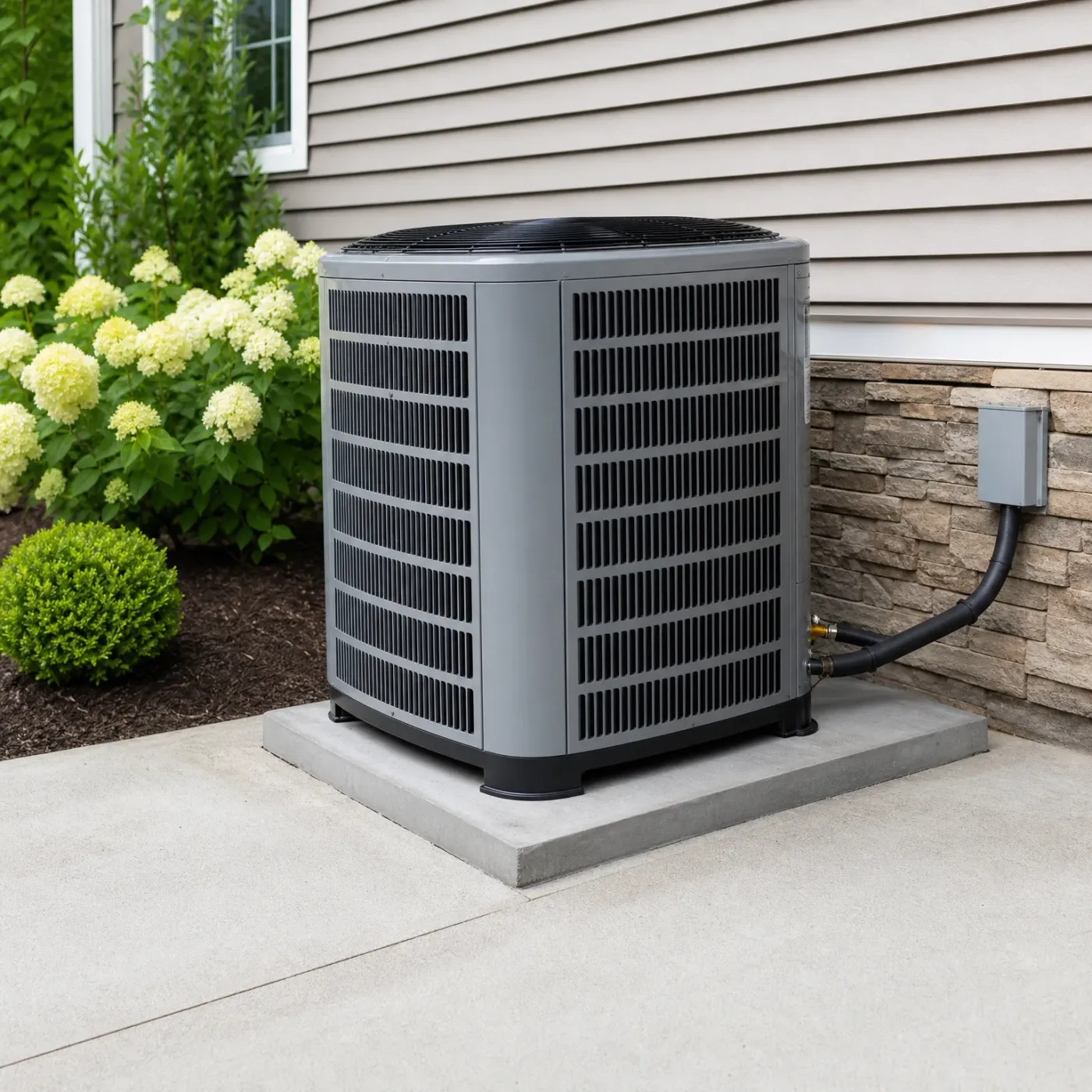
A gray outdoor air conditioning condenser unit on a concrete pad beside a house with horizontal siding and a stone veneer base, with refrigerant line and electrical disconnect box on the wall and flowering shrubs to the left.

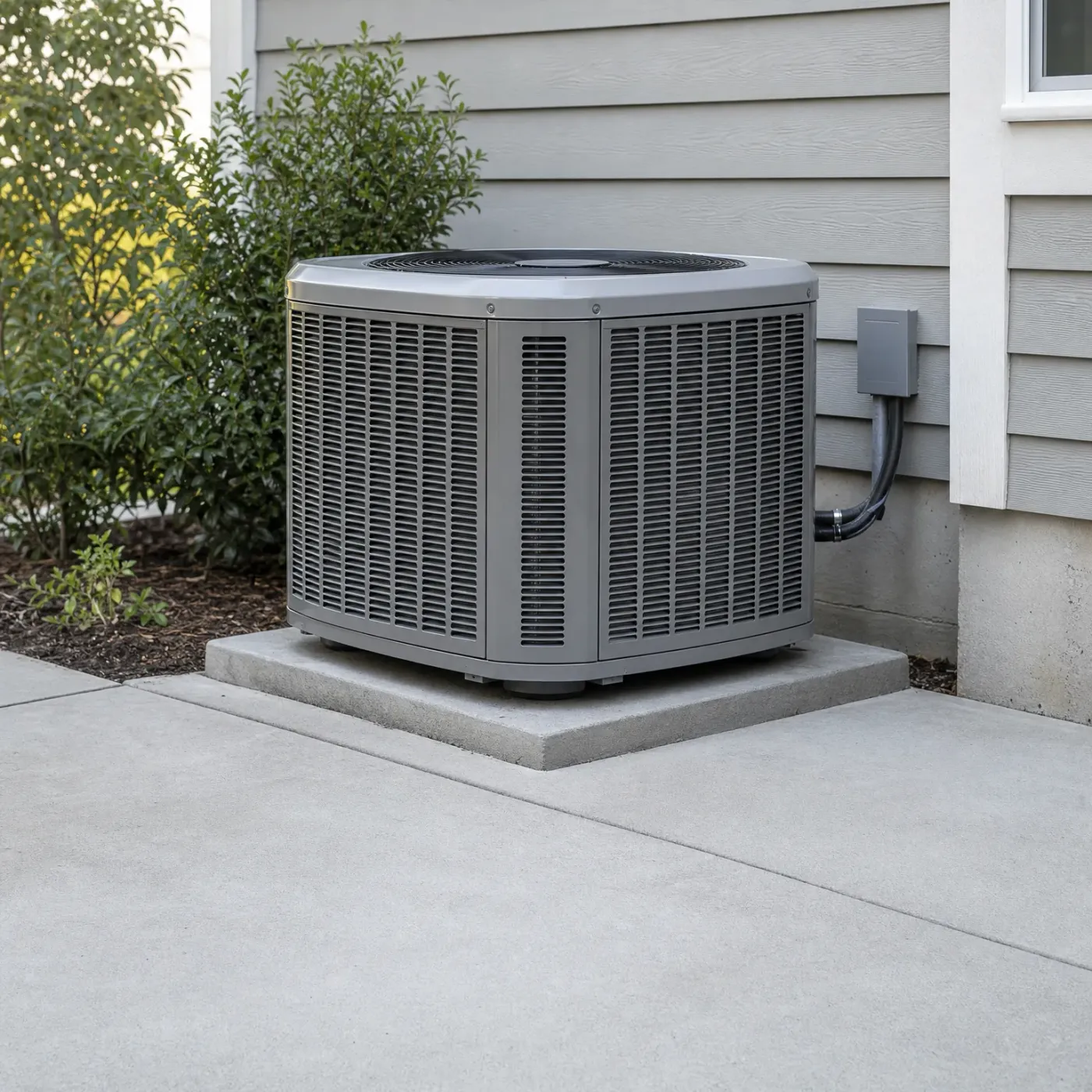
Running clean

This condenser sits on its pad with clear fins and a clean casing. Air moves through it the way it was built to. On a sticky afternoon it cycles hard but it keeps pulling the house down toward the setting, degree by degree, instead of stalling out.
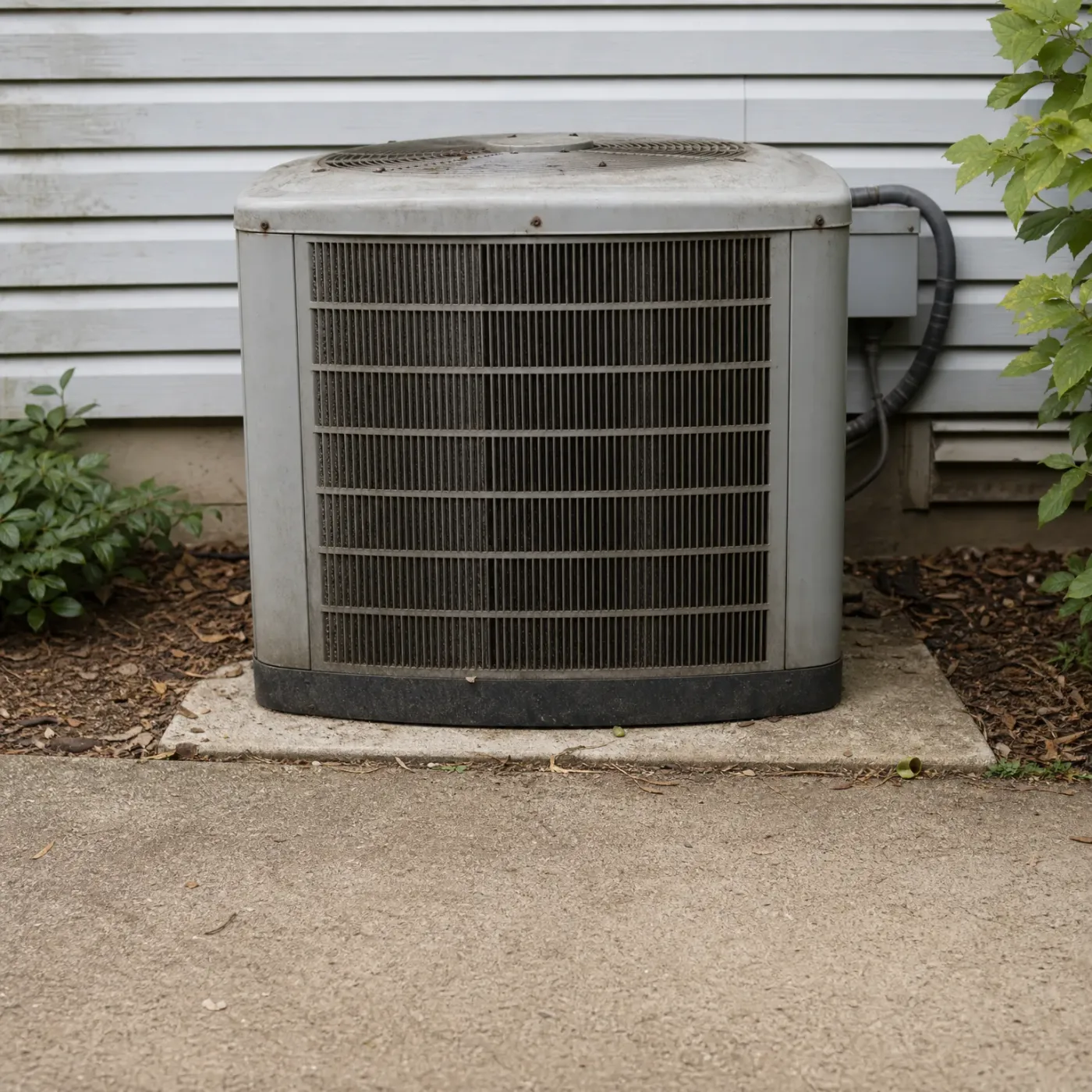
An outdoor air conditioner condenser unit on a concrete pad beside a house with light gray horizontal siding, with mulch and green shrubs on either side and a concrete walkway in the foreground.

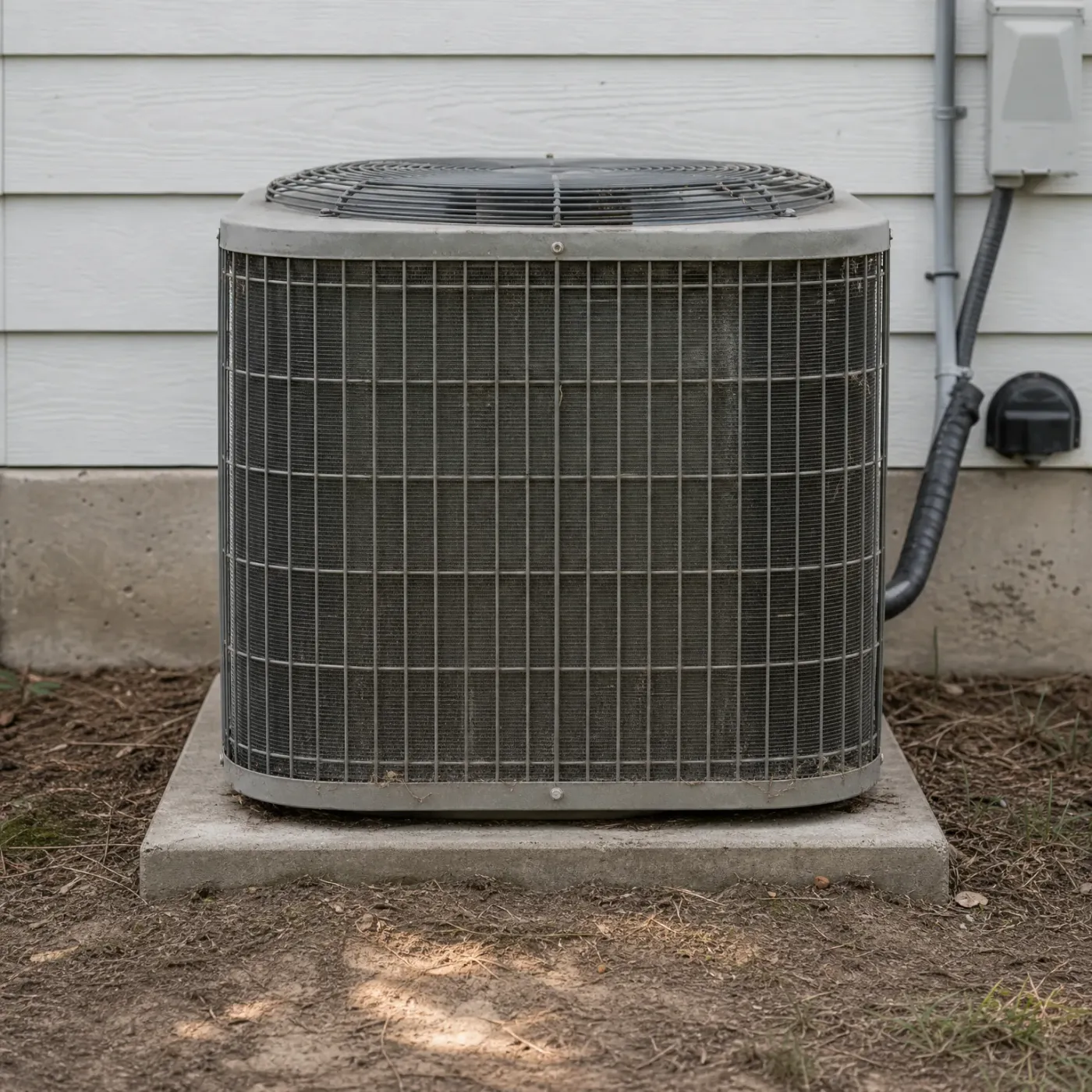
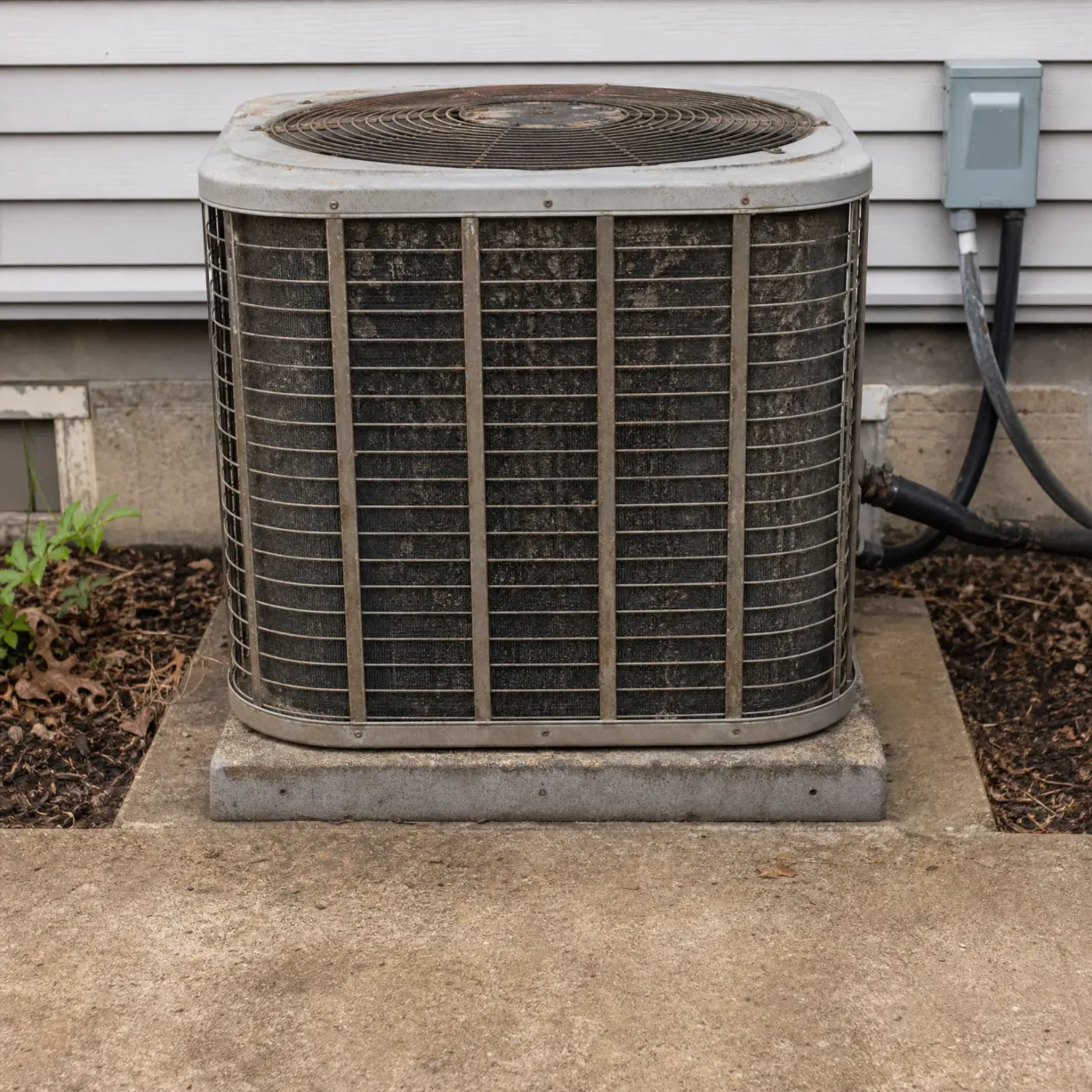
Running dirty

This one has sat against the house taking weather for years. The fins are caked and the casing shows it. Dirt on the fins blocks the heat from leaving the refrigerant, so the unit works harder and still falls behind once the temperature climbs.

A weathered outdoor air conditioning condenser unit on a concrete pad beside a house with light horizontal siding, an electrical disconnect box and conduit on the wall, and mulched soil on either side.
Before you get your air conditioner repair
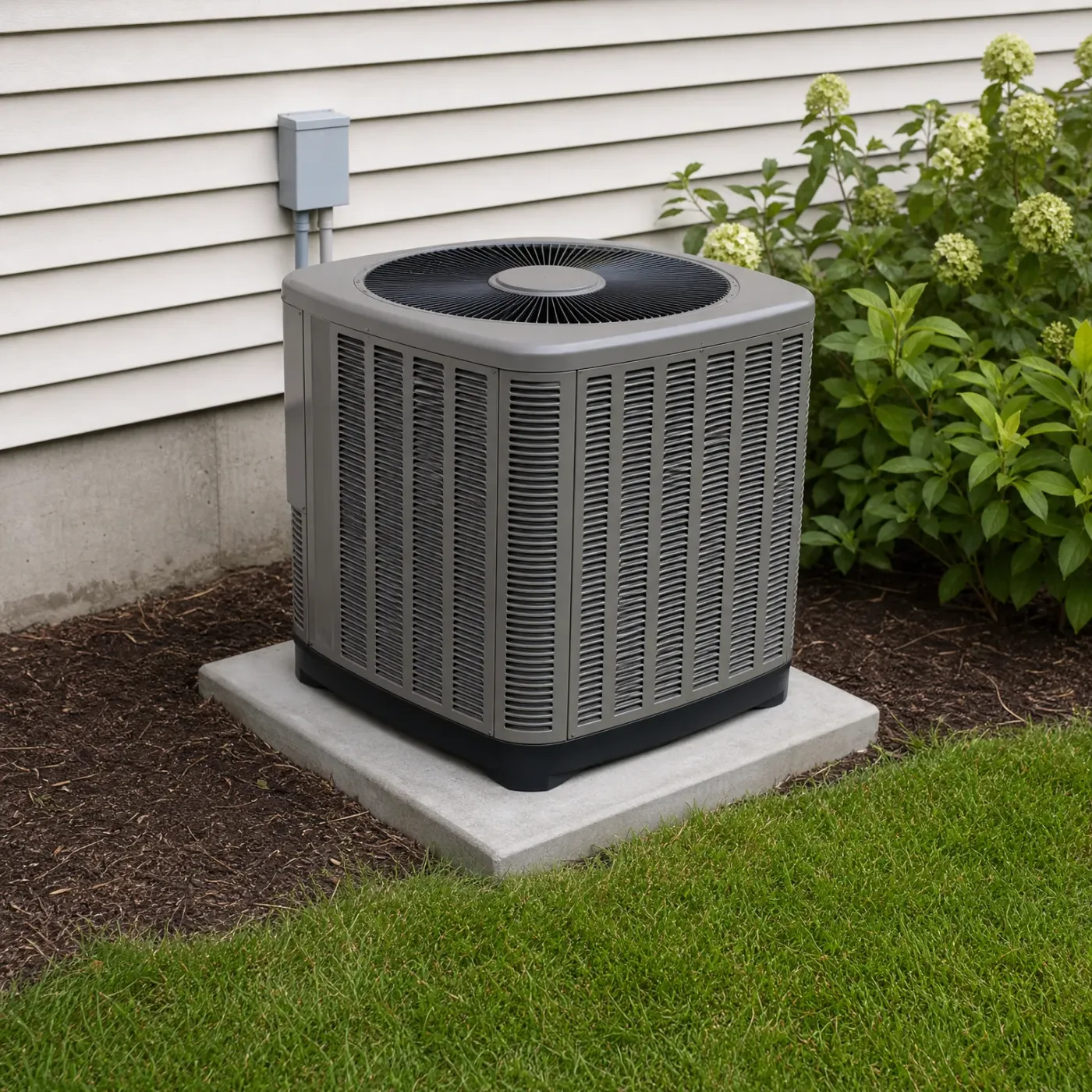
A gray outdoor air conditioner condenser unit on a concrete pad beside a house with horizontal vinyl siding, surrounded by mulch, flowering shrubs, and lawn.
After you get your air conditioner repair
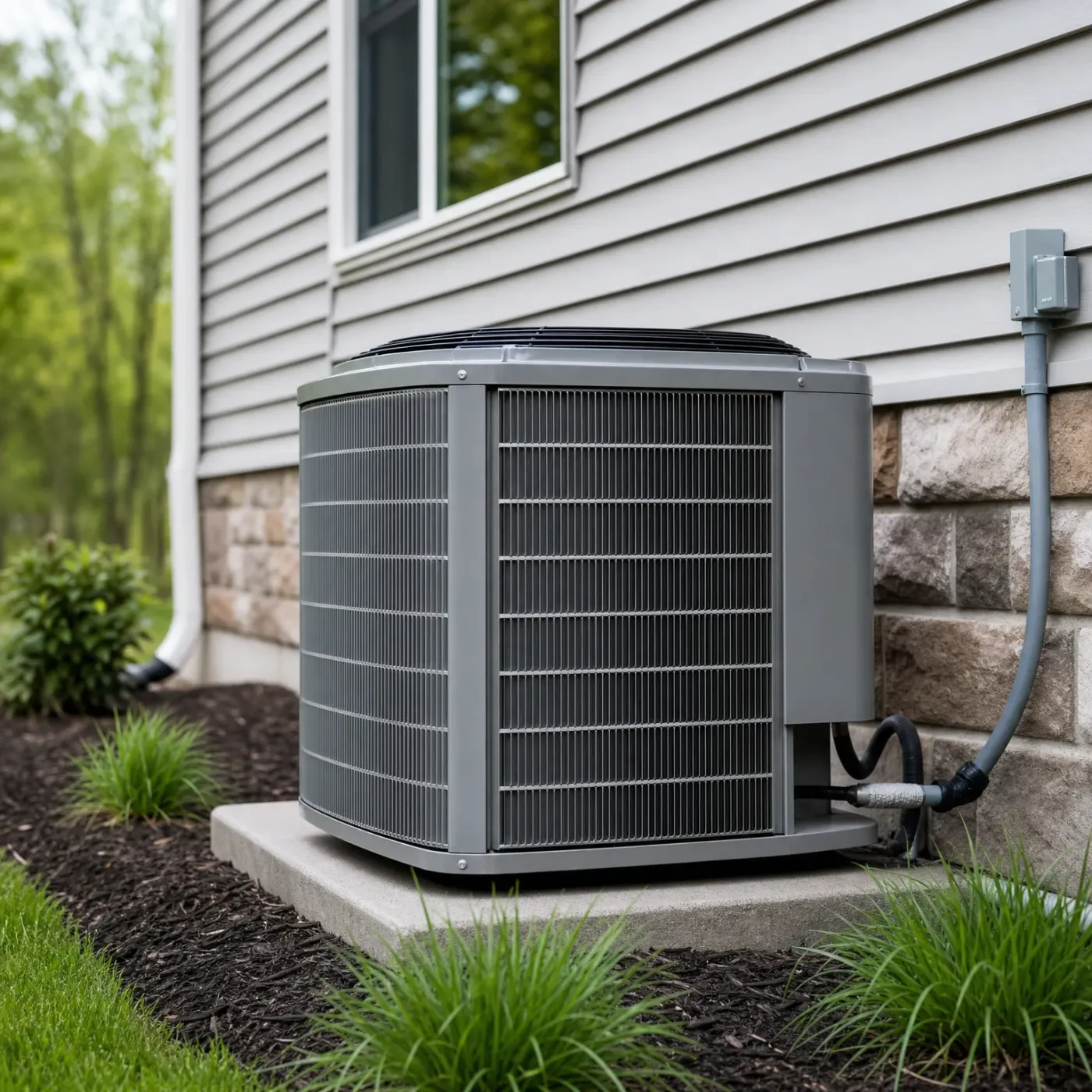
A gray outdoor air conditioner condenser unit on a concrete pad beside a house with horizontal siding and a stone veneer foundation, surrounded by mulch, ornamental grasses, and shrubs, with a conduit and disconnect box on the wall.

A pro who works on air conditioners

The pro who reaches out is licensed in Wisconsin.

Describe your air conditioner job, and a local pro who handles it gets in touch.

Find a licensed pro

It costs nothing to send, and you don't have to hire anyone.

What are you noticing around the house right now

The upstairs rooms stay warm even when the thermostat downstairs reads close to the setting. The air coming out of the vents feels cool at the register but weak, not the steady push you'd expect. The outdoor unit runs long stretches without shutting off, and you can hear it working through the evening when it used to cycle off by dinner. Indoors it feels damp, clothes on the line don't dry, and the house has a closed up, heavy feel even with the AC running. Left alone through a full Wisconsin summer, that strain tends to wear harder on the parts carrying the extra load, and the people trying to sleep in the hotter rooms feel it first.

A gray outdoor air conditioner condenser unit on a concrete pad beside a house with horizontal lap siding, with a wall-mounted disconnect box and conduit to its right and shrubs to the left.

Coil running clean

This condenser's fins are clear and the casing is free of grime. Electrical conduit runs tight to the disconnect box, nothing loose or corroded. Air pulls through the coil the way the unit was built to move it, so the system sheds heat as fast as it takes it on, even with the compressor running most of the afternoon.

An outdoor air conditioning condenser unit on a concrete pad beside a house with horizontal lap siding, with a conduit and electrical disconnect box on the wall at right.

Coil caked with grime

Dirt has built up across the coil guard here, thick enough to block airflow before it ever reaches the fins. The unit still runs, but it's working against itself, trading heat with the air far slower than it should. On a hot Wisconsin afternoon that's the difference between a house that cools down and one that doesn't.

A gray-haired woman in a cream knit sweater stands in a dimly lit kitchen at night, looking to her right, with a round loaf of bread in the foreground and a dark window and potted plant behind her.
A woman and a sleeping child wrapped together in a cream knitted blanket on a couch, with a potted plant, framed photo and lit lamp in the background.

Why heat load wins out

A central air conditioner is sized for a certain heat load, meaning the amount of heat it can pull out of the house per hour. That number is fixed the day it's installed. It doesn't grow when a July afternoon pushes past 90 with the air thick enough to wring out. On those days the house is gaining heat faster than the unit was ever built to remove it, through the walls, the windows, the roof, every door that opens and closes. A unit that cycled off on comfortable days in June runs flat out in late July because the gap it has to close is simply bigger, not because anything inside it has failed.

What a dirty coil costs you

The outdoor coil gives up the heat the system pulls from inside the house. When it's coated in grass clippings, cottonwood fluff, or a season of dust, air can't move through the fins the way the unit was built to move it. Heat that should transfer to the outside air backs up instead. The compressor runs longer to do the same job, and on a 90 degree day that lost margin is the difference between a house that creeps down to 76 by evening and one that sits at 80 no matter how long the system runs. A contractor can check whether a coil is costing you that margin.

Power costs 18.08 cents per kilowatt-hour statewide

At 18.08 cents per kilowatt-hour, every extra hour your AC runs straining against the heat shows up on the bill. A unit that's lagging the thermostat isn't just leaving the house warm, it's pulling power the whole time it fails to catch up.

EIA-861 2025 statewide residential average

So when your AC falls behind on the hottest afternoons, the question is whether it's keeping pace with what the day is asking of it or whether something inside it is making the job harder than it needs to be. A clogged coil, a low charge, a failing capacitor, any of those will show up exactly this way, as a house that won't quite reach the setting no matter how long the unit runs. You don't have to figure out which one it is. A local contractor who works on these systems all summer can look at yours, tell you if what you're seeing is normal strain or a part that's wearing out, and fix it if there is something to fix. You'll be matched with one contractor, not a handful calling at once, someone who knows the equipment that shows up in homes around here and what tends to go wrong with it first. From there you'll know whether your system needs help or just a hot day to prove itself.

A gray outdoor air conditioning condenser unit on a concrete pad beside a house with light horizontal siding, with gravel, dark mulch, shrubs and lawn nearby and a conduit box on the wall.

Get your air conditioner to the right pro

Find a local pro

Only one pro gets your request, so you hear from one company.

No charge to send it. You decide if you hire them.