

Why your AC compressor won't kick on in Wisconsin

Step 1 of 3: Equipment

A compressor that won't start is usually stuck behind one of a few things: a tripped breaker or blown fuse, a bad run capacitor, a failed contactor, or a safety switch that's shutting it down on purpose. The capacitor is the most common one. It gives the compressor the jolt it needs to start, and once it weakens, the unit hums or clicks but never turns over. Wisconsin summers run hot and humid enough that an aging capacitor often gives out right when the system is working hardest, on the muggiest days of July or August. If the outdoor unit is dead quiet with no hum at all, that points more toward the contactor or the power supply feeding it. Either way, running a compressor that's struggling to start, or trying to force it, can burn out the motor itself, which costs far more to fix than the part that failed first.

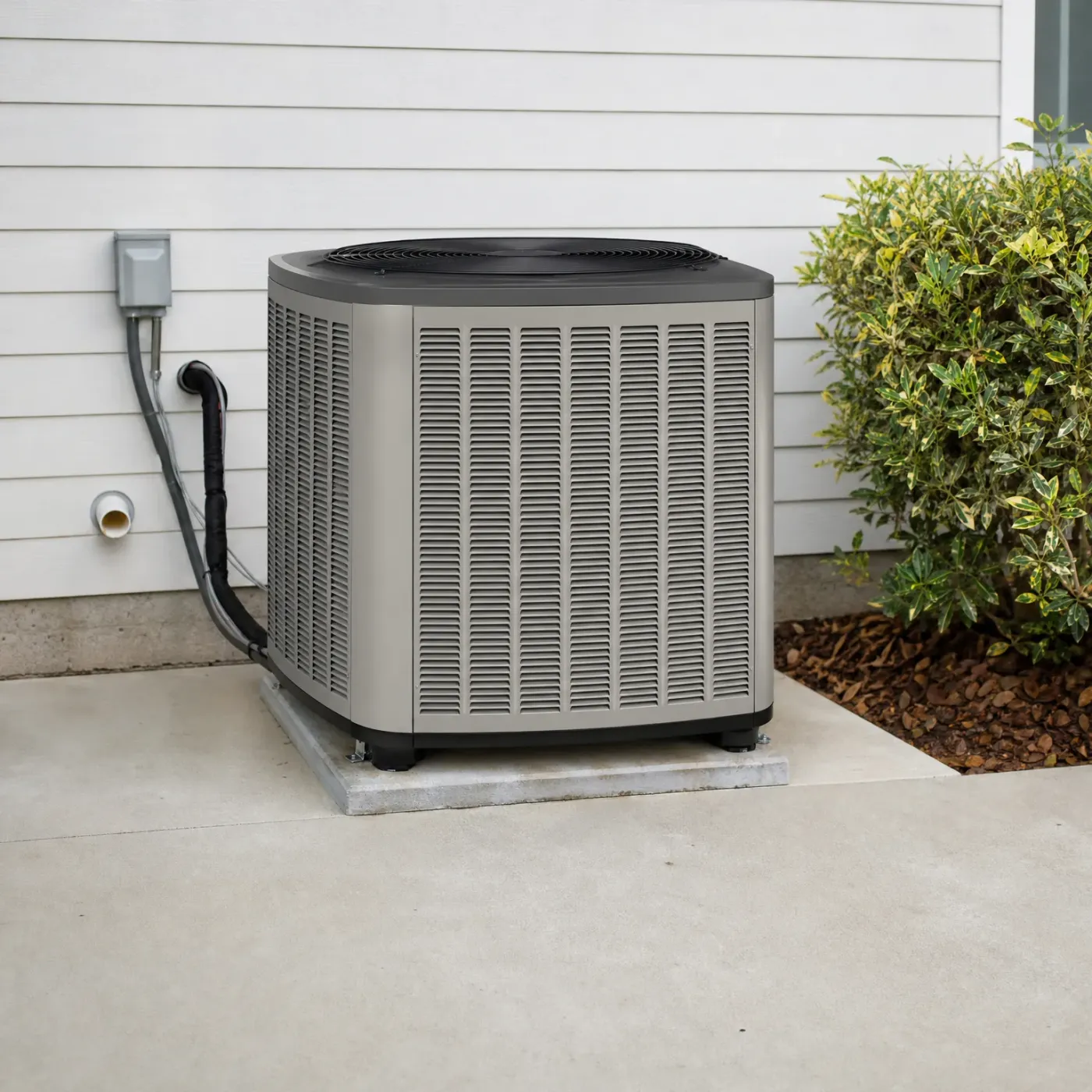
An outdoor air conditioner condenser unit on a concrete pad beside a house wall, with a gray electrical disconnect box and conduit above it and grass in the foreground.

The capacitor fails quietly first

A run capacitor stores the jolt the compressor needs to start spinning. It weakens with heat and age, and a Wisconsin summer puts it through real swings between cool nights and ninety-degree afternoons. When it drops below what the compressor needs, the unit hums for a second and goes quiet, or the outdoor fan spins while the compressor sits still. That hum is the motor trying and failing to start.

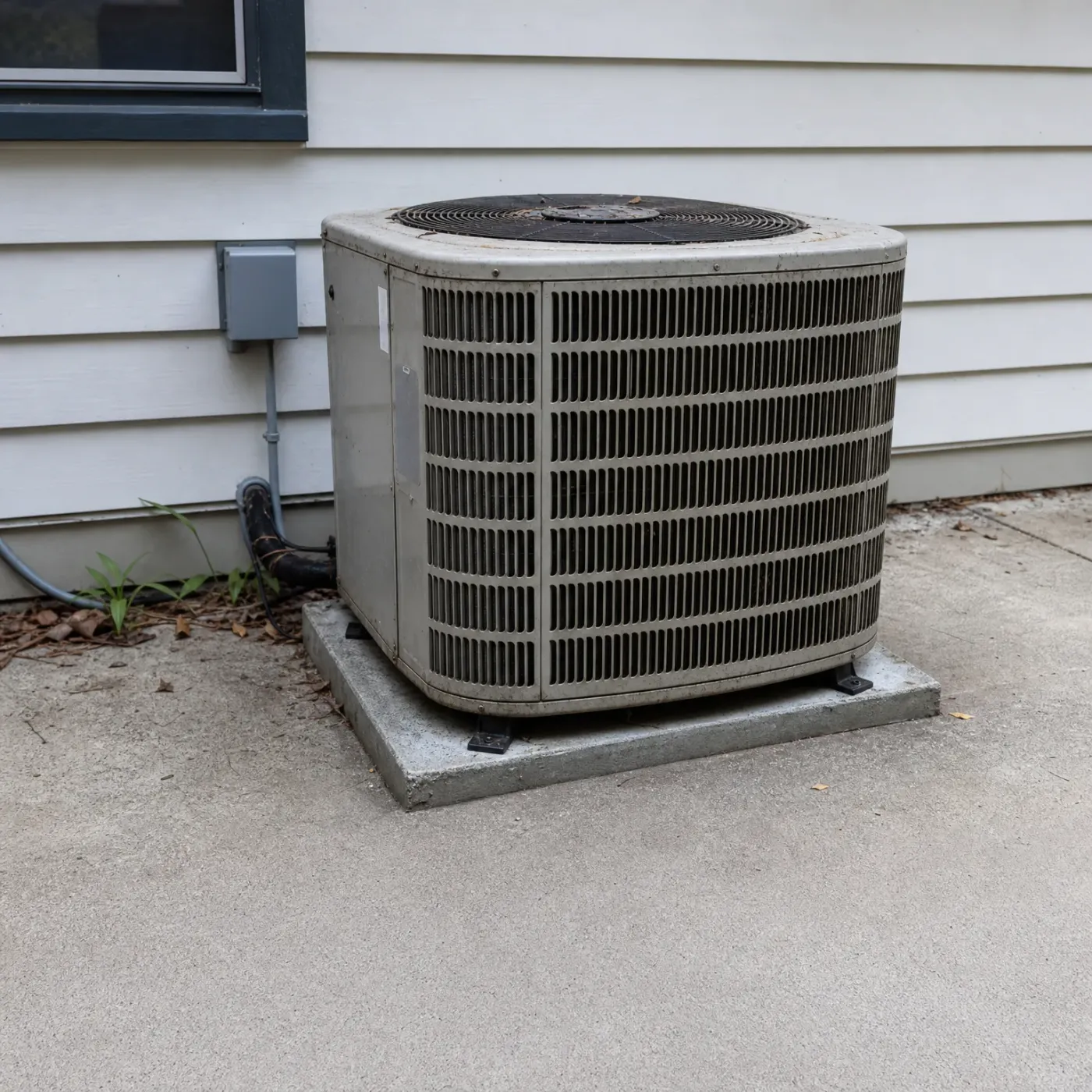
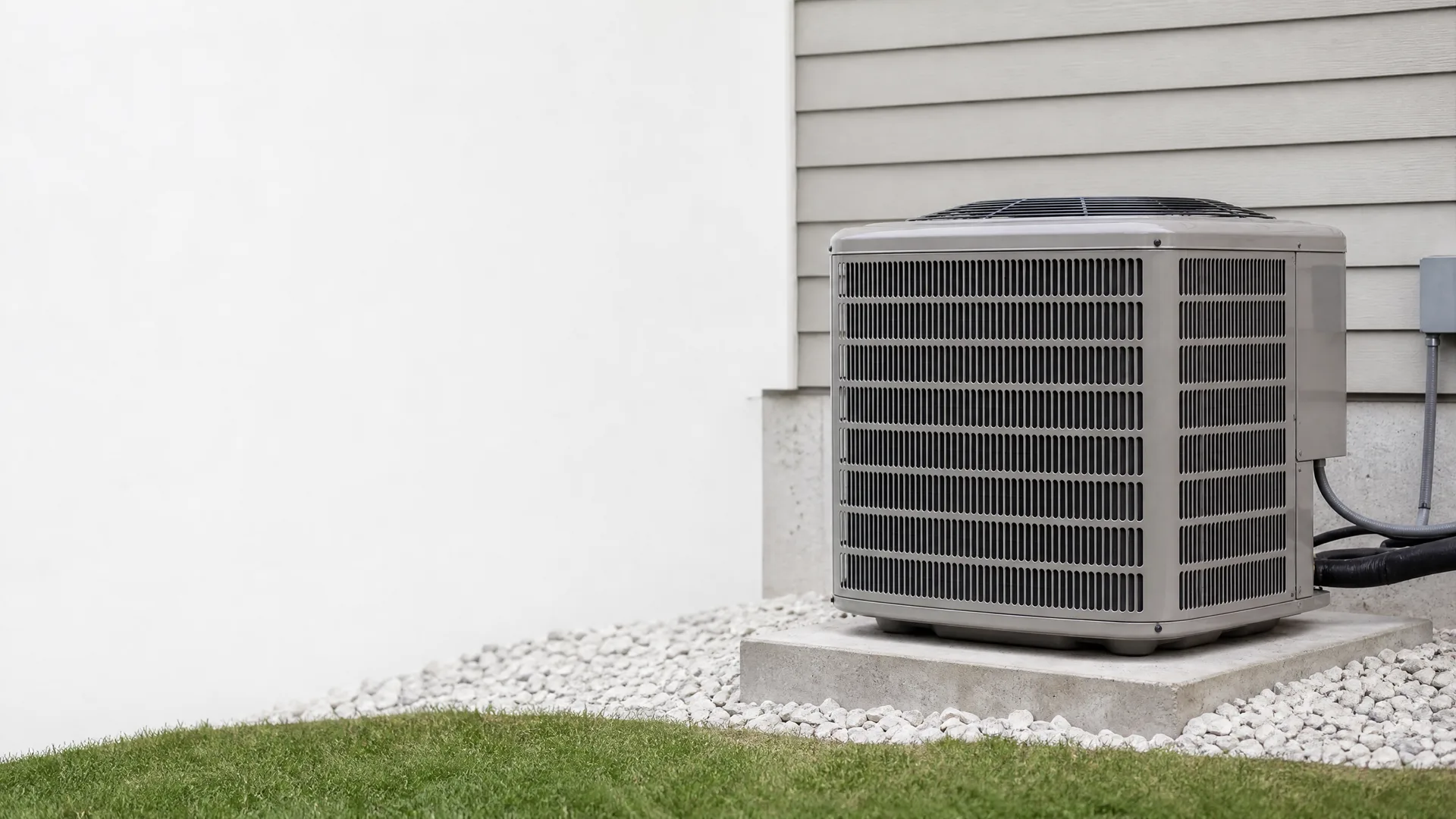
A gray outdoor air conditioner condenser unit on a concrete pad beside a house with horizontal lap siding, surrounded by white gravel and a lawn, with a white wall at left.

A safety switch is doing its job

If the compressor has been short on refrigerant or straining against a dirty coil, a high pressure or low pressure switch will cut power to it on purpose. That's not a malfunction. It's the system protecting itself from damage that costs more to fix later. The same goes for a high limit switch tripped by poor airflow. Until whatever triggered it gets corrected, the switch will keep resetting the compressor off, no matter how many times the breaker gets flipped back on.

Is this why your AC won't turn on today

You go to the thermostat, the house is already sticky, and nothing happens. Maybe you hear a faint hum or click from the outdoor unit and then silence. Maybe you hear nothing at all. Inside, the fan might still blow, just warm air instead of cool. Outside, the compressor sits quiet while you'd expect it running flat out on a humid afternoon. If it's been cycling on and off every few minutes before quitting, that's a safety switch stepping in, and running it that way for days at a time asks a lot of a compressor that's already struggling to start.

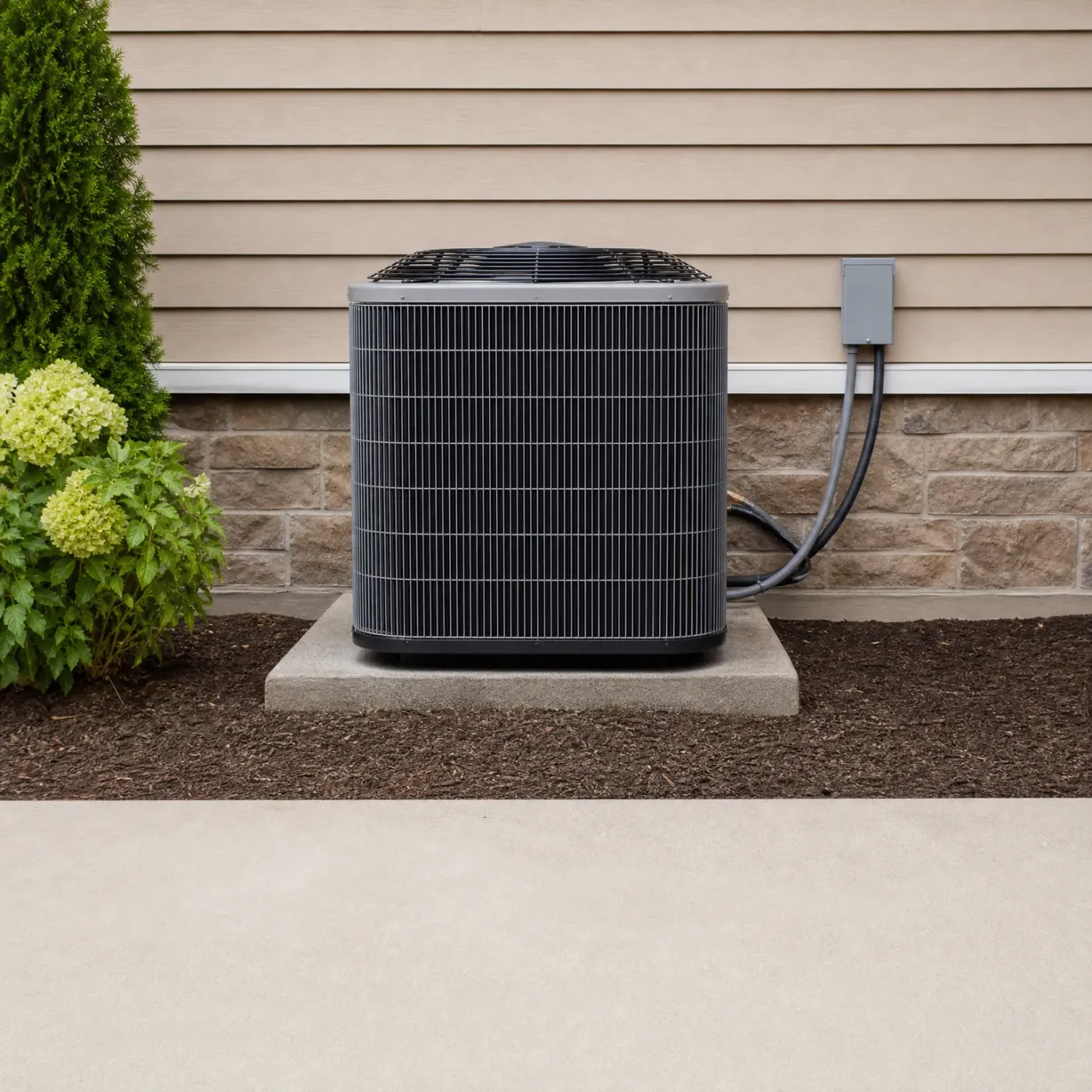
An outdoor air conditioner condenser unit on a concrete pad beside a house with beige horizontal siding and a stone-veneer base, with refrigerant lines running to a gray wall-mounted electrical box, surrounded by dark mulch, a flowering shrub and an evergreen on the left.

Running the way it should

The condenser hums along on its pad, the disconnect box closed up beside it. Air moves out the top, the unit cycles on and off with the thermostat, and the house keeps pace with a muggy Wisconsin afternoon without you thinking about it.
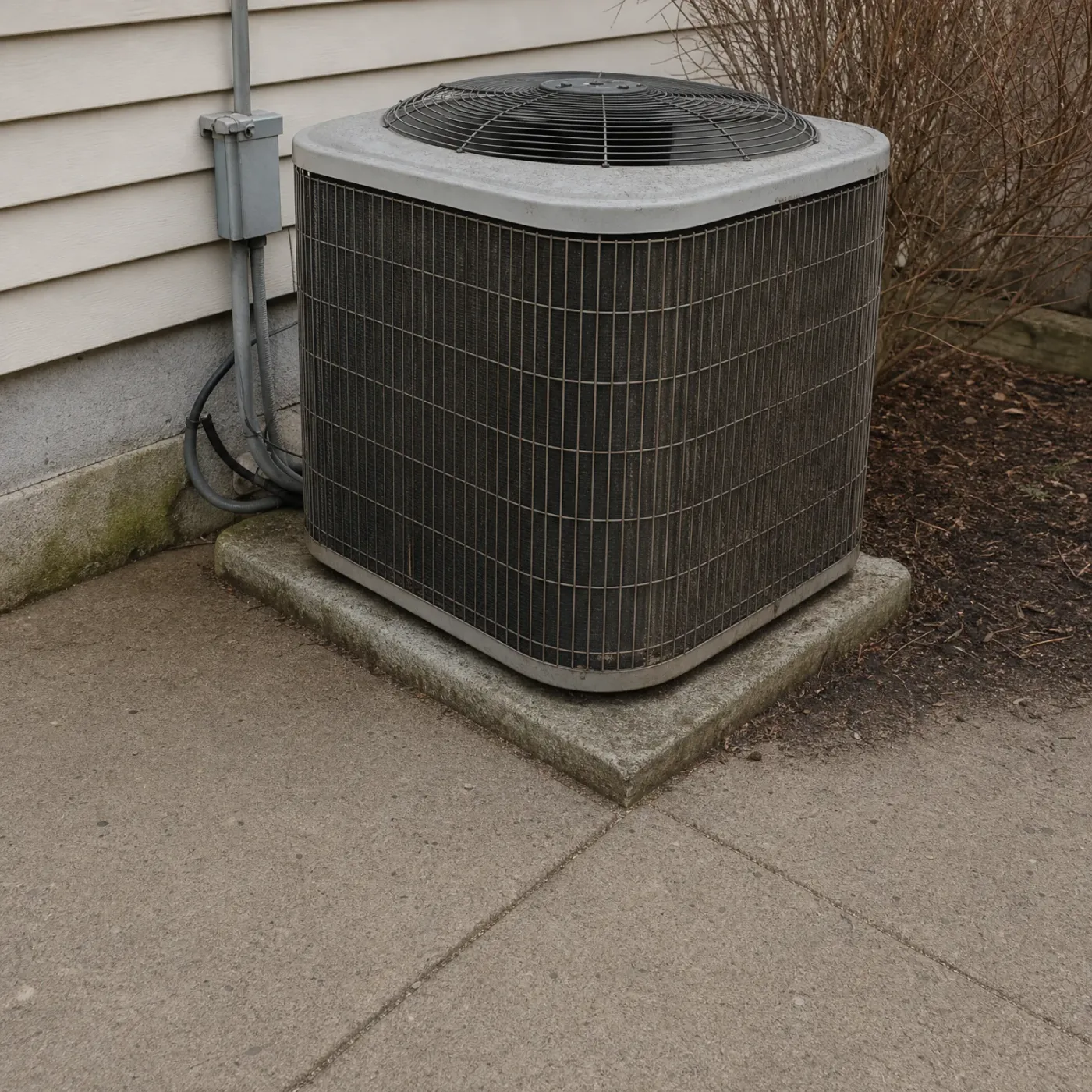

An outdoor air conditioning condenser unit on a concrete pad beside a house with light vinyl siding, an electrical disconnect box and conduit on the wall, bare shrubs and mulch to the right, and a concrete walkway in the foreground.

Sitting there doing nothing

You walk out and the unit is silent. No hum, no click, no air moving over the coils. Check the disconnect box first. If it's seated right and the breaker hasn't tripped, something inside the unit is keeping the compressor from starting.

A woman in a gray turtleneck sweater stands by a window looking outside at snowy ground, with a dimly lit living room containing a sofa, shelves, lamp and a lit candle behind her.
A woman in a cream cable-knit turtleneck sweater stands in a warmly lit living room with a fireplace and shelves behind her, looking out a window toward snow-covered trees and a railed deck.
A woman in a cream knit turtleneck sweater stands by a window looking out at snow, with a lit fireplace, sofa and lamp in the room behind her.
A woman in a gray knit sweater sits by a window looking out at falling snow, with a dimly lit living room containing a sectional sofa, pillows, a lamp and houseplants behind her.

The right pro for this job

Skip searching for an air conditioner pro and answer a few questions instead.

You're not committing to anything by asking.

The switches between thermostat and compressor

  • The outdoor unit has a disconnect box, usually gray, mounted on the wall right next to it.
  • Pull that disconnect and the compressor has no power at all, even if the thermostat calls for cooling.
  • A contactor is the switch that lets 240 volts reach the compressor each time the thermostat calls.
  • Contactors wear out from the arcing every time they open and close, and the contacts can pit or fuse.
  • A low refrigerant charge trips a pressure switch that shuts the compressor off before it can damage itself.
  • The high pressure switch and low pressure switch both sit in the refrigerant line and both can stop a start.

Your thermostat doesn't talk straight to the compressor. The call passes through a few points first, and any one of them can break the chain. Outside, next to the condenser, there's a disconnect box, usually gray, with a pull block inside. It's there so a contractor can cut power safely before working on the unit, but if it's pulled even partway, or if moisture or a mouse has gotten into it, the compressor sees nothing. Past that is the contactor, a small switch that closes to send 240 volts to the compressor every time the thermostat calls for cooling. It does this constantly through a Wisconsin summer, and every time it closes there's a small arc across the contacts. Over enough cycles that arcing pits the metal, and eventually the contacts don't make a clean connection, or they fuse shut and the compressor runs when it shouldn't. Further into the system, mounted right on the refrigerant lines, are the high pressure and low pressure switches. These aren't wear parts in the same way. They trip because something upstream is wrong, usually a low charge from a slow leak, and they shut the compressor off on purpose rather than let it run and damage itself. A technician checking a no-start compressor works backward through these points in order, because the fix is different at each one.

An outdoor air conditioning condenser unit on a concrete pad beside a house with white horizontal lap siding, with an electrical disconnect box and insulated refrigerant line on the wall and a shrub over mulch to the right.
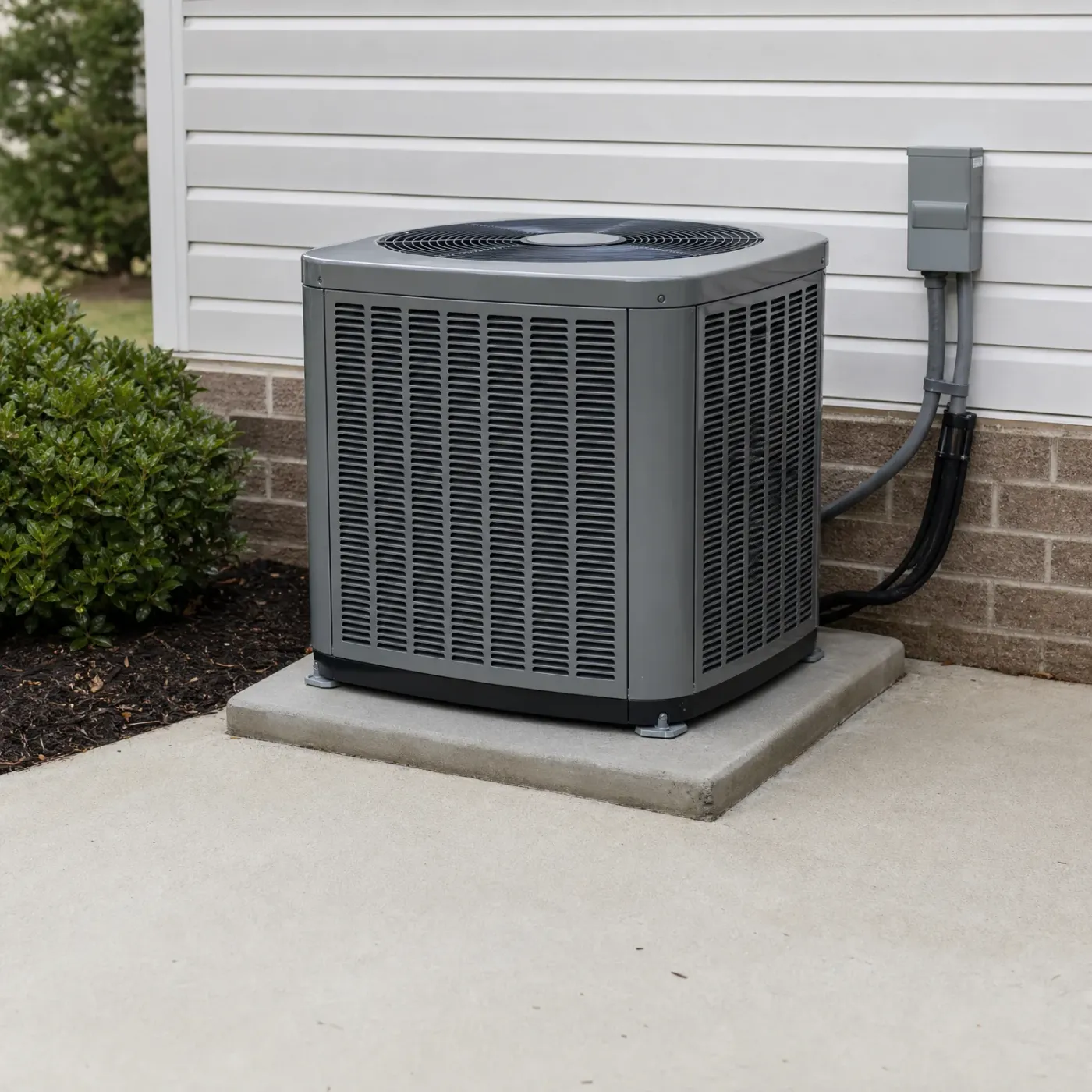
The condenser looks clean, the disconnect box is shut, and the lines running to it sit flush against the wall with no sign of wear.
An outdoor air conditioner condenser unit on a concrete pad beside a house with light horizontal lap siding, with an electrical disconnect box and conduit on the wall behind it.
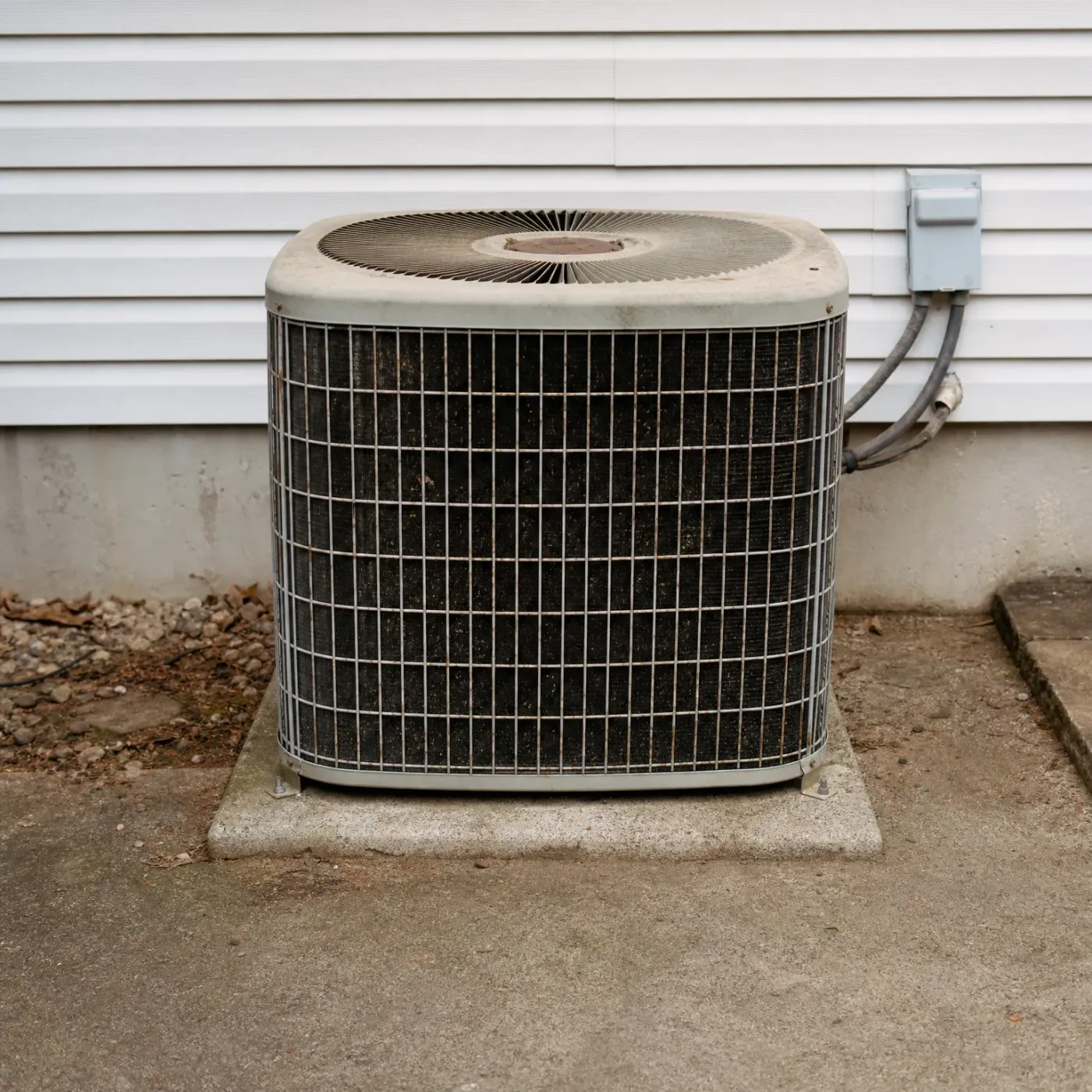
Weathered cabinet, a disconnect box that's been opened more than once, and lines along the foundation showing their age same as the house.
  1. The thermostat calls for cooling and sends power to the contactor coil.

  2. The contactor pulls in, closing the contacts that feed 240 volts to the compressor.

  3. The run capacitor dumps its stored charge into the compressor windings.

  4. That charge kicks the compressor motor into a spin.

An outdoor air conditioning condenser unit on a concrete pad beside a house with white horizontal vinyl siding, with a gray electrical disconnect box and refrigerant lines on the wall behind it.
Before you get your air conditioner repair
A gray outdoor air conditioner condenser unit on a concrete pad beside a house with white horizontal siding and a brick foundation, with a wall-mounted disconnect box and conduit, and a green shrub with mulch at left.
After you get your air conditioner repair

You call around to find someone who can look at it, describe the same no-start problem three or four times, then wait to see which quote actually matches what's wrong.

You answer a few questions once, and a contractor who covers your part of Wisconsin reaches out to get it running again.

A bearded man in a plaid flannel shirt stands in a kitchen looking out a window toward snow-covered shrubs, with a steaming mug on the windowsill and potted plants on a shelf behind him.
A smiling man with dark curly hair in a navy t-shirt sits on a gray couch indoors, with a large-leafed plant and a window in the background.

Power costs 18.08 cents per kilowatt-hour statewide

A compressor that keeps short-cycling or struggling to start pulls harder on your meter the whole time it's working against whatever's wrong. At 18.08 cents per kilowatt-hour, that strain shows up on your bill before it shows up as a full breakdown.

EIA-861 2025 statewide residential average

A woman in a cream cardigan and jeans stands with one hand raised facing an open front door of a gray horizontal-siding house, with a black lantern wall light, a potted shrub with yellow flowers, and a stone-faced porch column.

A compressor that won't start has a reason, and it's findable

A tripped breaker, a weak capacitor, a failed contactor, a safety switch doing its job. One of those is behind your outdoor unit sitting silent. None of them fix themselves, and running the thermostat down lower or flipping the breaker a few more times won't change which one it is. Somebody has to open the disconnect, test the part, and know what they're looking at.

You don't have to be the one who sorts through that. Answer a few questions about what your unit is doing, or isn't, and a contractor who works on these systems around Wisconsin gets back to you instead of you working the phone yourself, telling the same story to whoever picks up. You'll know where you stand with your AC, and you won't have spent the muggy afternoon chasing that answer alone.

A living room corner with a light beige sofa holding a textured taupe cushion, a large ceramic vase of olive branches by a window, a framed neutral artwork on the wall, and a dark bowl with stacked books in the foreground.
Interior room corner with sunlight from a window, showing peeling paint and damaged plaster on the wall above a white baseboard, a wooden cabinet with a pale bowl on top, hardwood floor and a patterned rug.
Interior corner of a room with tan walls, white profiled baseboard and window trim, a wood-plank floor in sunlight, and green foliage visible through the window.
An empty room corner with cream walls, white baseboard, two windows with deep sills showing green foliage outside, and a wood plank floor lit by sunlight.
Empty room corner with beige walls, white beadboard wainscoting, chair rail and baseboard, a window with green foliage outside, and sunlight casting leaf shadows on the wall above a wood floor.
Sunlit room corner with a multi-pane window, beige walls, white baseboard, wood floor with a woven rug, and a dark wooden cabinet holding a ceramic table lamp below a framed picture.

Matched to your air conditioner job

One form replaces the calls you'd make to find an air conditioner pro.

Connect with a pro

It costs nothing to send, and you don't have to hire anyone.