




Why your AC outdoor fan isn't spinning in Wisconsin

Step 1 of 3: Equipment

Why isn't my AC's outdoor fan spinning?

You go outside on a hot, sticky Wisconsin afternoon and the unit is running but that fan on top isn't turning. The air coming out of your vents feels warm, or the system is short cycling. You want to know why the fan stopped before you decide whether this is something to watch or something to get looked at right away.

Usually a bad capacitor, a seized motor, or a tripped breaker

Most often the capacitor that gives the fan motor its starting jolt has gone weak and can't spin the blade anymore, even though you might hear the unit humming. Sometimes the motor bearings have seized up from age or from dirt and grass clippings packed into the housing. It can also be as simple as a breaker that tripped from the heat and strain of a long Wisconsin summer day. Whatever the cause, a compressor that keeps running without its fan can overheat fast, and on a 90 degree day that damage can happen within minutes, not hours. Shutting the system off at the thermostat or breaker until it's checked is the safer move than letting it run.

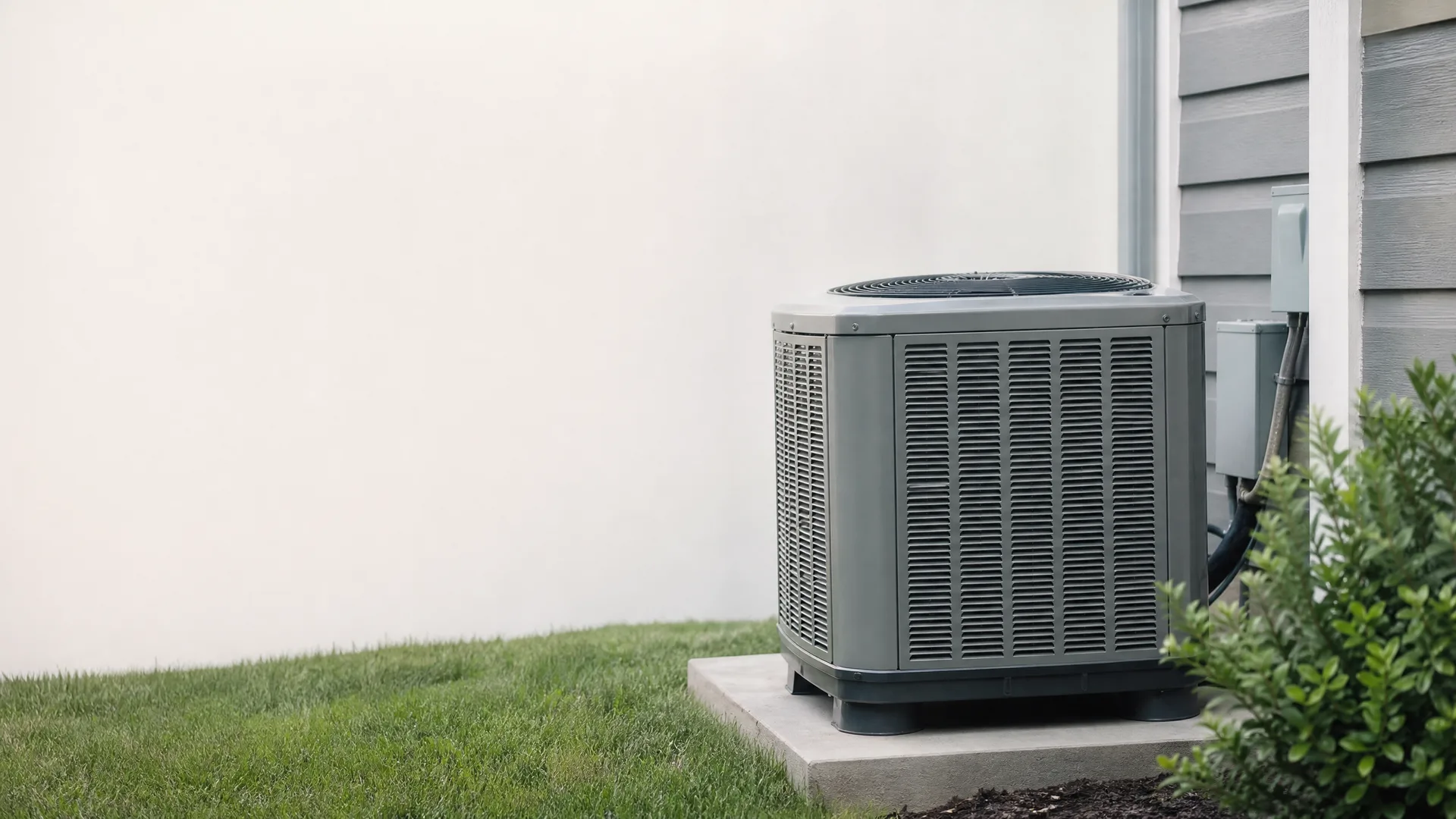
A gray outdoor air conditioner condenser unit on a concrete pad beside a house corner with lap siding and a stucco wall, surrounded by mown green grass.

The capacitor gives out first

That fan motor needs a push to get spinning, and the run capacitor supplies it. Capacitors wear down with heat and age, and Wisconsin summers push that unit hard for months at a stretch. When a capacitor weakens, the motor hums but can't turn the blade on its own. Sometimes a light nudge with a stick through the grille will spin it up, which tells a contractor the capacitor is the likely cause rather than the motor itself.

An outdoor air conditioning condenser unit on a concrete pad beside a house with light stucco and lap siding, with mown grass to the left and a green shrub to the right.

A seized motor needs replacing

If the motor bearings have worn out or the windings have burned, the fan won't turn no matter what pushes it. Dirt and grass clippings built up around the motor housing over a season can also make it work harder than it should. A motor that's seized or shorted isn't something a capacitor swap fixes. At that point the outdoor unit needs a new fan motor, and running the system without it can let heat build up and damage the compressor.

Power costs 18.08 cents per kilowatt-hour statewide

At 18.08 cents per kilowatt-hour, a stuck fan costs you more than comfort. The compressor keeps running even when the fan can't push heat off the coil, so it pulls hard to do a job it can't finish. Catching a quiet fan now beats paying for that strain all summer.

EIA-861 2025 statewide residential average

Let it run like this and the compressor is doing the work with no heat leaving the coil. It can overheat and shut itself down, and on a bad day it can fail outright.

Call now, before the unit trips offline or the compressor takes the damage, and a contractor can get the fan motor or capacitor sorted before the next heat wave finds you without cooling.

A woman in a cream cowl-neck sweater sits by a window with snow outside, in a dimly lit living room with a sofa, lit lamp, mirror, candles and a fireplace.
A woman in a gray turtleneck sweater sits beside a large window looking out at snow-covered evergreen trees, in a dimly lit living room with a lit fireplace, lamps, couch and houseplant.
A woman in a cream turtleneck sweater stands beside a large window with snow-covered ground and bare trees outside, in a dimly lit living room with lamps, a sofa and framed art.
A woman in a grey cowl-neck sweater stands indoors near a window, looking out at falling snow, with a lamp, framed picture and couch in the warmly lit room behind her.

What you'll notice first

The air from your vents turns warm while the unit itself still sounds like it's running. Some systems start cycling on and off every few minutes instead of running a normal stretch. You might hear the compressor humming without that familiar rush of air from the fan on top. On a muggy Wisconsin afternoon, a room that should be cooling down stays sticky, and the thermostat number barely moves even though the system hasn't shut off.
What it risks if you wait

A fan that won't spin leaves the coil with no way to shed heat, so the compressor keeps working against that buildup. Run it like that through a stretch of hot days and the unit can trip itself offline, or the compressor can take damage that turns a fan repair into a much bigger job. Checking it before you leave for work or go another week without AC in July is worth more than hoping it fixes itself.

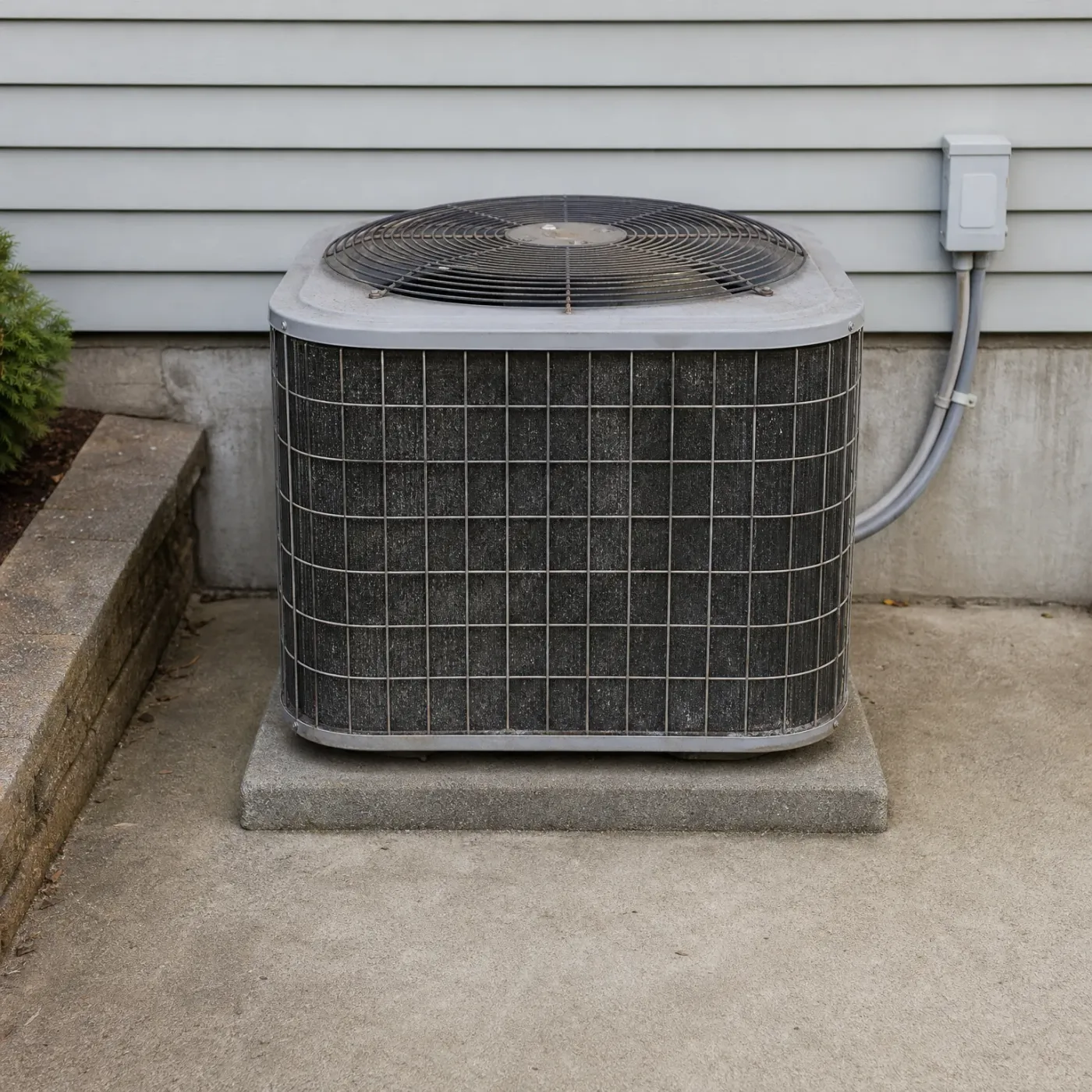
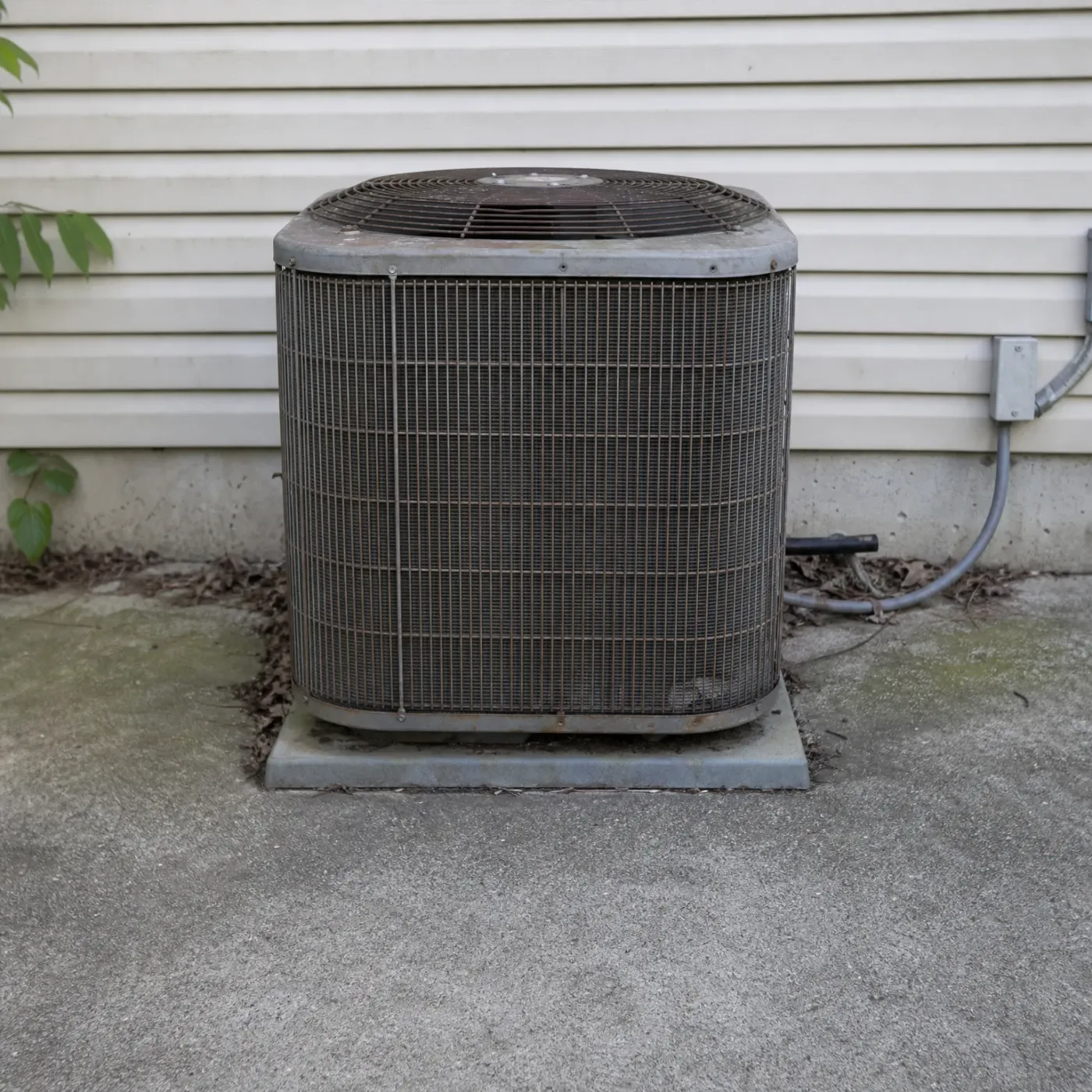
A weathered outdoor air conditioner condenser unit on a concrete pad beside a house with horizontal vinyl siding, with a conduit and disconnect box on the wall to the right.
Before you get your air conditioner repair
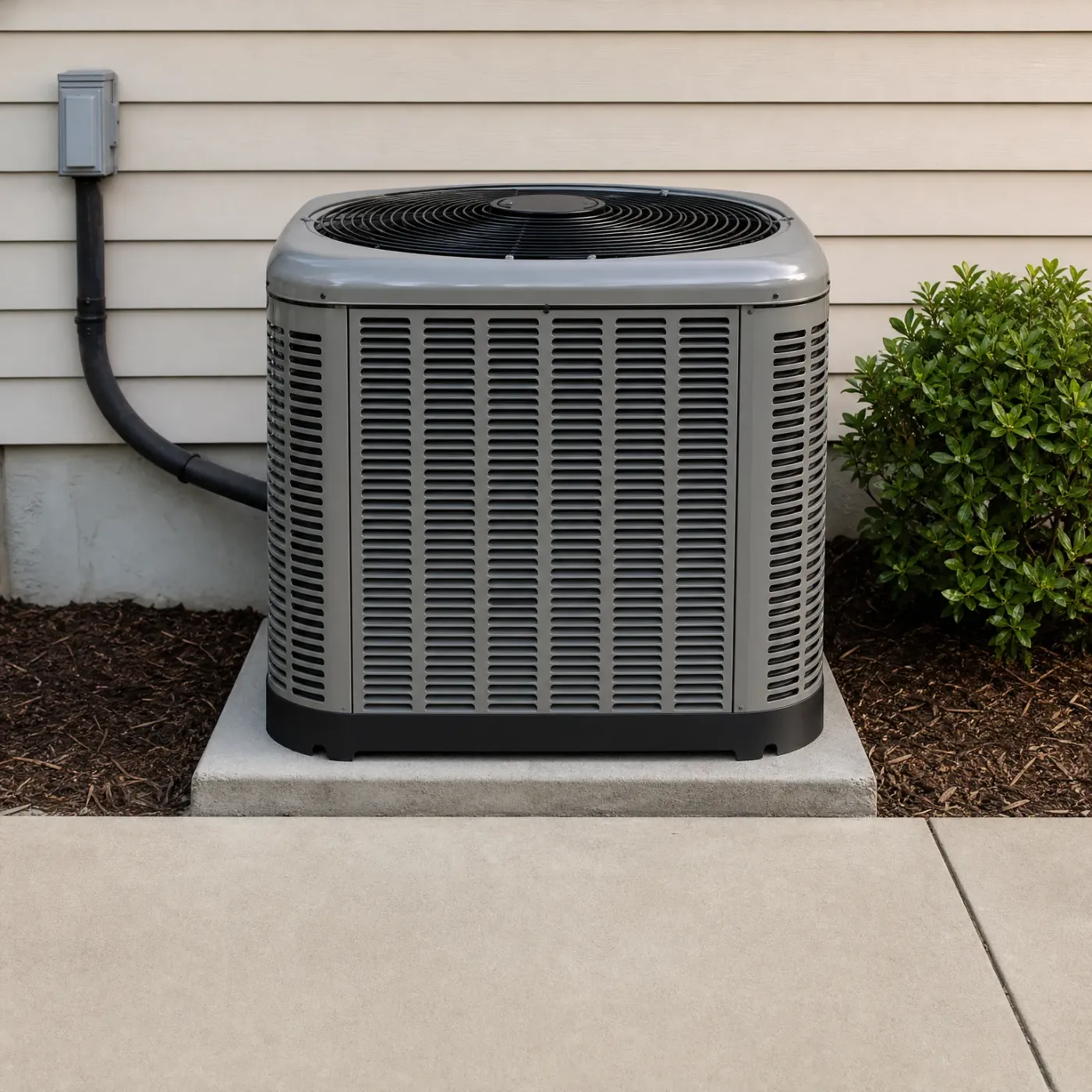
A gray outdoor air conditioning condenser unit on a concrete pad beside a house with horizontal lap siding, with a conduit and electrical disconnect box on the wall and a green shrub in mulch to the right.
After you get your air conditioner repair

A fan that won't turn usually comes down to one of a few things. The run capacitor gives the motor the jolt it needs to start spinning, and when it's weak, the compressor can still fire up while the fan sits still or just hums. The motor itself can seize at the bearing, so power reaches it but nothing moves. Sometimes the problem never reaches the motor at all, if wiring at the disconnect box has loosened or corroded. Other times the fan stopping isn't a failure. A high-pressure switch can cut power to the fan on purpose, protecting the compressor when the coil is blocked and pressure climbs too high. And a blade jammed by debris or ice can look exactly like a dead motor until someone checks what's actually holding it back. Knowing which one you're dealing with matters, because a seized bearing and a safety switch doing its job call for two different repairs, not the same fix.

What's actually stopping the fan

  • A failed capacitor will sometimes leave the fan motor humming in place instead of turning at all.
  • A seized or worn motor bearing can stop the blade even when power is reaching the motor.
  • Loose or corroded wiring at the disconnect box can cut power to the fan while the compressor still runs.
  • A bad run capacitor can also let the compressor start but strand the fan motor without the jolt it needs to spin.
  • A tripped high-pressure switch will sometimes shut the fan off on purpose to protect the compressor from a blocked coil.
  • A seized blade, jammed by debris or ice buildup, can look like a motor failure when the motor itself is fine.
A bearded man in a blue and brown plaid flannel shirt stands indoors looking out a window at snow-covered trees, with a ceramic mug on the windowsill.
A man in a blue T-shirt sits on a light gray sofa, laughing while looking at an open laptop in the foreground, with a framed picture, lamp and potted plant behind him.

An air conditioner pro near you

Describe what your air conditioner is doing once, in one form.

You only hire the pro if you want to.

A single-story house with light gray horizontal siding, dark gray shingled gables, black shutters and a dark front door, fronted by a mulched bed of small shrubs and a large lawn under a clear blue sky.

Wisconsin summers run a dew point around 60°F in June, July and August, averaged across where homes in the state actually sit. That's sticky air, and sticky air carries more heat into your house for your AC to move back out. A stuck outdoor fan already can't shed heat off the coil. Add that moisture load on top and the compressor is working against two problems at once instead of one. You'll feel it as a system that runs long stretches and still can't catch up, even overnight when it should cool down easy.

NASA POWER T2MDEW county cells weighted by homes

Call Now or Wait It Out

Call now

  • A contractor can get the fan turning before the compressor takes any damage from running without airflow across the coil.
  • Diagnosing a dead capacitor or a seized motor bearing while the system is off and cool is straightforward work.
  • You skip the part where the unit trips offline on its own and you're without cooling on a humid afternoon.
  • Parts like a capacitor or fan motor are easier to source and swap before a related failure forces a bigger repair.
  • Catching it now means one call, one visit, instead of searching for a contractor again when something else gives out.

Wait it out

  • The compressor keeps pulling power to move heat it can't get rid of, and that strain doesn't reverse itself.
  • A motor that's humming instead of turning can seize completely the next time the system cycles on.
  • Wiring or a disconnect box issue left alone can corrode further and cut power to more than just the fan.
  • The longer the unit runs this way, the more likely you're replacing a compressor instead of a fan motor or capacitor.
  • Waiting through a stretch of sticky Wisconsin weather means rooms that don't cool while the problem sits unaddressed.
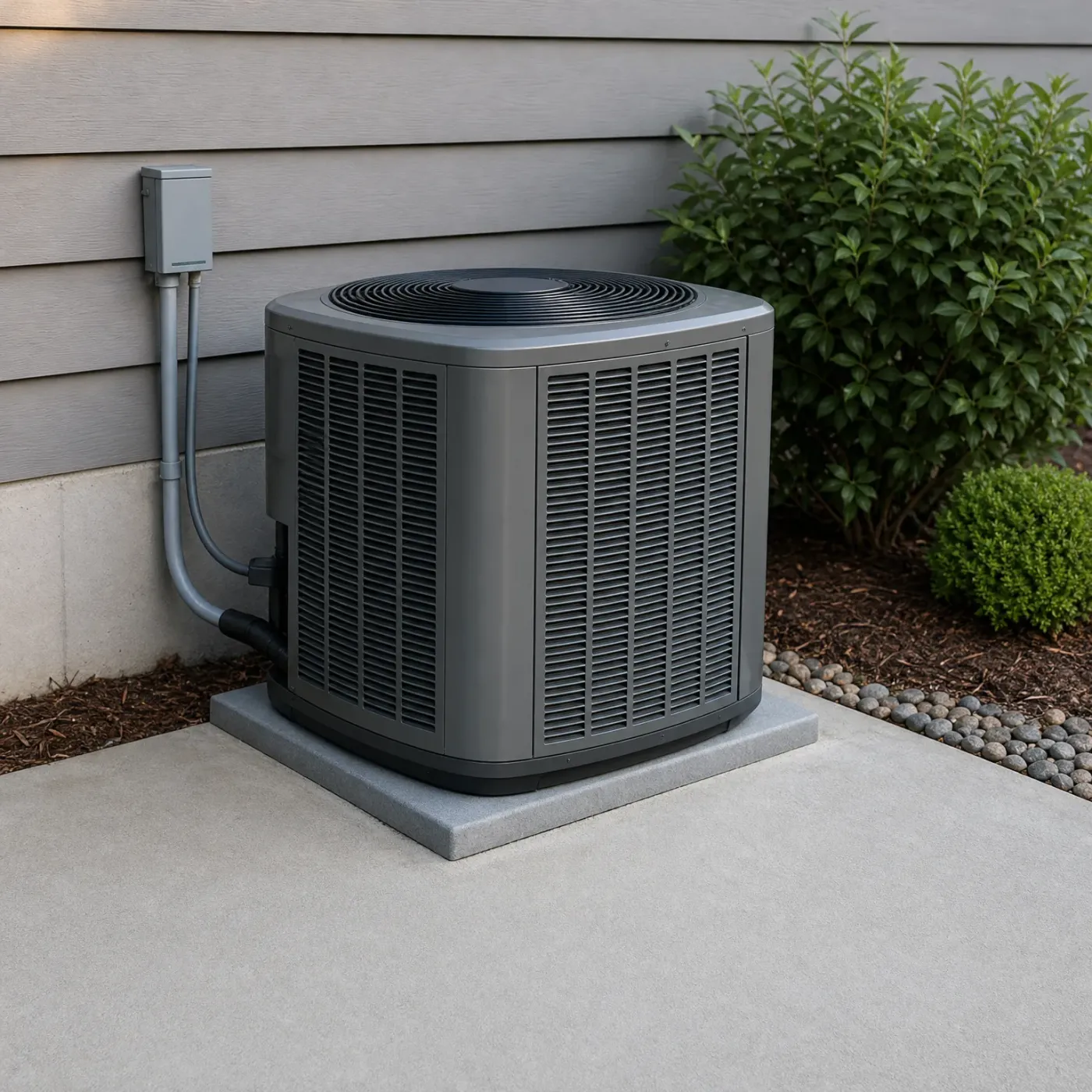
A gray outdoor air conditioner condenser unit on a concrete pad beside a house with horizontal lap siding, with a wall-mounted disconnect box and conduit at left and a green shrub and mulch bed at right.
The fan spins, the coil sheds its heat, and the unit cycles the way it's supposed to.
An outdoor air conditioner condenser unit on a concrete pad beside a house with horizontal lap siding, with a conduit running to a gray electrical disconnect box on the wall.
The fan sits still while the compressor keeps running, and the unit has no way to cool itself.
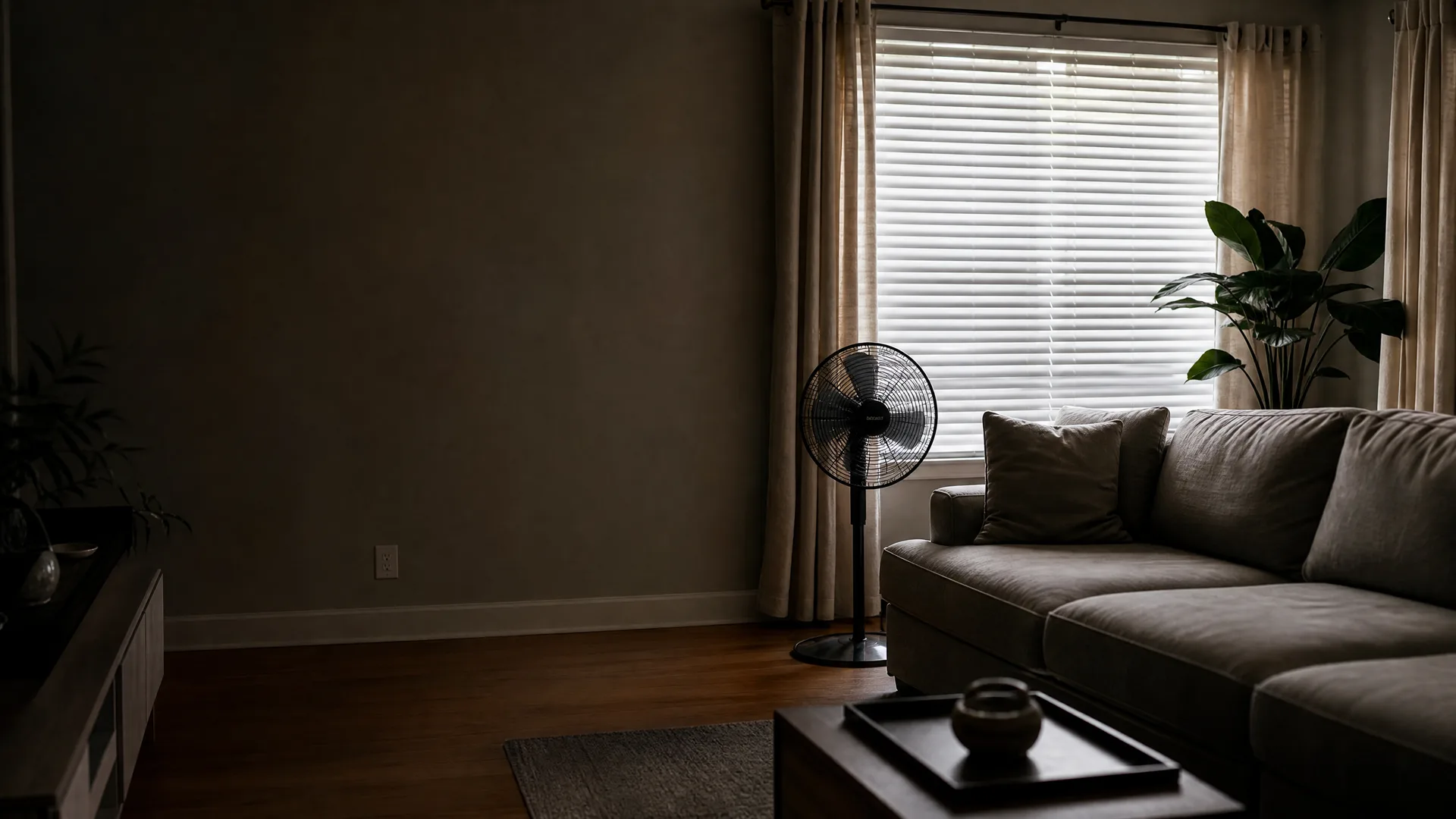
A dimly lit living room with a gray sectional sofa, a standing pedestal fan, a curtained window with blinds, a potted broad-leaved plant, a wooden coffee table with a tray and lidded jar, and a rug on dark wood flooring.

The blinds have been down since noon. The floor fan by the couch is doing most of the work now, pushing warm air around rather than cooling it. You caught the drawn-out hum from the backyard unit an hour ago and went out to check, and the top fan wasn't turning. It's one of those July afternoons where the dew point sits thick and the air outside feels like it's pressing on the windows. You've turned the thermostat down twice since lunch and the house hasn't moved. The couch cushion is warm where the sun got to it earlier. You keep half an eye on the vent above the TV, waiting for it to blow something other than room-temperature air.

A fan that isn't spinning usually comes down to a weak capacitor, a seized motor bearing, or power that isn't reaching the motor at all, and the unit can't cool itself until one of those gets fixed. Left alone through a Wisconsin summer, that's a compressor working without any way to shed heat, and a bill that climbs while your house stays warm anyway. You don't have to figure out which of those three it is, or spend an afternoon calling around to find someone who can look at it this week. You don't have to explain the hum and the warm vents to three different shops and then sit with three different quotes trying to sort out who's worth calling back. Answer a few questions about what you're seeing and hearing, and a contractor who handles this in your area will reach out to you directly. The fan either turns and moves heat off that coil, or it sits still while the compressor strains against it. You already know which one you're looking at.

Aerial view over the shingled roof and stone chimney of a house with a dormer window, overlooking dense green trees, farm fields, and a river under a partly cloudy sky.

A local pro for your air conditioner repair

Connect with a pro

Asking costs nothing, and the choice to hire stays yours.

You've already read what's keeping your AC from cooling. Sending the request means you're done tracking down a contractor, done calling around, done explaining the humming fan twice. One request, and someone who works on these units in Wisconsin homes reaches out to you.