



Profile view of a bearded man wearing a dark green baseball cap and a dark gray T-shirt against a plain light background.

Why your AC smells like burning in Wisconsin

Step 1 of 3: Equipment

A burning smell from your AC usually means something electrical is overheating, or dust burning off a part that just kicked on after sitting idle. A worn motor bearing, a failing capacitor, or wiring that's loose at a connection will all heat up and give off that smell before they fail outright. With how hard your system runs through a Wisconsin summer, these parts see long stretches of continuous use, and that strain is what pushes a weak one toward failure. A burning smell is different from the musty or dusty smell a unit gets after months off, which fades once it's been running a few minutes. If the smell doesn't fade, or comes with smoke, warmth at the vents, or the breaker tripping, that's a sign the part is actively failing. Running the system while that's happening risks more than the part itself, since overheated wiring can damage other components or trip hazards nearby. Shutting it off at the thermostat or breaker until it's looked at is the safer move.

A smiling bearded man in a dark green hooded jacket and blue t-shirt sits on a couch in a living room with shelves, a potted plant, and a bowl of popcorn on a wooden table.
A smiling man in a green long-sleeved shirt sits on a beige sofa in a living room, with a bowl of popcorn in the foreground, a large potted plant and shelving behind him.
A smiling man in a dark blue T-shirt sits on a couch in a dimly lit living room with a bowl of popcorn and a remote on a wooden table, a lit floor lamp and bookshelves behind him, and windows showing greenery.
A smiling bearded man in a dark green long-sleeved shirt sits on a leather couch in a living room, with a bowl of popcorn and a remote control on a wooden table in the foreground.

Where the smell actually starts

  • A dirty capacitor or a failing one makes the compressor draw more current than the wiring is rated for.
  • That extra current heats the wire insulation, and hot insulation is what you smell, not the refrigerant.
  • A blower motor with a worn bearing runs hotter than it should, and the heat cooks dust sitting on the motor housing.
  • If the smell shows up right when the AC kicks on after sitting off, it's often just dust burning off a coil that hasn't run in a while and it clears in a few minutes.
  • A burning smell that keeps coming back, or gets stronger, points to a connection or component that's degrading rather than a one-time dust burn-off.
  • Wisconsin summers push your AC to run for stretches at a time, and that extra runtime is what finds a weak connection or a tired capacitor.

Start with the capacitor, because it's the part most likely to be behind this. It gives the compressor the jolt it needs to start and keeps it running smooth. When it weakens, the compressor pulls more current through wires sized for a lower load. That wire has insulation rated for a certain temperature, and once current pushes past it, the insulation itself is what's heating up and giving off that burnt smell. It's not the refrigerant and it's not smoke from a fire. It's wire jacket cooking slowly at a connection point.

The blower motor tells a similar story a different way. Motors ride on bearings, and bearings wear. A worn bearing drags, and a motor working against drag runs hotter than a healthy one. Dust collects on motor housings over time, and heat is what turns that dust from harmless to smelly. Run the AC after it's sat idle for days and that same dust burn-off can happen on the coil, which is why a quick burning smell right at startup often means nothing is actually wrong. It should fade within a few minutes once the dust is gone.

What matters is whether it fades or stays. A smell that keeps returning, or one that gets stronger the longer the unit runs, means something is actively degrading rather than just burning off old dust. Long summer runtimes here put more hours on every connection and every capacitor than a mild season would, which is exactly the condition that turns a weak part into a failed one.

An outdoor air conditioning condenser unit on a concrete pad beside a house with light vinyl siding, with electrical conduit running to a wall-mounted disconnect box and a shrub in mulch to the right.
Before you get your air conditioner repair
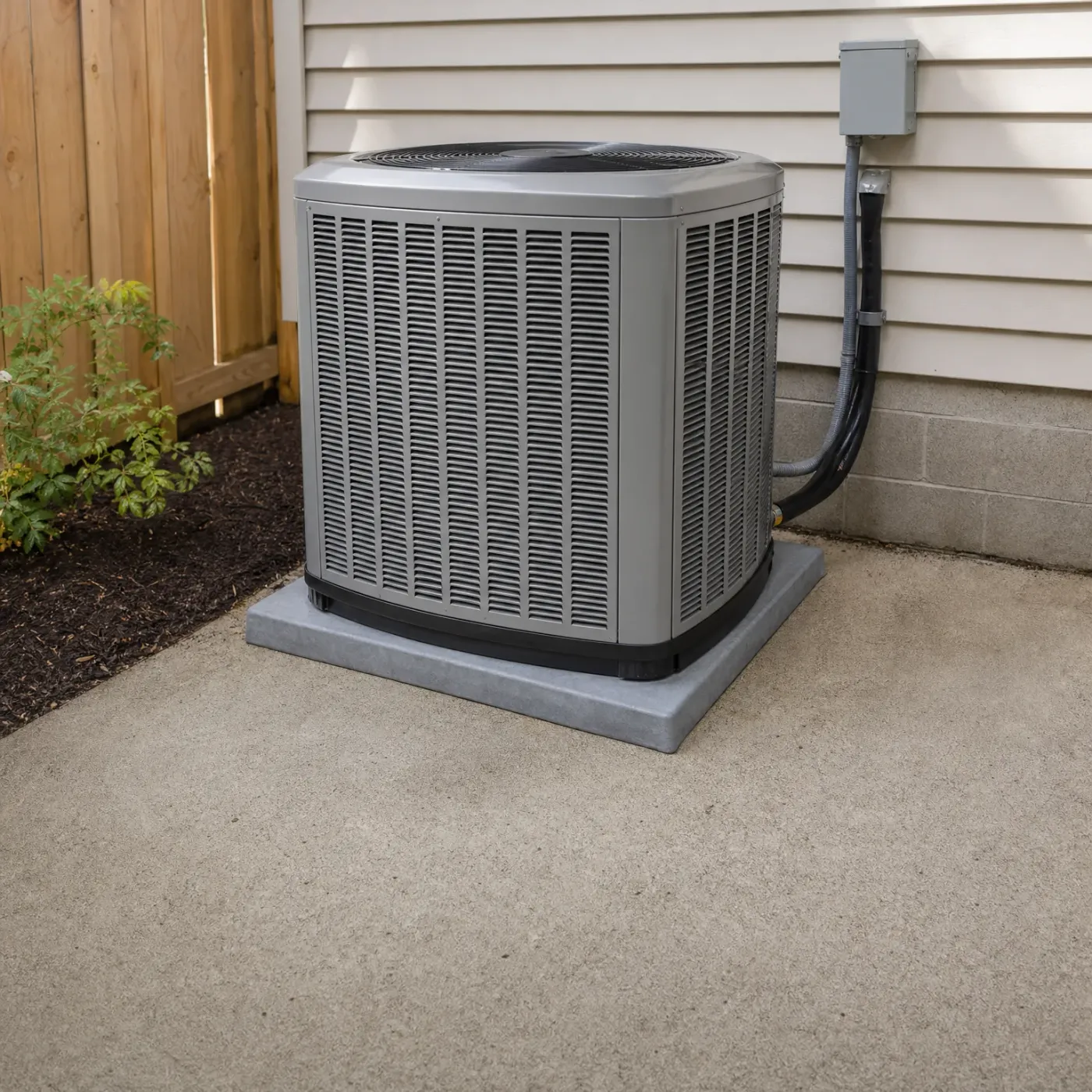
A gray outdoor air conditioning condenser unit on a composite pad beside a house with horizontal lap siding, with a wall-mounted disconnect box, refrigerant lines, and a wooden fence and shrubs to the left.
After you get your air conditioner repair

Get the right pro for your air conditioner

A burning smell is not something to wait out, even if the air coming through the vents still feels cool. Wisconsin summers don't give you many days to turn the AC off and leave it off, and running it while a wire or a motor bearing is overheating is how a bad capacitor turns into a bad compressor, or how hot wiring turns into a real problem behind the wall. Power here already costs enough without a strained motor pulling more current than it should every time it cycles. Shutting the unit off at the breaker until someone can look at it protects the system and the house. From there, finding a contractor who can get out to look at it, diagnose which part is overheating, and fix it before the next hot stretch is the part you don't have to carry alone. Send the request and that search is off your plate.

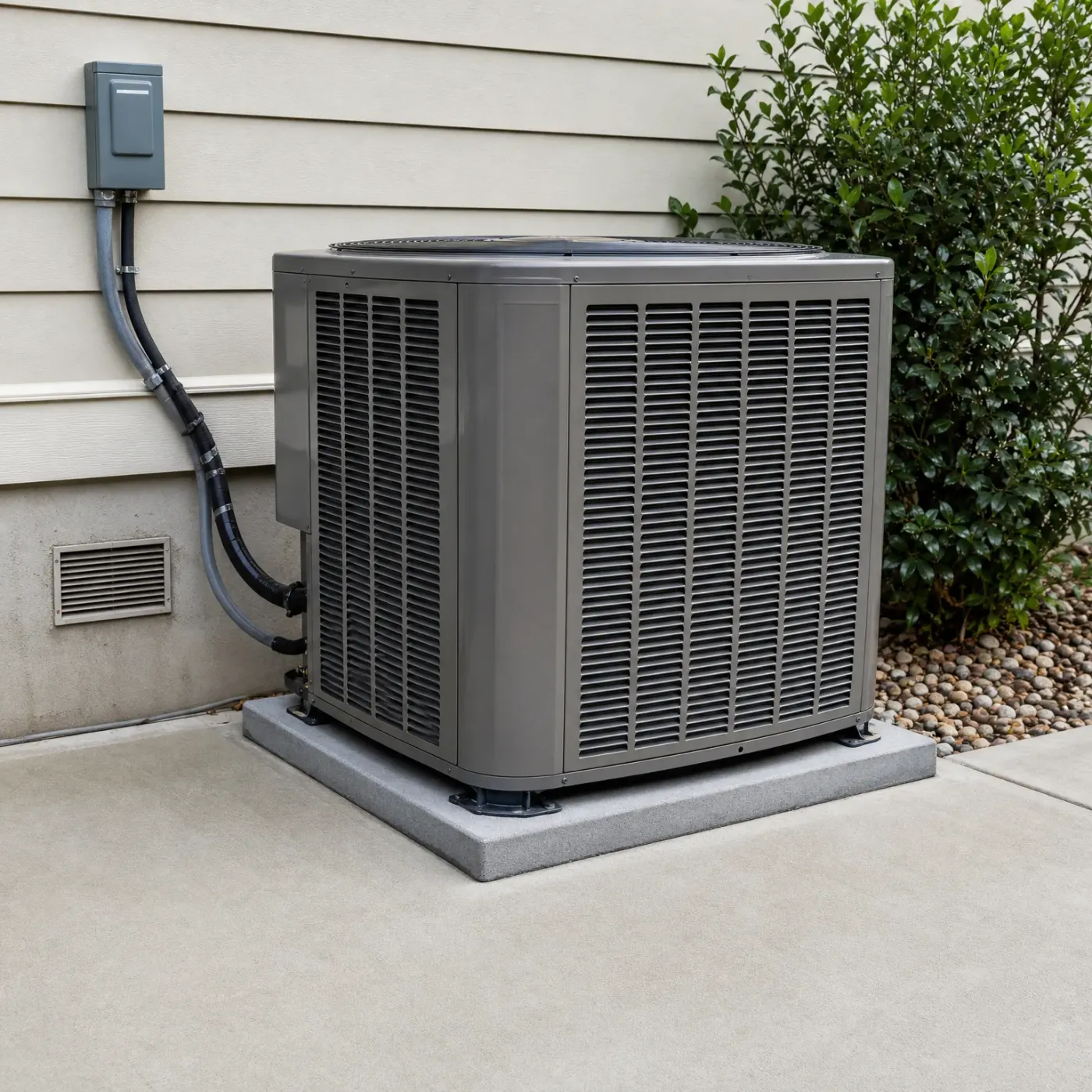
A gray outdoor air conditioning condenser unit sits on a concrete pad beside a house with horizontal siding, connected by insulated lines to a wall-mounted disconnect box, with a shrub and gravel bed to the right.

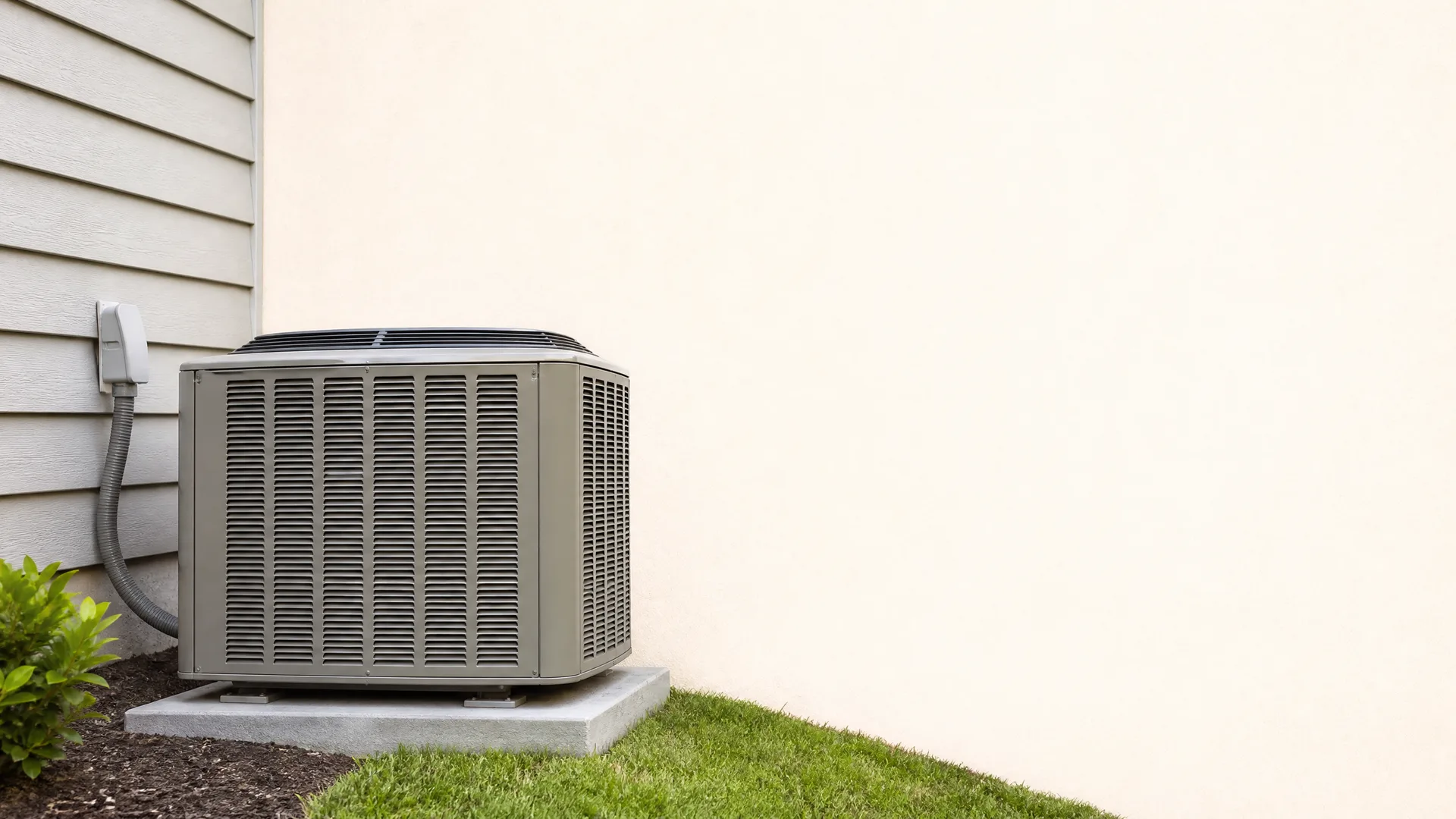
Running clean

A condenser like this should just hum along. Air moves through the fins, the compressor cycles on and off, and nothing smells like anything. If your unit still looks like this, a burning smell is likely a one-time thing, like dust on a part that just kicked on.
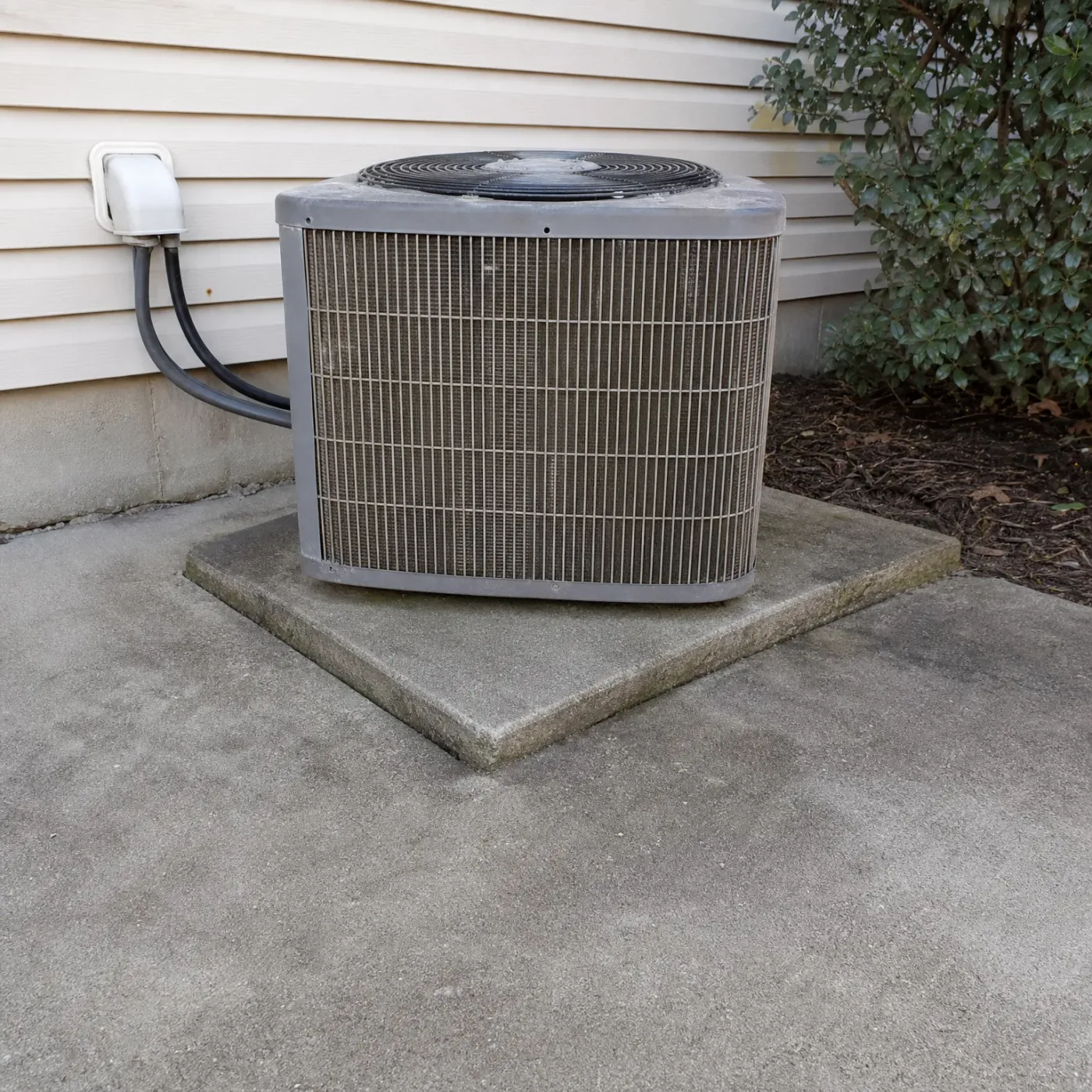
An outdoor air conditioning condenser unit sits on a concrete pad beside a house with horizontal vinyl siding, with a gray electrical disconnect box and insulated refrigerant line on the wall above, surrounded by bare mulched ground.

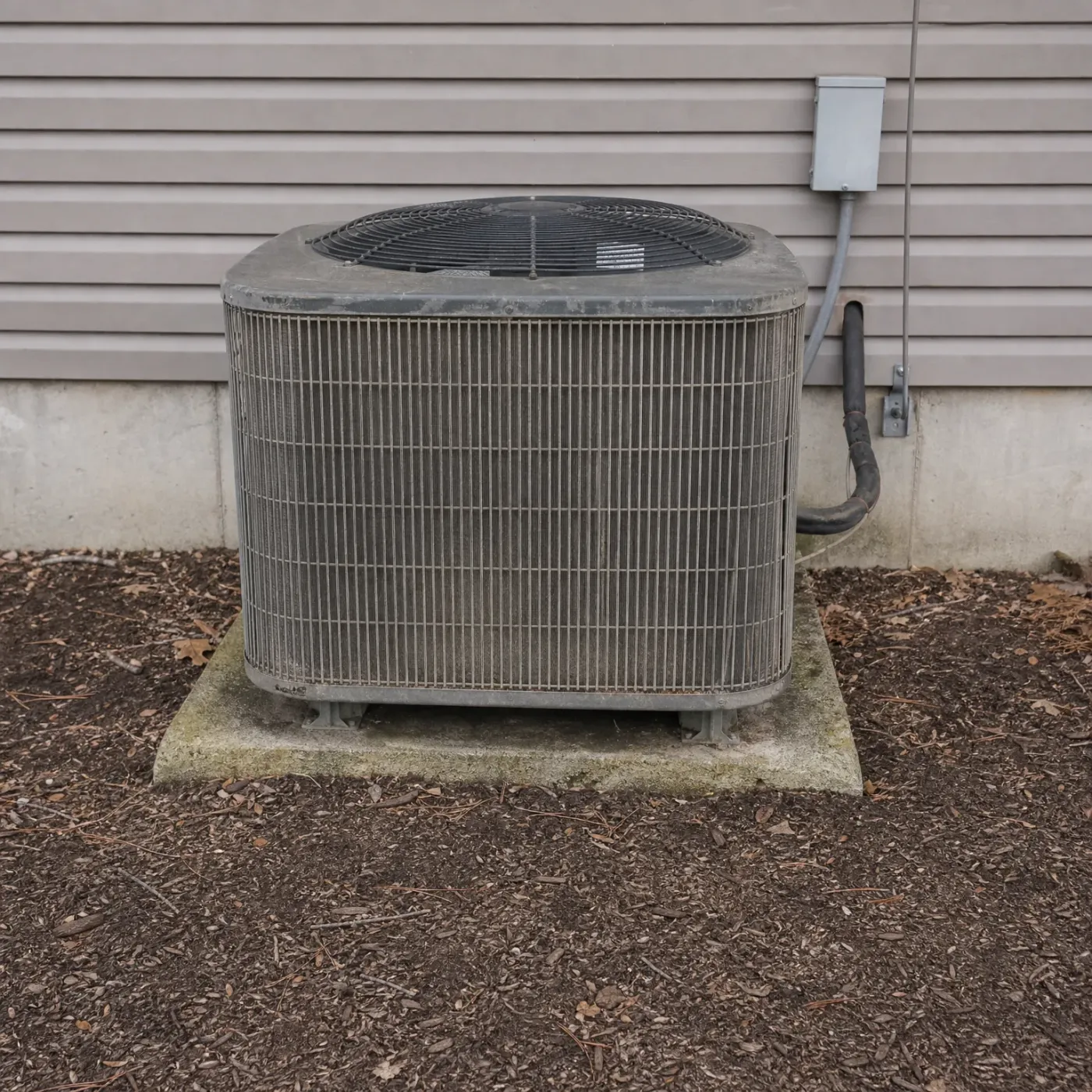
Caked in grime

Coil fins this dirty make the compressor work harder to move air, and that extra strain shows up as heat in the wiring and the motor. A unit that looks like this is a lot more likely to be the one producing the smell you're noticing.

Power costs 18.08 cents per kilowatt-hour statewide

At 18.08 cents per kilowatt-hour, a strained motor or an overheating wire isn't just a smell to worry about, it's pulling more power while it struggles. Letting a burning smell go unchecked can raise what you pay to keep the house cool all summer.

EIA-861 2025 statewide residential average

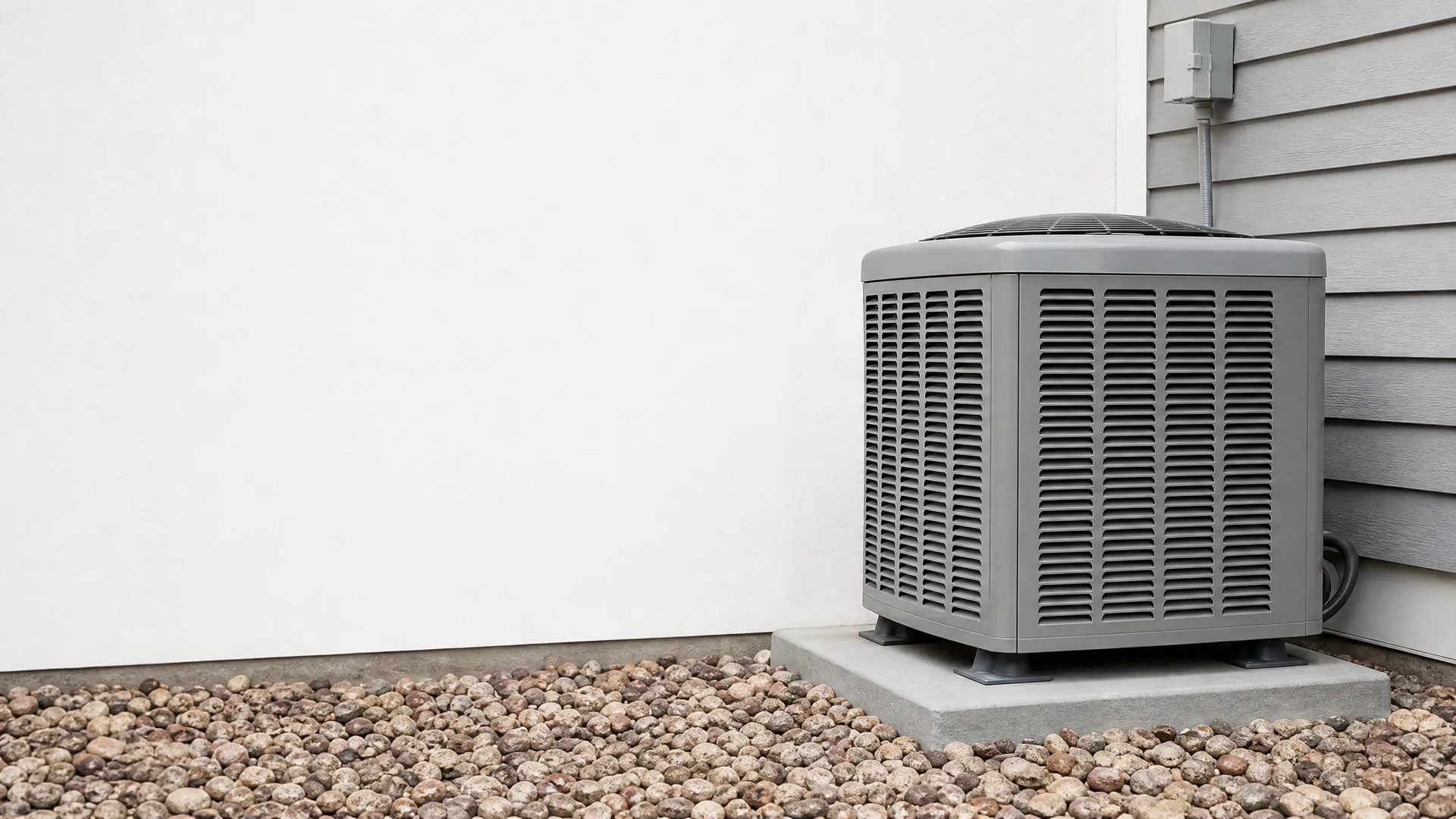
An outdoor air conditioning condenser unit on a concrete pad at the corner of a house, next to vinyl siding and a plain light-colored wall, with grass and a mulch bed in the foreground.

Why the smell shows up outside first

The outdoor condenser is where the compressor and its capacitor live, and it's the part doing the heavy electrical work. A failing capacitor can make the compressor motor run hotter than it should for a while before it trips a breaker or fails outright. That heat reaches wiring insulation and the paint on the unit's housing before it reaches you indoors, which is why the smell is often strongest when you walk past the outdoor unit itself.

A gray outdoor air conditioning condenser unit sits on a concrete pad beside a white stucco wall and gray horizontal siding, surrounded by rounded landscaping gravel, with an electrical disconnect box mounted on the siding above.

What a contractor checks first

A technician working a burning smell usually starts with an amp reading on the compressor and a capacitance test, since a capacitor reads low long before it fails completely. They'll also check wiring connections at the disconnect box and inside the unit for looseness, since a loose connection arcs and heats under load. Catching a weak capacitor before it fails avoids the kind of overheating that damages the compressor motor itself, which costs more to replace than the part that caused it.

A woman in a cream sweater and jeans stands in the open doorway of a white stucco house, holding the dark door, while a man in a dark quilted jacket seen from behind walks toward the entry past potted plants.

A burning smell has one job: tell you something's wrong

A burning smell from your AC comes down to a part working harder than it should, usually a capacitor, a motor bearing, or a wire connection carrying more current than it was built for. That's the answer. It doesn't mean the unit is done, and it doesn't mean you have to live with it either.

Wisconsin summers are too short and too humid to spend any part of them without cooling you can trust. Once you send the form, you're done hunting for someone to call and figuring out who's any good. A contractor who handles this in your area gets your information and reaches out to you, and from there it's off your plate.

A living room corner with a beige sofa and cushion, a round wooden coffee table holding a pale ceramic vase of eucalyptus stems and a wooden bowl, and a curtained window with a potted plant above a latticed radiator cover in the background.
A woman in a dark gray sweater reclines on a light sofa with eyes closed and a slight smile, under a textured gray blanket with an open book resting on her lap, with a lit table lamp and plant in the background.
A smiling bearded man in a navy crewneck sweater sits at a dinner table with a glass of red wine, plates and glasses in the foreground, in a dimly lit room with a lamp and framed picture behind him.

A pro who works on air conditioners

A burning smell means a capacitor, motor bearing, or wire connection is overheating under more load than it should carry. That doesn't fix itself, and in a Wisconsin summer you don't have many spare days to run the AC less. A licensed contractor can find which part is drawing too much current and replace it before it costs you more on a power bill already running 18.08 cents a kilowatt-hour. Send the form and the search for someone qualified is off your plate.

Get a local pro

One request and the search for a pro is handled.

Sending the form costs nothing.